
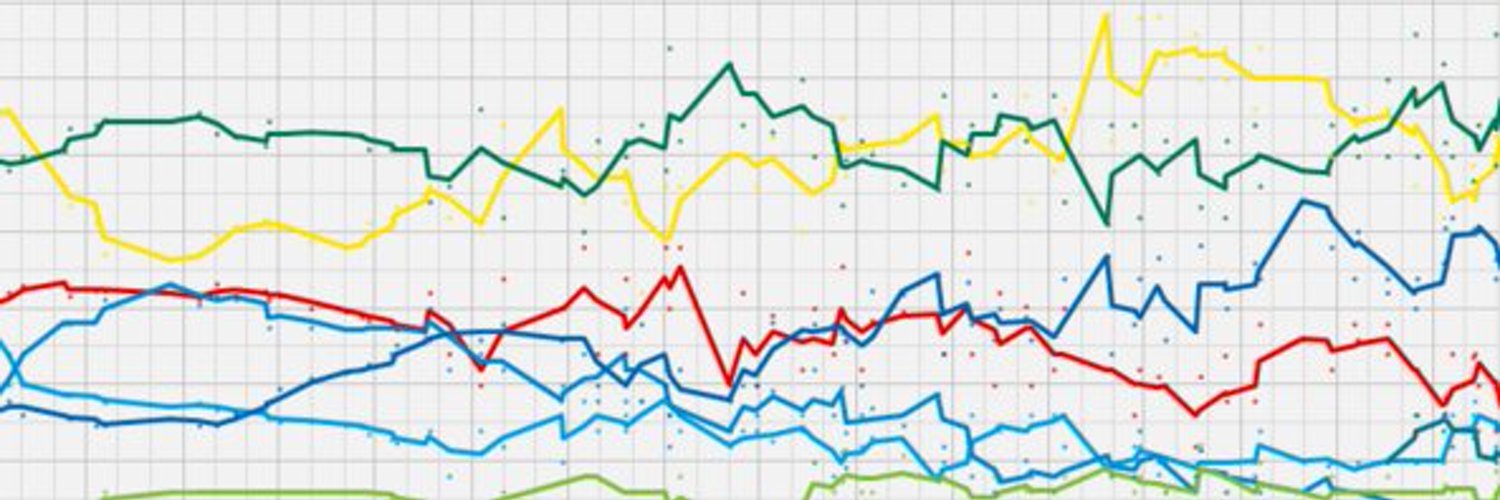
National generic-ballot polling released today shows a modest divide between surveys, with Harvard-Harris putting Democrats ahead 51-49 among likely voters while Morning Consult and Economist/YouGov each show a wider Democratic edge — 46-43 and 46-42, respectively — among registered voters. The spread illustrates the persistent gap between likely- and registered-voter samples this cycle. Separately, the Maine Senate race Democratic primary field continues to fracture following Graham Platner's withdrawal, with national figures now second-guessing their earlier support.
Generic Ballot: A Persistent LV-RV Gap
Three new surveys of the generic congressional ballot, all fielded within the past week, show Democrats leading nationally but by varying margins depending on sample composition. Harvard-Harris, surveying likely voters, found Democrats ahead by just two points, 51 to 49. Morning Consult and Economist/YouGov, both surveying registered voters, found wider three- and four-point Democratic leads. The pattern is consistent with a broader trend this cycle in which likely-voter screens tend to narrow the Democratic advantage relative to registered-voter samples.
Maine Senate: Khanna Voices Regret, Democrats Prepare for Debate
The fallout from Graham Platner's exit from the Maine Senate race continued today. Representative Ro Khanna, a California Democrat who had rallied for Platner last month before sexual assault accusations against him emerged, said he "should've listened" to his wife's concerns about the endorsement. Separately, Politico reported that Platner's volunteer network has splintered, with different factions backing different successor candidates in the Democratic primary. Eight candidates have been invited to a Portland debate, the first since Platner's withdrawal, which should offer the clearest public look yet at the fractured field.
U.S. House Passes Sunshine Protection Act
The U.S. House passed the Sunshine Protection Act, legislation backed by Florida lawmakers that would end the twice-yearly clock change and keep the country on Daylight Saving Time year-round. The bill's substantive effect would be to shift sunrise and sunset times later during winter months nationwide. The measure's path in the Senate and any timeline for a floor vote were not detailed in today's reporting.
Nebraska Senate: A Three-Way Contest Takes Shape
Ballotpedia detailed the field in Nebraska's Senate race, where Republican Pete Ricketts faces Democrat Cindy Burbank, Legal Marijuana Now Party candidate Mike Marvin, and nonpartisan candidate Dan Osborn. Ricketts and Osborn are reported to be leading the field in polling, fundraising, and media coverage, positioning the race as a competitive three-way contest rather than a straightforward two-party matchup.
Tomorrow, watch for developments out of the Portland Democratic debate in Maine and any further consolidation — or fragmentation — of the successor field to Platner.
Polls
| National Generic Harvard-Harris | Democrats 51.00% · Republicans 49.00% |
| National Generic Morning Consult (n=2200 RV) | Democrats 46.00% · Republicans 43.00% |
| National Generic Economist/YouGov (n=1450 RV) | Democrats 46.00% · Republicans 42.00% |
Follow the Money
Illinois Senate: Krishnamoorthi Leads the Money Race
Raja Krishnamoorthi, a Democrat running in the Illinois Senate race, reported the largest fundraising haul of this filing period at $31.4 million in total receipts. Spending has kept pace with intake: Krishnamoorthi's campaign disbursed $28.2 million, leaving just over $3.1 million in the bank. The gap between receipts and cash on hand suggests a campaign burning through resources nearly as fast as it raises them.
By contrast, Democrat Sherrod Brown, running in the Ohio Senate race, posted more modest receipts of $26 million but has spent far less — just $9 million — leaving him with $17 million on hand, the largest cash reserve among all candidates in this batch of filings. The disparity in burn rate between the two Senate campaigns points to different strategic postures at this stage of the cycle.
House Fundraising: Vindman and Laubacher Post Notable Numbers
In Virginia, Democrat Yevgeny Vindman, running in the Virginia 7th District race, reported $9.7 million in receipts with $5.3 million remaining in the bank. In Colorado, Democrat Eileen Laubacher, a candidate in the Colorado 8th District race, raised just under $10 million and has spent roughly two-thirds of it, reporting $3.3 million in cash on hand. Both filings rank among the largest House-level hauls in this reporting period, underscoring the national attention these districts are drawing.
On the Republican side, Louisiana's Steve Scalise, running in the Louisiana 1st District race, and Arizona's Eli Crane, a candidate in the Arizona 2nd District race, each reported receipts above $9.3 million. Crane's disbursements of nearly $7 million against $2.8 million cash on hand indicate a higher spending pace relative to Scalise, who retained $5.7 million after $7.8 million in expenditures.
Headlines
This section was withheld by a pre-send data check — see pollingsource.com for verified data.
What to Watch
Arizona Primary Filing Approaches
Arizona's July 21 primary for governor and House seats is still a week out, but the filing landscape is worth tracking closely in the meantime. The Arizona governor's race currently carries a Likely D rating, leaving relatively little competitive uncertainty heading into the primary itself. Watch for how many candidates ultimately qualify for the ballot in both the gubernatorial and House primaries, since crowded fields can shift late momentum even in races considered settled.
Governors' Races Offer Wider Range of Outcomes
Beyond Arizona, several other 2026 gubernatorial contests remain genuinely competitive. Florida's governor's race and Nebraska's governor's race are both rated Toss-up, making them the closest watches on the board. Kansas leans R, while Iowa and North Carolina lean D — all four sit closer to the margin than the Likely or Solid categories seen elsewhere. New Hampshire, by contrast, is rated Likely R, giving it less immediate suspense.
With no debates or filing deadlines scheduled in the next seven days beyond Arizona's primary, the coming week is largely a data-gathering period. New polling in the toss-up states would be the most consequential development to watch for.
New Polls (3)
How was today's briefing?
Get this briefing in your inbox every morning
Free. No password required. Unsubscribe anytime.