
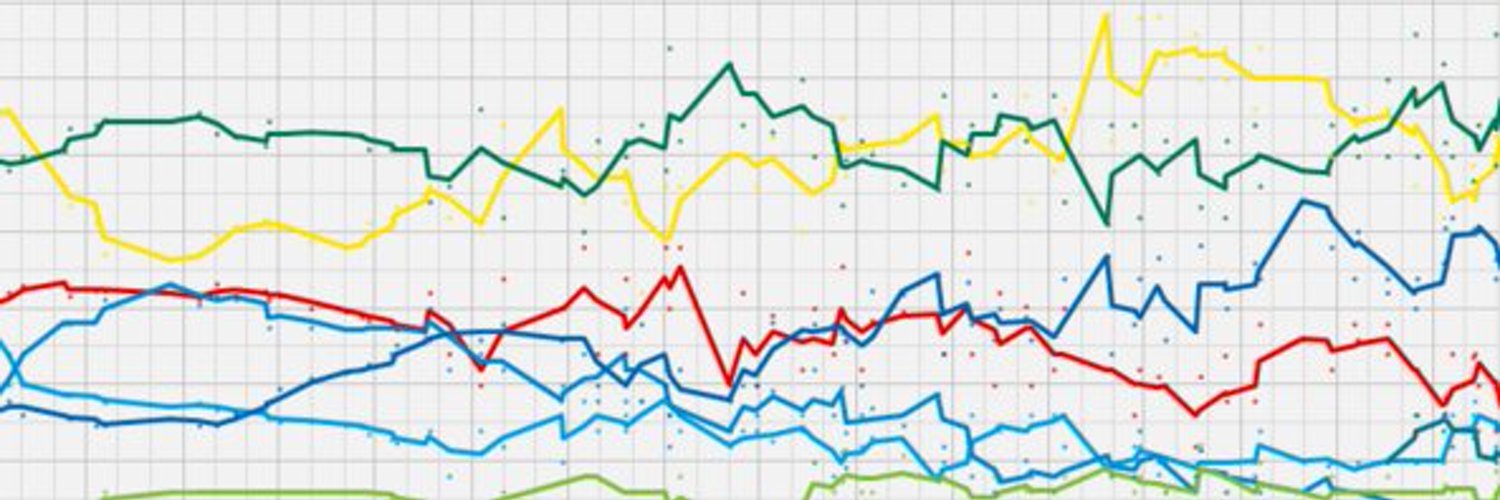
Michigan Senate: El-Sayed Narrowly Behind Rogers
From the PollingSource daily briefing for July 13, 2026
Michigan Senate: El-Sayed Narrowly Behind Rogers
A Data for Progress survey fielded in late June and only now entered into the PollingSource database offers a snapshot of the Michigan Senate race that is several weeks stale but still informative, showing Republican Mike Rogers ahead of Democrat Abdul El-Sayed by a single point, 47 to 46. The margin sits inside the poll's error range and adds to a data set for this race that has shown persistent volatility rather than a settled front-runner, with different pollsters over the spring producing results ranging from narrow El-Sayed leads to Rogers advantages in the mid-single digits. What distinguishes this release is less the topline than the company it kept in the same field period.
The same pollster surveyed Michigan's 7th Congressional District at the same time, and the results there track closely with the Senate numbers. Republican Tom Barrett led Democrat Matt Maasdam by a comparable margin, with fellow Democrats William Lawrence and Bridget Brink also within one to two points of Barrett in separate trial heats. That consistency matters. When a state's federal races move in near-lockstep, it typically signals that partisan identification, not candidate-specific factors, is doing most of the work in voters' decisions. That is a different pattern from what pollsters have documented this cycle in states like Georgia or North Carolina, where Senate and gubernatorial numbers have diverged from House-level results by five points or more, suggesting local dynamics or candidate quality overriding party lean.
The uniformity in the Michigan data has a straightforward explanation and a less straightforward implication. The explanation: Michigan's federal races this cycle feature candidates without the kind of scandal, retirement-district mismatch, or heavy self-funding that tends to produce ticket-splitting. Rogers and Barrett are both drawing on a similar coalition of suburban and exurban Republican-leaning voters, while El-Sayed, Maasdam, Lawrence and Brink are competing for an overlapping Democratic base concentrated in Detroit's suburbs and college towns. The less straightforward implication is for turnout modeling. If the state's electorate really does move as a single bloc, then late shifts in the presidential-adjacent national environment, rather than local campaign spending, will likely determine the outcome in both races simultaneously. That raises the stakes of any late movement in the state's generic congressional preference, since a shift of a point or two there would plausibly show up in the Senate and 7th District numbers at the same time.
Caution is warranted given the age of this batch. A survey fielded in late June predates several weeks of campaign activity, and Data for Progress's release schedule means the numbers are being added to the archive well after their shelf life for predicting current sentiment has passed. Still, as a structural snapshot of how Michigan's electorate was sorting itself heading into the summer, the read is useful: Republican strength was broad rather than concentrated in a single marquee race, a pattern worth watching for whether it holds as fresher polling arrives.
Whether that uniformity survives contact with more current data, or whether one race starts to pull away from the other as the fall approaches, will say as much about the state's political geography as about either individual contest.