
June 2 Primary Wave: Seven States Hold Consequential Contests
Seven states conduct primaries on June 2, 2026, determining nominees across Senate, House, and gubernatorial races. California, the largest of these states, will select nominees for its open Senate seat and multiple competitive House districts. Montana and New Mexico feature competitive Senate primaries where the eventual general election outcomes could shift chamber control. Iowa, Alabama, South Dakota, and New Jersey round out the slate, each with House races that will reshape district-level competitiveness.
California Senate Dynamics
California's Senate primary will test whether the state's top-two primary system produces a clear frontrunner or sets up a general election between two candidates from the same party. Turnout patterns and regional strength in coastal versus inland areas will signal which candidates can assemble durable coalitions through November. The winner will face a general election environment shaped by statewide ballot measures and national economic conditions.
Montana and New Mexico Senate Races
Montana's Republican and Democratic Senate primaries will determine challengers in a race rated competitive at the general election stage. Candidate positioning on energy policy, agriculture, and immigration will define primary messaging. New Mexico similarly presents an open or competitive Senate seat; primary outcomes will clarify whether national parties can consolidate support behind frontrunners or face fragmented nominee selection.
June 9 Secondary Contests: Strategic Importance in Competitive States
Six states hold primaries on June 9, with Nevada, Virginia, and Maine presenting high-stakes House and Senate nomination battles. Nevada's primary will test candidate strength in Las Vegas and Reno metropolitan areas ahead of a likely competitive general election. Virginia's primary activity will shape outcomes in districts currently held by both parties, with special attention to any open seats or retirement-triggered contests. Maine's primary follows earlier county conventions in the state's unique process.
Southern and Northern Contests
South Carolina, Mississippi, and North Dakota complete the two-week schedule. South Carolina's gubernatorial primary on the Republican side will be closely watched given the state's Republican lean. North Dakota's early June primary will finalize Senate and House fields in a heavily Republican state, while Mississippi's contests will determine nominees in districts with varying competitiveness.
Polls
Generic Ballot: Democratic Lead Persists Amid Methodological Variation
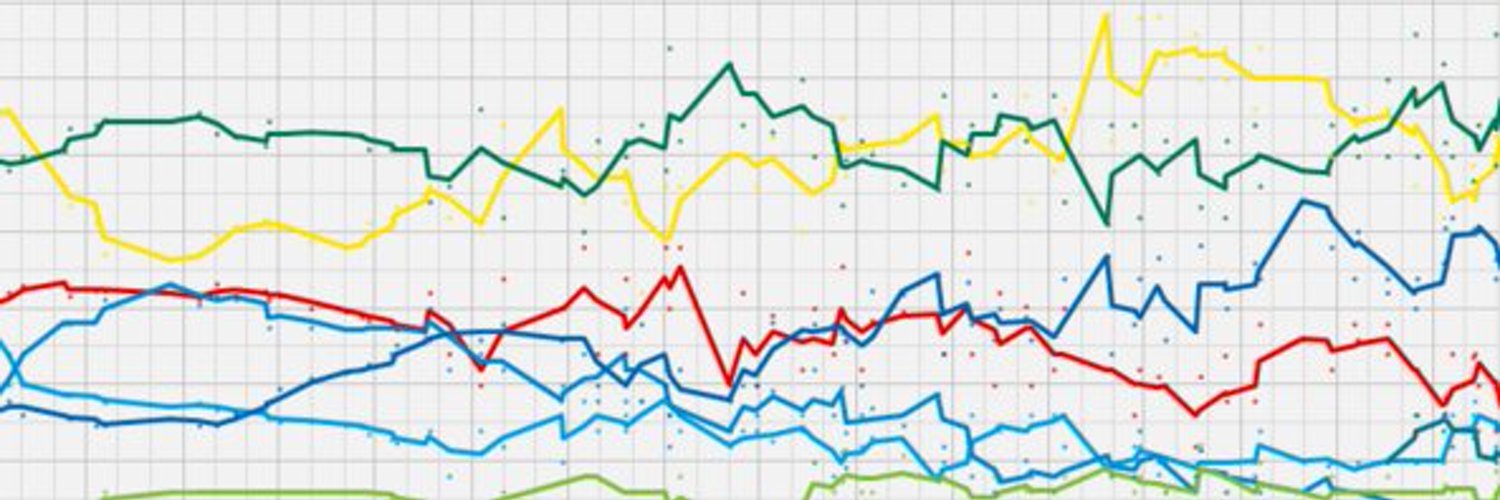
Recent generic ballot polling shows Democrats maintaining a consistent advantage over Republicans, though the margin varies significantly by pollster. Ten surveys from the past 30 days show Democrats ranging from 39 to 51 percent, while Republicans cluster between 38 and 43 percent. The median Democratic advantage stands at approximately 6 points.
The variation reflects known methodological differences. Data for Progress and Echelon Insights both show Democrats at 51 percent, while Reuters/Ipsos reports the narrowest gap at just 1 point. Most major pollsters—Wall Street Journal, Quinnipiac, New York Times, and Morning Consult—cluster Democrats between 47 and 50 percent. The consistency of the Democratic lead across different sampling methodologies suggests genuine underlying support rather than statistical noise, though the range of outcomes indicates meaningful uncertainty about the actual national position.
Follow the Money
New Hampshire House Race: Democratic Financial Dominance
Democrats hold a commanding financial advantage across all four competitive New Hampshire House seats. Combined, the four Democratic candidates—Chris Pappas (D NH-01), Maggie Goodlander (D NH-02), Maura Sullivan (D NH-02), and Stefany Shaheen (D NH-02)—retain 7.87 million in cash on hand. Their Republican counterparts, Anthony Dilorenzo (R NH-01) and Lily Williams (R NH-02), hold combined reserves of only 1.4 million.
Chris Pappas (D NH-01) leads all candidates with 3.24 million in cash on hand, having raised 6.55 million total and spent 3.72 million. His resource advantage over Anthony Dilorenzo (R NH-01)—who holds 827,267 dollars—exceeds 3.4 million. The spending disparity reflects Pappas's stronger position in a race rated Likely D.
Among Democratic challengers, Maggie Goodlander (D NH-02) maintains the healthiest cash position at 2.05 million despite lower overall receipts, indicating measured spending discipline. Maura Sullivan (D NH-02) and Stefany Shaheen (D NH-02) retain 1.48 million and 1.11 million respectively, both substantially
Headlines
Texas Primary Runoffs Conclude; Competitive Senate Race Takes Shape
Ken Paxton (R TX-SEN) secured the Republican nomination for the U.S. Senate seat being vacated by John Cornyn, setting up a general election matchup against Democrat James Talarico (D TX-SEN). The race has shifted to Lean Republican following Paxton's primary victory, though political analyst Steve Bannon acknowledged the contest will prove "very tough" for the Republican nominee, suggesting voter hesitation about Paxton's candidacy may keep the race more competitive than typical for Texas Republicans.
Texas Congressional Primaries Settle Multiple Races
Texas held multiple congressional primary runoffs on May 26, with Colin Allred (D TX-33) defeating incumbent Julie Johnson (D TX-33) in Texas's 33rd District, securing 45.5% in the initial March primary before advancing to the runoff. In Texas's 18th District, Christian Menefee (D TX-18) defeated incumbent Al Green (D TX-18) in a competitive primary runoff where both candidates had finished within two percentage points of each other in March.
Republican runoffs also concluded in multiple districts: Carlos De La Cruz (R TX-35) won in Texas's 35th District after leading the March primary with 32.5%, while Jon Bonck (R TX-38) advanced from Texas's 38th District after commanding 47.7% of the initial vote. Mayes Middleton (R TX-SEN) defeated incumbent Chip Roy (R TX-SEN) in the Republican primary runoff for Texas Attorney General with 55.2% of the vote.
South Carolina Republicans' Gubernatorial Moves Open Two House Seats
South Carolina faces two open House seats this election cycle—the most since 2014—after Republican incumbents Nancy Mace (R SC-01) and Ralph Norman (R SC-05) announced retirements to pursue the governorship. The candidate filing deadline passed March 30, 2026, setting the field for both races.
What to Watch
June 2 Primary Elections Across Seven States
Seven states will hold primary elections on June 2, 2026, with contests for Senate, House, and gubernatorial seats. Alabama, California, Iowa, Montana, New Jersey, New Mexico, and South Dakota will vote simultaneously. These primaries will determine general election matchups in competitive districts and potentially shape Senate control heading into the fall. Monitor turnout patterns and incumbent performance as indicators of overall party momentum.
House Tossups in Arizona and California
Arizona's 1st District and 6th District are rated tossups by Cook Political Report. In California, CA-13 and CA-22 are also tossups, while CA-45 and CA-47 lean Republican. These districts will receive outsized attention for early signals on suburban and urban swing patterns.
Senate Races in Florida and Georgia
Florida's Senate race is rated likely Republican by Sabato's Crystal Ball, while Georgia's Senate seat leans Democratic per Cook Political Report. Both races carry implications for Senate partisan balance. Watch funding levels and candidate recruitment in these states as proxies for perceived competitiveness.
New Polls (0)
No polls with fresh fieldwork today.
How was today's briefing?
Get this briefing in your inbox every morning
Free. No password required. Unsubscribe anytime.