
Maryland and New Jersey both report elevated primary competition in House races this cycle, with Maryland featuring seven incumbents in contested primaries—the second-highest since 2014—while New Jersey has 52 total candidates across 12 districts, also the second-most since 2014. The uptick in primary challengers in these Democratic-leaning states suggests either emerging intraparty divisions or recruitment efforts by minority Republicans testing vulnerable seats.
Idaho Ballot Initiatives: Abortion and Marijuana
Two Idaho ballot initiatives have submitted signatures for the November general election: one seeking to enshrine reproductive freedom and another to legalize medical marijuana. Both measures face a Republican-controlled state government and represent direct challenges to current law. The initiatives will test voter appetite for policy changes in a state with consistent Republican legislative majorities.
Michigan Senate Primary: Middle East Policy Division
The Michigan Democratic Senate primary has emerged as a battleground over Middle East policy, particularly positions on Israel and Hamas. Democratic divisions on foreign policy are now shaping competitive primary races, with the article suggesting internal disagreement could strengthen rather than weaken the party's general election positioning.
Maine Senate: Redistricting Compliance as Campaign Issue
Democratic Maine Senate candidate Graham Platner (D ME-SEN) highlighted Republican noncompliance with court redistricting rulings, citing Ohio's past defiance following Virginia's Supreme Court strike-down of the state's congressional map. The criticism frames judicial oversight of electoral maps as a potential campaign issue in the 2026 cycle.
Oklahoma Attorney General Primary
Jon Echols (R OK-GOV) and Jeff Starling (R OK-GOV) are competing in the Republican primary for Oklahoma Attorney General on June 16, marking the first open-seat race for the position since 2010, as incumbent Gentler Drummond pursues the governorship instead.
Watch tomorrow: Polling data from competitive Senate races and any updates on Pennsylvania Senate positioning following recent candidate messaging.
This Week in Review
```htmlNational Generic Ballot: Democrats Maintain Slight Lead
A Forbes/HarrisX national generic ballot poll released this week shows Democrats leading Republicans 48 percent to 46 percent among likely voters. The 2-point advantage reflects Democrats' current positioning heading into the November midterm elections. The margin falls within typical polling variance and suggests neither party has secured commanding momentum at this stage of the cycle.
Indiana State Senate: Trump Tests Influence Over State Legislative Challengers
Eight Republican state senators in Indiana faced primary challenges this week from Trump-backed candidates, directly stemming from their opposition to the former president's redistricting initiative last year. Twenty-one GOP state senators voted against the redistricting effort in 2025, earning public criticism from Trump. The targeted primaries represent a significant test of Trump's ability to impose consequences on state legislators who oppose his priorities, and whether intraparty divisions over redistricting strategy will persist into the general election phase.
Ohio Governor: Conservative Business Candidate Advances Against Democrat
Vivek Ramaswamy (R OH-GOV), a businessman and former 2024 presidential candidate, competed in Ohio's Republican gubernatorial primary this week against business owner Casey Putsch. Ramaswamy is expected to advance to the general election where he will face Amy Acton (D OH-GOV), who ran unopposed in her primary. The general election matchup pits a nationally visible conservative entrepreneur against a state health official with executive experience, positioning a significant ideological contrast for Ohio voters.
Nevada Legislative: Record Primary Incumbent Challenges Signal Majority Vulnerability
Nevada's state legislative landscape shows unprecedented vulnerability for the party in power. Fifteen state legislative incumbents face primary challenges in 2026, an 88 percent increase from 2024 and the second-highest number since 2010. Twelve of these contested seats are held by Democrats, the party currently controlling the state legislature. This elevated primary pressure typically correlates with weakened incumbent positions heading into general elections and suggests potential structural challenges for Democratic retention of legislative control.
Senate Republicans Express Confidence on Chamber Control, House Outlook Murkier
Senator Tim Scott (R SC-SEN) stated this week that Republicans will retain Senate control following the midterms but acknowledged greater uncertainty regarding House control. Scott's conditional optimism reflects the structural advantages Republicans currently hold in the Senate—where they face a favorable map with fewer competitive seats in danger. The asymmetry between Senate and House confidence among party leadership suggests Republican strategists view House retention as a more vulnerable proposition than defending their Senate position.
Week's Pattern: Intraparty Tests and Structural Vulnerabilities Emerging
This week's developments reveal two distinct dynamics shaping the midterm environment. First, intraparty pressure is intensifying, with Trump directly challenging Republican state legislators who opposed his policy agenda, while Nevada's Democrats face their own internal primary challenges from within their ranks. Second, structural vulnerabilities are becoming visible: Democrats maintain only a narrow generic ballot advantage despite holding the presidency, Nevada's legislative majority faces unprecedented primary pressure, and Republican leaders express divergent confidence levels between chambers. The convergence of these factors suggests a competitive midterm environment where both parties face distinct internal and electoral pressures.
```Polls
Generic Ballot: Democratic Lead Persists Across Methodologies
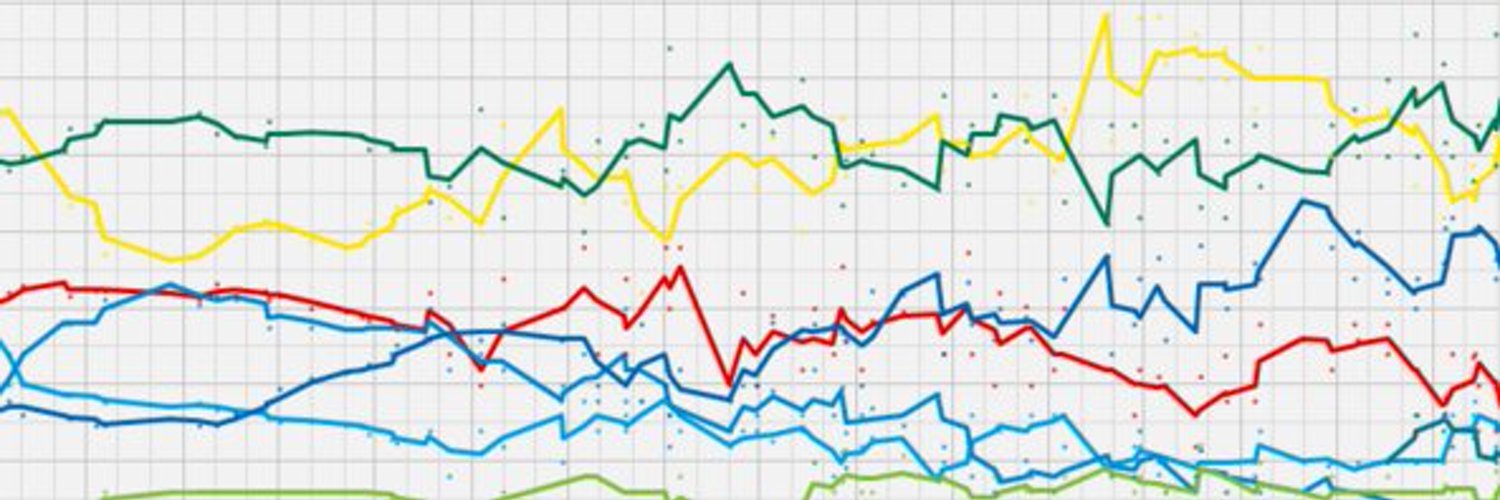
Recent generic ballot polling shows Democrats maintaining a consistent advantage heading into the 2026 midterms, though the margin varies significantly by pollster. NPR/PBS/Marist recorded the widest Democratic lead at 10 points (52%-42%), while Forbes/HarrisX showed the narrowest at 2 points (48%-46%). The median across ten surveys conducted between late April and early May places Democrats at approximately 48% and Republicans at 42%, a 6-point spread.
Volatility within the polling suggests underlying fluidity in voter sentiment. Economist/YouGov recorded a 5-point Democratic advantage on April 27 but expanded it to 3 points by May 4, while Morning Consult data tracked from April 27 to May 3 remained relatively stable. Larger sample sizes from Big Data Poll (n=2,874) and Morning Consult (n=2,200) both showed Democratic leads of 6-7 points, suggesting the broader range may reflect legitimate poll-to-poll variation rather than methodological artifacts.
The consistency of Democratic advantages across different firms indicates the lead is not an outlier phenomenon, though the variance in margins—from 2 to 10 points—underscores uncertainty about the actual state of congressional preference.
Follow the Money
North Carolina Senate: Massive Democratic Fundraising Advantage
Roy Cooper (D NC-SEN) has raised 26.8 million dollars compared to 8.4 million dollars for Michael Whatley (R NC-SEN), the leading Republican challenger. Cooper maintains 18.5 million dollars in cash on hand versus Whatley's 2.5 million dollars, providing substantially greater resources for the final campaign phase in a race rated Lean Republican.
The financial disparity reflects Cooper's higher disbursements to date, suggesting aggressive early spending. Combined Republican receipts across all candidates total approximately 13.3 million dollars, still trailing Cooper alone by a 2-to-1 ratio. This funding gap presents a constraint for Republican messaging capacity despite the race's structural Republican lean.
Headlines
- Platner points to Ohio GOP defying courts in response to Virginia redistricting ruling (The Hill)
Democratic Maine Senate candidate Graham Platner criticized Republicans' history of ignoring court redistricting ruli... - I Haven't Changed. Here's What Has (RealClearPolitics)
A Pennsylvania Senate candidate reflects on their political origins, recalling a narrow victory in their first mayora... - Tragedy That Dems Can't Let Infinity Immigration Go (RealClearPolitics)
Conservative commentators criticized California Democrats during a gubernatorial debate for prioritizing immigration ...
What to Watch
House Battlegrounds in Arizona and California
Arizona's 1st District (AZ-01) and Arizona's 6th District (AZ-06) remain rated as tossups by Cook Political Report, reflecting competitive terrain in districts where neither party holds clear advantage. In California, CA-13 and CA-22 are similarly rated, while CA-45 and CA-47 lean Republican according to Inside Elections and Cook Political Report respectively. These races will be critical indicators of overall House performance in Western swing districts.
Senate Races Shaping Upper Chamber Balance
The Florida Senate race is rated likely Republican by Sabato's Crystal Ball, signaling Republican strength in the state. Conversely, Georgia's Senate race leans Democratic per Cook Political Report, suggesting competitive dynamics in a state that has moved unpredictably in recent cycles. These two contests carry outsized importance for determining Senate control.
Additional House Races to Monitor
Colorado's 8th District (CO-08) leans Republican, while Iowa's 1st District (IA-01) is rated likely Republican. Cook Political Report ratings for these races suggest Republican confidence in their holds and gains in rural and suburban territory.
New Polls (0)
No polls with fresh fieldwork today.
How was today's briefing?
Get this briefing in your inbox every morning
Free. No password required. Unsubscribe anytime.