
Democrats continued to outperform in special elections across Georgia and Wisconsin, winning a state Supreme Court race decisively while overperforming in a deep-red House district, signaling sustained momentum as the 2026 midterm cycle accelerates. Meanwhile, California's House races are attracting unprecedented candidate participation following mid-decade redistricting, and Utah tightened voter registration requirements with proof-of-citizenship legislation.
Wisconsin State Supreme Court: Democratic Expansion
Democrats secured a double-digit victory in Wisconsin's state Supreme Court race, expanding their majority to 5-2. The result reflects continued Democratic strength in the state following recent electoral gains and underscores the salience of judicial control in competitive midwestern states heading into 2026.
Georgia's 14th District: Republican Hold with Democratic Overperformance
Clay Fuller (R GA-14) won the special election to fill Marjorie Taylor Greene's former seat, with President Trump taking credit for the victory while simultaneously criticizing Greene as a liability to the district. Democrats again overperformed relative to the district's partisan lean, suggesting a pattern of stronger-than-expected Democratic performance in Republican-held seats in Georgia.
California House Races: Record Candidate Filings
California's 2026 House races attracted 289 candidates filing for 52 congressional districts—the highest number since 2014—following the state's mid-decade redistricting. The surge reflects increased electoral competition in newly redrawn districts, averaging 5.6 candidates per seat and signaling broad engagement in House competition across the state.
Utah Election Legislation: Citizenship Requirements Enacted
Utah Governor Spencer Cox signed 14 election-related bills during the 2026 legislative session, including HB 209, which requires documentary proof of citizenship for voter registration. The legislation represents a significant tightening of voting requirements in the state.
Watch tomorrow: The Texas 19th District Republican primary runoff between Tom Sell (R TX-19) and Abraham Enriquez (R TX-19) is scheduled for May 26, with Sell leading the first round at 40 percent.
Polls
```htmlGeneric Ballot: Democratic Advantage Persists
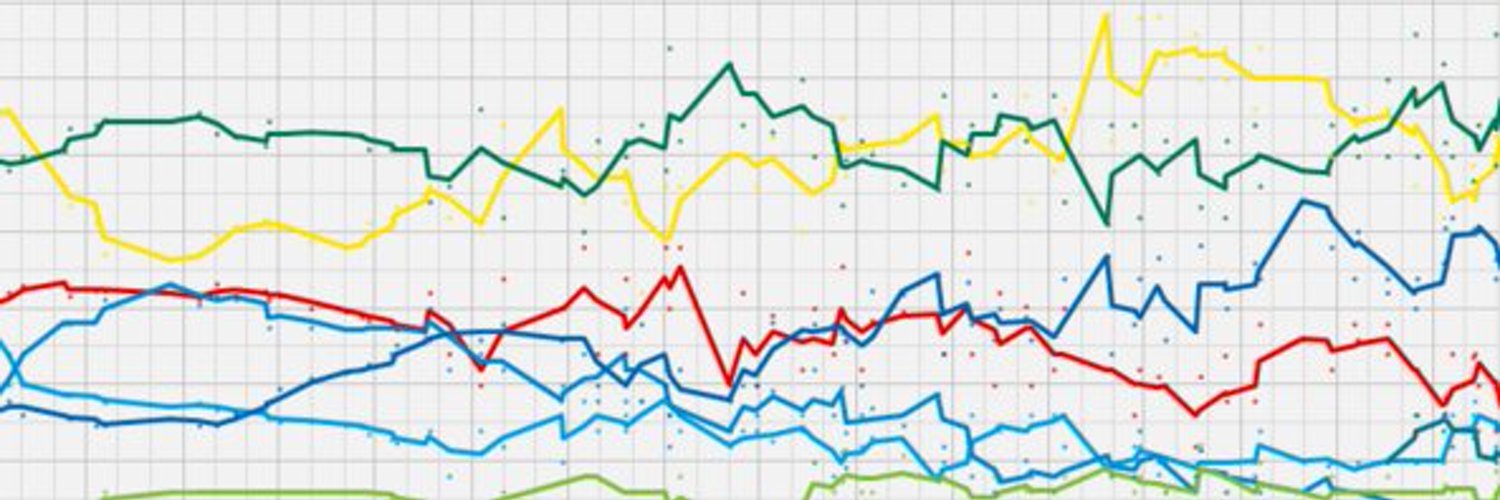
Recent generic ballot polling shows Democrats maintaining a modest but consistent lead heading into the 2026 midterms. Across ten surveys conducted between late March and early April, Democrats average 46.1 percent support while Republicans average 41.6 percent—a 4.5-point gap. The range of Democratic support spans from 44 to 49 percent, suggesting stability rather than volatility. Morning Consult's tracking, which captures the most recent data, shows Democrats at 45 percent versus Republicans at 42 percent.
The consistency across pollsters merits attention. Even Cygnal, which tends toward Republican-friendly results, recorded Democrats at 49 percent to Republicans at 43 percent on April 3rd. This alignment across different methodologies suggests the Democratic edge reflects genuine preference distribution rather than polling artifact.
North Carolina Senate: Cooper Leads Whatley
Roy Cooper (D NC-SEN) holds a notable advantage over Chuck Whatley (R NC-SEN) in two early-stage surveys. High Point/YouGov shows Cooper at 50 percent versus Whatley at 42 percent (conducted April 6th), while Quantus Insights registered 49 percent for Cooper and 44 percent for Whatley (April 1st). Both polls show Cooper in the upper 40s with 6-point margins. These early measurements provide limited predictive value given the distance to the general election, but neither candidate has consolidated the race.
```Follow the Money
Minnesota Senate: Financial Disparity Favors Democrat
Angie Craig (D MN-SEN) holds a substantial financial advantage with 9.3 million in total receipts and 4.9 million cash on hand. She has spent 4.4 million through the reporting period, maintaining a significant war chest for the final stretch.
The Republican field is fragmented across five candidates. Michele Tafoya (R MN-SEN) leads GOP fundraising with 2 million receipts but has spent minimal funds (187,000), suggesting late-cycle deployment. Adam Schwarze (R MN-SEN) and Royce White (R MN-SEN) have raised roughly 1.1 million and 566,000 respectively, both with limited cash reserves heading into Election Day.
Margaret Flanagan (O MN-SEN) has accumulated 4.6 million in receipts as a third-party candidate, though her 1.1 million cash on hand trails Craig significantly. The rating reflects Craig's fundraising dominance, though money alone does not determine electoral outcomes in this environment.
Headlines
- Nation’s first anti-data center referendum passes in Wisconsin (The Hill)
Port Washington, Wisconsin has become the first city in the nation to pass a referendum requiring voter approval for ... - Trump says Republican ‘convincingly’ won Georgia district ‘despite the stench left’ by Marjorie Taylor Greene (The Hill)
President Trump claimed credit for a Republican victory in Georgia's special election to fill Marjorie Taylor Greene'... - A record-high number of U.S. House candidates filed to run in California after the state conducted mid-decade redistricting (Ballotpedia News)
California's 2026 U.S. House race is attracting record interest, with 289 candidates filing to compete for 52 congres...
What to Watch
```htmlHouse Races in Competitive Terrain
Four House districts rated as tossups by Cook Political Report warrant close monitoring: AZ-01, AZ-06, CA-13, and CA-22. These races will offer early signals on regional dynamics and suburban voter sentiment. Additionally, CA-45 and CA-47 are rated Lean R by Inside Elections and Cook Political Report respectively, suggesting potential Democratic vulnerability in historically competitive California districts. CO-08, rated Lean R, remains another battleground to monitor for shifts in rural and exurban voting patterns.
Senate Races Shaping Chamber Control
Georgia's Senate race is rated Lean D by Cook Political Report, indicating a competitive contest that could determine overall chamber dynamics. Florida's Senate race is rated Likely R by Sabato's Crystal Ball, suggesting reduced Democratic pickup potential in that state. Iowa's 1st District House race, rated Likely R, reflects broader trends in that state's political realignment.
```New Polls (0)
No polls with fresh fieldwork today.
How was today's briefing?
Get this briefing in your inbox every morning
Free. No password required. Unsubscribe anytime.