
Maine Senate: Platner Maintains Edge Over Collins in Latest Survey
From the PollingSource daily briefing for July 6, 2026
Maine Senate: Platner Maintains Edge Over Collins in Latest Survey
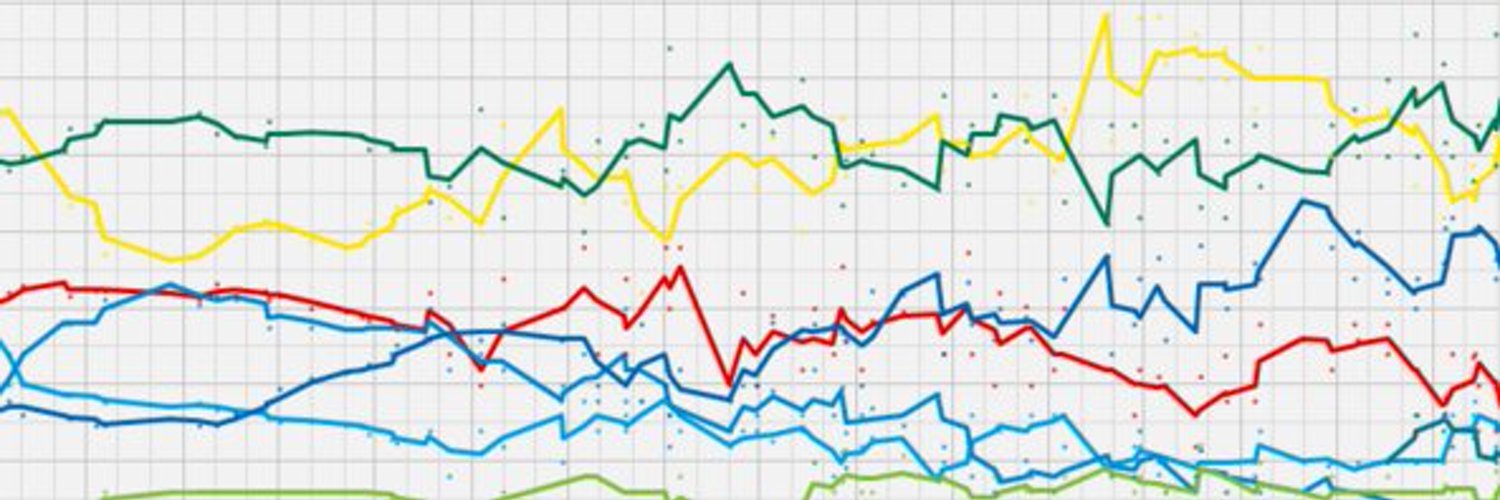
The Maine Senate race has settled into a pattern that should concern strategists in Susan Collins' orbit, even accounting for the usual caveats about early polling. The Republican incumbent has not led a single survey added to the archive since a Workbench Strategy poll found the race tied at 50-50 in December. Since then, Democrat Graham Platner has posted advantages ranging from 3 points in a March Echelon Insights poll to 9 points in a University of New Hampshire survey from May. That is not a razor-thin trend line prone to reversal on a single data point — it is seven months of consistent directional movement in one candidate's favor.
The house-effect story here is worth dwelling on, because it cuts against the easy narrative. Pollsters with a Democratic-aligned track record and Republican firms with ties to the Collins campaign both show tighter margins than the field average — typically in the 3- to 5-point range rather than the high single digits. That convergence from opposite institutional directions is notable. When partisan pollsters on both sides are more conservative in their estimates than the nonpartisan and academic surveys, it suggests the true state of the race is closer to the high end of Platner's lead than the low end, not the reverse. Campaigns often rely on their own internal numbers to argue a race is closer than public polling suggests; here, even the friendliest data for Collins still shows her trailing.
Context matters for why an incumbent of Collins' tenure and reputation for electoral resilience — she has outrun the partisan lean of her state in five previous Senate campaigns — would find herself consistently behind by mid-single digits or more. Maine's electorate has shifted in recent cycles, and Collins' past success has often depended on a coalition of moderate and crossover voters that any generic Republican brand erosion would strain first. Whether that erosion is showing up now, seven months from a general election, or whether this is a polling snapshot that undersells incumbent name recognition and campaign infrastructure, is the open question. Collins has trailed in polling before and recovered; 2020 surveys frequently showed her behind Sara Gideon, sometimes by wide margins, before she won by roughly 9 points. That history alone argues for treating the current numbers as directionally informative rather than predictive.
Still, the 2020 comparison has limits. Gideon was a state legislative leader without Platner's current media profile, and the polling misses that cycle were part of a broader national pattern of underestimating Republican support, not specific to Maine or to Collins' personal appeal. Whether that systemic polling error repeats in 2026 is unknowable in advance, and pollsters have made public adjustments to methodology since then specifically to address it. What is measurable now is that Platner has led wire-to-wire since December across firms with divergent methodologies and no obvious shared bias, which raises the bar for what would need to change for Collins to close the gap through Election Day.
The next several months of fundraising reports and debate performances will offer a clearer read on whether this is a genuine structural shift in Maine's Senate politics or an early-cycle mirage that resolves toward the incumbent as the race sharpens.