
Exactly two states are holding elections today: South Carolina conducts a runoff day featuring Senate, House, and gubernatorial contests, while New York holds primary day across House, Senate, and gubernatorial races. Both elections feature significant fundraising disparities and divergent competitive dynamics across districts.
South Carolina: Republican Structural Advantage in Senate Runoff
South Carolina holds a Senate general election between incumbent Lindsey Graham (R SC-SEN) and challenger Annie Andrews (D SC-SEN). All three major forecasters—Cook Political Report, Inside Elections, and Sabato's Crystal Ball—rate the race Solid R or Safe R, indicating structural Republican advantages in a state that has favored Republican Senate candidates across recent cycles. The general election occurs on runoff day, suggesting earlier primary activity has concluded for this Senate seat.
Andrews has outraised Graham in total receipts, 8.1 million to 6.2 million, though Graham maintains a cash-on-hand advantage of 4.2 million compared to Andrews' 2.9 million. The fundraising gap reflects Democratic resource concentration on competitive seats nationally, with South Carolina's Senate race receiving lower priority given unfavorable partisan lean. Graham's remaining cash reserves position him for sustained advertising through November despite lower total receipts, a pattern typical in incumbent-held seats where candidates begin campaigns with existing name recognition and donor networks.
Tonight's results will confirm whether Republican structural advantages hold in a state that has not elected a Democratic senator since 1998. Andrews' fundraising success relative to Graham's will provide one metric of Democratic competitiveness, though rating consensus suggests the incumbent enters the general election as heavy favorite regardless of turnout patterns.
Full coverage on South Carolina →
South Carolina: House Runoff in Open 1st District
South Carolina's 1st District features a Republican primary runoff between Jenny Honeycutt (R SC-01) and Mark Smith (R SC-01) following an initial primary on June 9 where neither candidate secured sufficient votes. Honeycutt led the initial field with 22.1 percent and Smith received 18.0 percent, advancing them past a five-candidate field that included higher-profile fundraisers Sam McCown (R SC-01) and Jay Byars (R SC-01). The runoff determines the Republican nominee for an open seat—the district's first open contest since 2013—in a district with strong Republican registration advantage.
Fundraising totals show McCown accumulated 1.6 million in receipts with 739,000 available, positioning him as a top fundraiser despite elimination in the initial primary. Honeycutt and Smith emerged from the field without leading fundraising totals, suggesting the runoff outcome may hinge on voter persuasion between the two finalist candidates rather than differential resource advantages. The open-seat dynamics create unpredictable outcomes in primary runoffs, where turnout composition shifts between initial primary and runoff voting.
Full coverage on South Carolina →
South Carolina: Gubernatorial Runoff and Trump Dual Endorsement
South Carolina's gubernatorial runoff features candidates advancing from the initial primary without clear frontrunner status in current data. Recent reporting indicates President Trump unexpectedly endorsed both Republican runoff candidates just days before voting, an unusual approach that complicates traditional endorsement dynamics. Trump's initial backing of Lt. Gov. Pamela Evette in the primary, followed by dual endorsement before the runoff, suggests internal Republican calculations shifted during the primary-to-runoff transition.
The dual endorsement strategy indicates uncertainty about which candidate represents Trump's preferred path forward, or reflects pressure to support both finalists to maintain influence regardless of runoff outcome. Republican gubernatorial races in South Carolina carry consequences for state policy on education, healthcare, and economic development, yet the gubernatorial runoff receives lower national attention than concurrent Senate or House contests. Tonight's results will clarify which candidate emerged as Republican nominee for the general election.
Full coverage on South Carolina →
New York: Democratic Primary Tests Progressive Organization
New York's House primary contests pit sitting Democratic incumbents against challengers endorsed by Mayor Zohran Mamdani, the progressive political figure who gained national prominence through his mayoral nomination. Mamdani is leveraging recent political success to influence the state's congressional delegation by endorsing progressive challengers in multiple House primaries scheduled for today. The contest reflects factional disagreement between progressive and establishment wings of the Democratic Party rather than general election competitiveness—both factions operate within a Democratic-dominated state where November outcomes in most districts appear predetermined by registration advantage.
Fundraising disparities underscore incumbent structural advantages. Alexandria Ocasio-Cortez (D NY-14) leads all candidates with 31.1 million in total receipts and 15.9 million in cash on hand, while Hakeem Jeffries (D NY-08) reports 14.0 million in receipts and 4.9 million available. Ritchie Torres (D NY-07) maintains 14.6 million in cash on hand despite lower total receipts of 6.7 million, indicating strong incumbent reserves. Progressive challenger Peter Chatzky (D NY-03) accumulated 11.7 million in total receipts but reports only 789 dollars in remaining cash, suggesting front-loaded spending before the primary.
The progressive endorsement strategy tests whether organizational support from a popular progressive figure can overcome incumbent advantages built through years of fundraising and constituent service. Mamdani's influence extends to multiple districts, making today's results a bellwether for progressive movement capacity to redirect Democratic congressional representation toward anti-establishment candidates. Tonight will show whether progressive enthusiasm translates into primary victories or whether incumbent fundraising advantages prove decisive against factional challenge.
New York: Competitive House Districts in Toss-
Follow Live Results Tonight
Real-time vote counts updated every 5 minutes after polls close.
New York (9:00 PM ET) · South Carolina (7:00 PM ET)Polls
Generic Ballot: Democratic Lead Persists Amid Variance
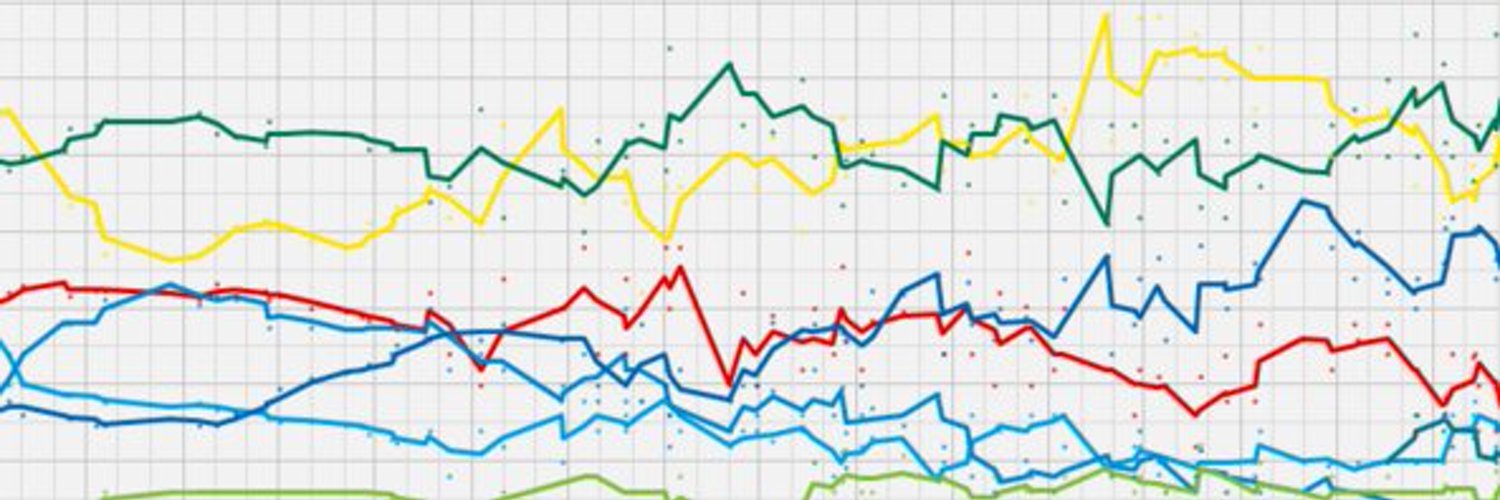
Democrats maintain a consistent advantage across the generic congressional ballot, though the margin fluctuates significantly depending on pollster. Recent surveys show Democrats ranging from 41 percent to 50 percent support, compared to Republicans at 37 percent to 45 percent. The Economist/YouGov poll (June 15) and NBC News survey (June 7) offer the largest samples and show Democrats leading by 4-5 points, while Emerson and Echelon Insights produce larger Democratic advantages at 10 points. Reuters/Ipsos consistently shows the narrowest gap at 3-4 points. The variance reflects methodological differences rather than significant movement, with Democrats' floor appearing near 41 percent and ceiling near 50 percent.
Michigan Senate: El-Sayed Leads Rogers
Syed El-Sayed (D MI-SEN) holds a 5-point lead over John James Rogers (R MI-SEN) in the MIRS/Mitchell Research survey conducted through June 13, capturing 47 percent to 42 percent. The sample size of 827 respondents carries standard polling margin considerations. This represents the only state-level data available in the current dataset and suggests a competitive but Democratic-leaning race at this stage.
Follow the Money
Pennsylvania House Races: Republican Fundraising Advantage Across Competitive Seats
Republican candidates in contested Pennsylvania House races have substantially outraised Democratic opponents. The five leading Republican fundraisers—Brian Fitzpatrick (R PA-01), Rob Bresnahan (R PA-05), Scott Perry (R PA-10), Ryan Mackenzie (R PA-07), and Guy Reschenthaler (R PA-14)—collectively raised 21.97 million dollars compared to 10.15 million for the three tracked Democratic candidates. Brian Fitzpatrick leads all candidates with 5.7 million in receipts and maintains a substantial cash-on-hand advantage at 7.3 million.
Janelle Stelson (D PA-01) trails Fitzpatrick by approximately 1 million dollars in total receipts despite the tossup rating, holding 3.3 million in cash on hand compared to his 7.3 million. Paige Cognetti (D PA-12) and Christopher Deluzio (D PA-17) show limited fundraising relative to their Republican counterparts in competitive districts, suggesting Democratic candidates face resource constraints in targeted races.
Cash-on-hand disparity indicates Republicans can sustain spending through the general election cycle. Fitzpatrick's 7.3 million reserve exceeds total receipts raised by most Democratic candidates, positioning him for extended media and field operations independent of
Headlines
- Forty-one candidates are running for Minnesota’s eight congressional districts this year — the most since 2014 (Ballotpedia News)
Minnesota's 2026 U.S. House races are attracting record candidate participation, with 41 total candidates (22 Democra... - Twelve candidates are running for Wyoming’s At-Large Congressional District this year — the most since 2014 (Ballotpedia News)
Wyoming's At-Large Congressional District has attracted 12 candidates for the 2026 election, marking the highest numb... - Trump endorses James in Michigan governor’s race (The Hill)
President Trump endorsed Rep. John James (R-Mich.) for Michigan governor, calling him an 'America First Congressman' ...
What to Watch
Primary and Runoff Elections: Late June Schedule
New York, South Carolina, Colorado, Illinois, Maryland, Mississippi, Oklahoma, and Utah hold primaries or runoffs between June 23 and June 30. New York and South Carolina vote first on June 23, with contests for Senate, House, and gubernatorial seats. Colorado and Illinois primaries on June 30 will shape races in competitive House districts, particularly CO-08, rated Lean R by Cook Political Report. Monitor turnout patterns and candidate performance in these contests as indicators of momentum heading into the general election cycle.
House Races Requiring Close Attention
Six House races carry Toss Up or Lean R ratings. In California, CA-13 and CA-22 are rated Toss Up, while CA-45 and CA-47 lean Republican. Arizona presents two Toss Up contests in AZ-01 and AZ-06. These districts will test whether Democrats can defend or expand House representation in traditionally contested regions.
Senate Races: Georgia and Florida
Georgia's Senate race leans Democratic while Florida's leans likely Republican, according to Cook Political Report. Georgia will be critical to determining Senate control; movements in either direction warrant tracking. Florida's likely Republican rating suggests a challenging environment for Democratic efforts in that state.
New Polls (0)
No polls with fresh fieldwork today.
How was today's briefing?
Get this briefing in your inbox every morning
Free. No password required. Unsubscribe anytime.