
Exactly 6 states are holding elections today. Kentucky, Georgia, and Pennsylvania are conducting primary day elections, while Idaho, Oregon, and Arkansas are also holding primaries across multiple offices.
Kentucky: Trump's Influence Test in Republican Primary
Kentucky Republicans are voting in Senate and House primaries today with significant outside attention focused on presidential alignment. In the Senate race, Nate Morris (R KY-SEN) leads fundraising with 8.59 million dollars raised and 708,324 dollars cash on hand, followed closely by Garland Barr (R KY-SEN) at 8.34 million raised with 2.39 million cash on hand. Daniel Cameron (R KY-SEN) trails at 2.18 million raised. On the Democratic side, Amy McGrath (D KY-SEN) has raised 2.15 million but maintains only 82,418 dollars cash on hand, a sign of late-stage financial stress. The race carries a "Solid R" rating from Cook Political Report and "Safe R" from Sabato's Crystal Ball, indicating Republican control is not in question.
The House primary is dominated by Trump endorsement dynamics. Rep. Thomas Massie (R KY-04) has raised 5.54 million and holds 608,243 dollars cash on hand but faces presidential opposition after Trump called him "disloyal" ahead of voting. Trump's criticism follows Massie's role in efforts to remove Senator Bill Cassidy from office, establishing a test of whether Trump's anti-endorsement carries primary weight in Kentucky. Adam Arquette (R KY-04) and S. Guthrie (R KY-04) represent alternative conservative choices, with Guthrie holding 1.66 million dollars cash on hand compared to Arquette's zero remaining funds despite raising 4.99 million.
Kentucky also held its first nonpartisan mayoral and Metro Council primary today in Louisville following 2024 legislation that restructured local elections. Results tonight will establish whether Louisville voters accept the new primary-runoff structure and signal any shifts in metropolitan area political composition.
Georgia: Republican Fragmentation as Ossoff Dominates Money Race
Georgia's primary day presents a stark contrast between parties: Jon Ossoff (D GA-SEN) has amassed 60.43 million dollars in total receipts with 32.50 million dollars cash on hand—a commanding financial position that dwarfs Republican opposition in the Senate primary. The Democratic incumbent faces no primary challenge, allowing him to build cash reserves and prepare for the general election uncontested. Multiple rating services including Cook Political Report and Sabato's Crystal Ball rate the Senate race "Lean D" and "Leans D," reflecting the structural advantage Democrats hold in the seat.
Republicans confront a fragmented Senate primary field with no clear consensus candidate. Earl Carter (R GA-SEN) leads Republican fundraising at 6.84 million raised with 1.71 million cash on hand, followed by Michael Collins (R GA-SEN) at 4.53 million raised and Derek Dooley (R GA-SEN) at 3.87 million raised. Reporting from Politico indicates significant voter indecision and lack of frontrunner consolidation within the Republican field, suggesting the eventual nominee may emerge from a crowded field without commanding primary support. This fragmentation creates practical complications for the general election nominee's ability to mobilize primary voters and consolidate party infrastructure quickly.
Georgia's House primaries feature 18 contested contests—the highest number since 2014—with seven Republican and eleven Democratic primaries. Shawn Harris (D GA-HOU) leads House Democratic fundraising at 7.89 million raised, while Houston Gaines (R GA-HOU) and James Kingston (R GA-HOU) lead Republican House candidates in receipts. The Georgia Supreme Court election presents a separate contest today with five candidates competing for three seats, including challenges to incumbents Charlie Bethel, Sarah Hawkins Warren, and retention of Ben Land.
Pennsylvania: Minimal Primary Incumbent Competition Continues Pattern
Pennsylvania's primary elections today feature 416 General Assembly candidates with 218 incumbents seeking re-election—a record high for incumbent participation since 2010. Only 21 incumbents (9.6 percent) face primary challenges, matching 2024's lowest rate and indicating entrenched incumbent protection in state legislative races. This structural pattern limits primary voters' ability to reshape legislative composition through internal party competition and reflects broader advantages sitting legislators possess in securing party nominations.
Brian Fitzpatrick (R PA-01) leads House candidate fundraising with 5.70 million raised and 7.31 million cash on hand—notably, his cash reserves exceed his total receipts, indicating carryover from previous cycles. Janelle Stelson (D PA-HOU) and Rob Bresnahan (R PA-HOU) follow with 4.69 million and 4.51 million raised respectively. House races rated competitive include Pennsylvania's 8th District and Pennsylvania's 7th District, both marked as toss-ups by multiple rating services. Pennsylvania's 17th District rates as "Likely D," with Summer Lee (D PA-17) representing the sole incumbent in a contested House primary statewide.
Pennsylvania General Assembly races show limited primary disruption, with only one incumbent facing significant primary opposition despite representing some of the state's most politically competitive districts. This suggests party establishments are successfully protecting sitting members from grassroots primary challenges and maintaining legislative continuity across partisan lines.
Full coverage on Pennsylvania →
What to Watch Tonight
Kentucky: Monitor whether Trump's anti-endorsement of Massie translates into primary defeat or if the incumbent survives challenger pressure. Track
Polls
Generic Ballot: Democratic Advantage Persists Amid Methodological Variance
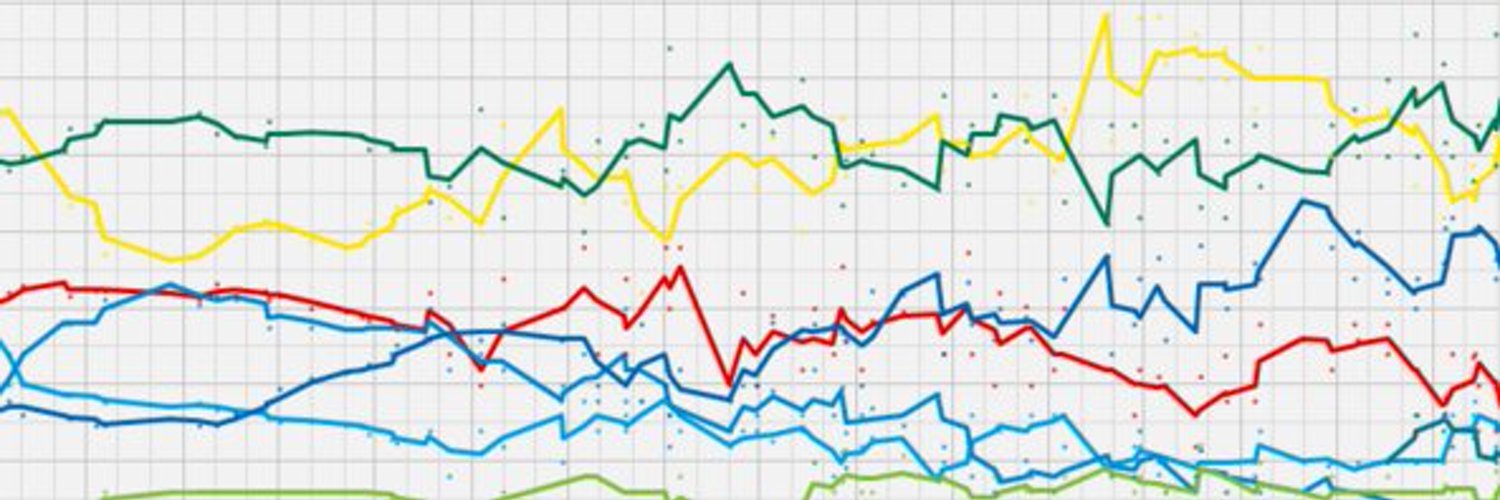
Generic ballot polling from mid-May shows Democrats maintaining a consistent edge, though the magnitude varies significantly across pollsters. Most surveys cluster Democrats between 45–51 percent against Republicans at 39–43 percent. The Economist/YouGov poll (46–43), Wall Street Journal (48–40), and Morning Consult (47–41) suggest leads in the 5–7 point range. Higher-end estimates from Echelon Insights, Data for Progress, and Quinnipiac place the Democratic advantage at 8 percentage points.
The Reuters/Ipsos survey stands as an outlier, showing substantially lower support for both parties (39–38), suggesting either different likely-voter modeling or sample composition effects. The consistency of Democratic leads across methodologically distinct firms—from live-interview Quinnipiac to online Morning Consult—indicates the advantage is not an artifact of a single polling approach. The spread between highest and lowest Democratic estimates (51 to 39 percent) underscores the importance of weighing multiple data sources when assessing congressional ballot positioning.
Follow the Money
Virginia House Races: Cash-on-Hand Disparity Across Districts
Yevgeny Vindman (D VA-07) holds the largest cash reserves of any candidate in today's Virginia House races at 5.27 million dollars, despite the race being rated Lean Republican. Jennifer Kiggans (R VA-07) trails significantly with 3.03 million dollars on hand, leaving Vindman with a 2.24 million dollar advantage in available funds heading into the election.
Robert Wittman (R VA-01) maintains 3.86 million dollars despite minimal recent spending, while James Walkinshaw (D VA-01) has only 796 thousand dollars remaining after 1.48 million in disbursements. This 3-to-1 cash disparity in the Virginia 1st District race reflects divergent fundraising trajectories between the candidates.
Across the dataset, Democratic candidates collectively hold 7.64 million dollars in cash reserves compared to 8.35 million dollars for Republicans, offsetting the typical structural advantage incumbents hold in off-cycle fundraising periods.
Headlines
- Missouri voters to decide amendment to establish Show-Me Prosperity Investment Fund to reduce and eliminate state taxes (Ballotpedia News)
Missouri voters will decide on a constitutional amendment that would establish the Show-Me Prosperity Investment Fund... - SEIU-UHW sponsored initiative that would set spending requirement on patient care for health clinics qualifies for ballot in California (Ballotpedia News)
A union-backed ballot initiative in California has qualified for the general election ballot that would require nonpr... - Missouri voters to decide constitutional amendment to require election of county sheriffs (Ballotpedia News)
Missouri voters will decide on a constitutional amendment requiring the election of county sheriffs in most counties....
What to Watch
May 19 Primary Elections Across Seven States
Five states hold primary elections on May 19, 2026: Arkansas, Georgia, Idaho, Oregon, and Pennsylvania will conduct contests for House and statewide offices. Kentucky holds Senate and House primaries the same day. These elections will determine general election matchups and signal candidate viability in competitive districts. Georgia's Senate primary and gubernatorial race warrant particular attention given the state's status as a perennial swing state.
Texas Runoff and General Election Preview
Texas holds primary runoffs on May 26 for Senate, House, and governor races where no candidate achieved a majority. These results will clarify the general election landscape in the nation's second-largest state.
House Seats to Monitor
Cook Political Report rates six House districts as tossups: AZ-01, AZ-06, CA-13, and CA-22. Two additional California seats—CA-45 and CA-47—lean Republican. CO-08 is rated lean Republican. Senate races in Florida (likely Republican) and Georgia (lean Democratic) remain consequential for chamber control.
New Polls (0)
No polls with fresh fieldwork today.
How was today's briefing?
Get this briefing in your inbox every morning
Free. No password required. Unsubscribe anytime.