
Pennsylvania's General Assembly primary on May 19 will feature a record 218 incumbent candidates seeking re-election, with only 21 facing primary challenges—the lowest number of contested seats in over a decade. The near-absence of intra-party incumbent challenges suggests limited internal party pressure on sitting legislators and reflects broader structural advantages for incumbents in primary elections.
Pennsylvania General Assembly: Incumbents Face Minimal Primary Opposition
Pennsylvania's May 19 primary will field 416 candidates for the General Assembly, including the highest number of incumbent re-election bids since 2010. Only 21 incumbents (9.6%) are contested in their primaries, matching 2024's record low and indicating reduced primary-level electoral competition. The concentration of unopposed incumbents limits party members' ability to reshape legislative delegations through primary mechanisms.
Georgia Senate: Keisha Lance Bottoms Leads Democratic Primary Amid Electability Concerns
Former Atlanta Mayor Keisha Lance Bottoms (D GA-SEN) maintains a consistent polling lead in Georgia's Democratic Senate primary, but party members have begun raising questions about whether her candidacy presents liabilities in a general election matchup against Republican opponents. The internal Democratic anxiety over her viability signals tactical disagreement within the party about nominee selection despite her primary dominance.
California Governor: Affordability Dominates Final Debate Stage
Seven candidates participated in their fifth and final gubernatorial debate Thursday, with gas, grocery, and housing costs emerging as the central campaign focus. The convergence on affordability reflects voter concern intensity on cost-of-living issues across California's candidate field.
What to Watch
Monitor Pennsylvania primary results on May 19 and track whether Georgia Democratic primary voters align with or diverge from party insiders' electability assessments of Bottoms.
This Week in Review
```htmlRedistricting Acceleration: Trump Signals Partisan Map Strategy
President Trump's explicit encouragement to South Carolina Republicans to adopt aggressive redistricting tactics represents a significant shift toward openly directing state legislatures toward partisan advantage ahead of 2026. Trump's directive—to be "bold and courageous" on maps—follows Tennessee's adoption of a congressional district designed to eliminate that state's sole Democratic House member. This pattern signals a coordinated approach by Republican leadership to maximize partisan gains during the current redistricting window, establishing a template likely to influence similar efforts in other Republican-controlled states. The timing is notable: redistricting windows typically occur after decennial censuses, but states retain authority to adjust maps between cycles, and Trump's direct involvement normalizes executive pressure on what has historically been a legislative function.
Nebraska's 2nd District: Powell and Harding Set Up Competitive General
Democrat Denise Powell (D NE-02) advanced from the Democratic primary to face Republican Jeff Harding (R NE-02) in the general election to replace retiring Rep. Don Bacon. Powell, a political fundraiser, defeated State Sen. John Cavanaugh in her primary contest. Nebraska's 2nd District—anchored in Omaha—represents the state's most Democratic-leaning territory while the broader state trends Republican, making the race structurally competitive. Both candidates will enter the general election phase with established profiles, though fundraising reports and polling movement will be critical metrics to monitor heading into fall.
Nebraska Secretary of State Race: Incumbent Evnen Defeated in Primary
Nebraska Secretary of State Bob Evnen (R NE) lost his Republican primary reelection bid to Omaha businessman Scott Petersen (R NE), who won by approximately 6 percentage points. The result signals a shift in Nebraska's Republican primary electorate away from supporting an incumbent elected official in a statewide position. Petersen will advance as the GOP nominee for the state's top elections official, a consequential post during a period of sustained national focus on election administration.
Democratic Endorsement Activity: Buttigieg and Obama Deploy in 2026 Races
High-profile Democratic endorsements accelerated this week across multiple races. Former Transportation Secretary Pete Buttigieg endorsed Josh Turek (D IA-SEN) in Iowa's Democratic Senate primary, choosing between Turek and fellow candidate Zach Wahls. Buttigieg's endorsement leverages his 2020 Iowa caucuses performance to boost Turek heading toward the general election. In Texas, Former President Barack Obama campaigned directly for State Rep. James Talarico (D TX-SEN), meeting with him and gubernatorial candidate Gina Hinojosa in Austin. These endorsements indicate national Democratic investment in competitive Senate and statewide races during the primary-to-general transition period.
State-Level Election and Fiscal Measures: Colorado TABOR, Hawaii Corporate Spending, California Primaries
Colorado's legislature advanced Senate Bill 135 to the November 2026 ballot, which would permit the state to retain revenue exceeding the Taxpayer Bill of Rights constitutional cap and allocate it exclusively to K-12 education funding and operational costs. The measure directly tests voter appetite for circumventing a 1992 constitutional constraint that has limited discretionary spending for three decades. Passage would require voter approval and would represent substantive fiscal restructuring within the state.
Hawaii legislators advanced Senate Bill 2471 to Governor Joshua Green that would prohibit corporations from directly spending money or participating in election and ballot measure activities. The legislation seeks to restrict corporate political engagement by redefining corporate powers under state law, representing a targeted attempt to limit financial influence in electoral contests. The measure awaits gubernatorial action.
California consultant Steve Maviglio filed a ballot initiative for the 2028 election cycle that would repeal the state's top-two primary system adopted in 2010. The proposed measure reflects ongoing debate over whether the current system has affected candidate selection patterns and legislative behavior. California voters would require approval to restore the previous partisan primary structure, making this a consequential procedural question heading toward 2028.
Week in Context: Partisan Positioning and Structural Questions
The week's developments cluster around two distinct themes: Republican tactical positioning for 2026 through redistricting acceleration, and Democratic deployment of high-profile endorsements in targeted races. Simultaneously, states are advancing competing visions
Polls
Generic Ballot: Democratic Advantage Widens
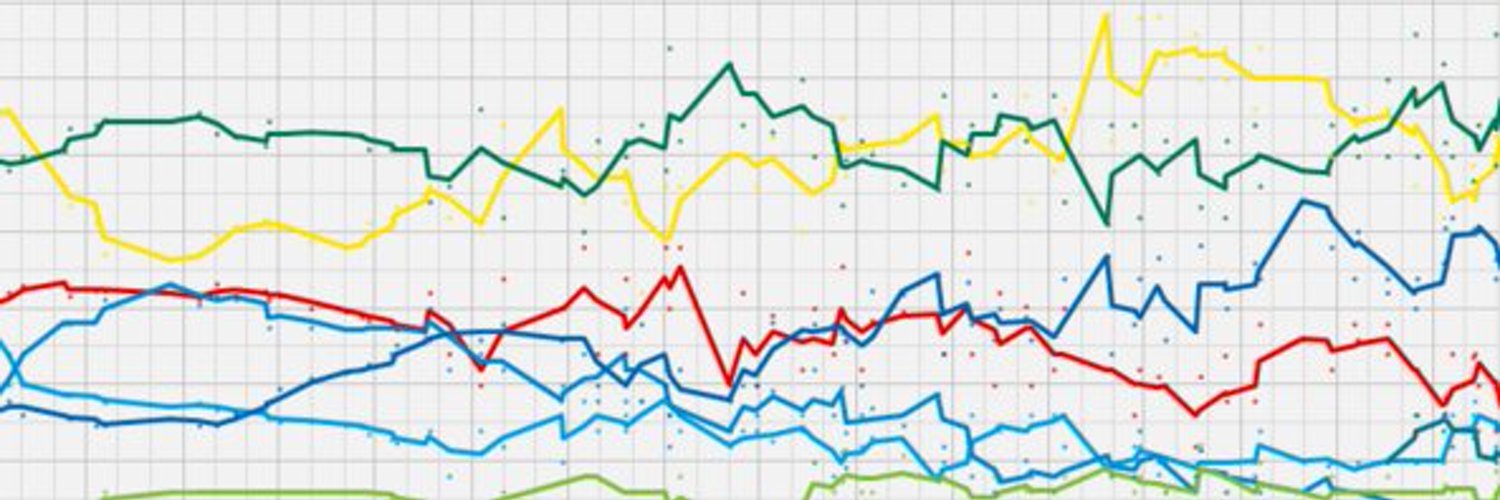
Recent generic ballot polling shows Democrats maintaining a consistent lead heading into the 2026 midterms. Across ten polls conducted between May 4-11, Democrats averaged 48.3 percent support compared to 41.2 percent for Republicans—a 7.1-point spread. The range is notable: Atlas Intel's May 7 survey showed the widest gap at 15 points (55-40), while Reuters/Ipsos on May 11 registered the narrowest at 6 points (41-35). Financial Times and RMG Research both showed 8-point advantages for Democrats. The consistency of the trend across multiple pollsters and methodologies suggests sustained Democratic positioning rather than statistical noise.
North Carolina Senate: Cooper Leads Whatley
In the North Carolina Senate race, Roy Cooper (D NC-SEN) holds a 11-point lead over Chuck Whatley (R NC-SEN) in a Carolina Journal/Harper poll ending May 11, 50-39 percent. The 600-sample survey indicates significant support for Cooper in a state where Senate races have trended competitive in recent cycles.
Michigan Senate: Competitive Race
Michigan's Senate contest shows a statistical tie. Abdel El-Sayed (D MI-SEN) trails Peter Moolenaar (R MI-SEN) 41-42 percent in a MIRS/Mitchell Research poll from May 7, marking one of the tightest races in the available data.
Follow the Money
New Hampshire Senate: Pappas Commands Substantial Financial Advantage
Chris Pappas (D NH-SEN) holds a commanding financial position with 9.86 million in total receipts and 4.22 million cash on hand, compared to 5.64 million combined receipts from both Republican candidates. John Sununu (R NH-SEN) has raised 2.48 million with 1.89 million cash on hand, while Scott Brown (R NH-SEN) trails at 1.66 million raised and 783k remaining. The disparity reflects Pappas's established fundraising infrastructure as an incumbent House member transitioning to a statewide race.
Pappas has spent 6.04 million against Sununu's 583k and Brown's 881k, indicating early campaign activity and organization building. Sununu's low disbursement relative to receipts suggests a delayed spending timeline, while Brown has nearly exhausted his cash reserves. The race's Lean D rating appears consistent with Pappas's financial dominance, though both Republican candidates' combined resources exceed individual totals in many competitive races.
Headlines
- Most incumbents running for re-election and the fewest incumbents contested in the primaries for Pennsylvania’s General Assembly since 2010 (Ballotpedia News)
Pennsylvania's May 19 primary elections will feature 416 candidates for the General Assembly, including a record 218 ... - Candidates face off on affordability in final California gubernatorial debate (The Hill)
Seven candidates for California governor participated in their fifth and final debate Thursday, with affordability em... - Keisha Lance Bottoms’ lead is making some Georgia Democrats uneasy (Politico)
Former Atlanta Mayor Keisha Lance Bottoms leads Georgia's Democratic Senate primary but faces growing concerns from p...
What to Watch
Arizona House Races
AZ-01 and AZ-06 are both rated tossups by Cook Political Report, making Arizona a key battleground for House control. Both districts have seen shifting demographics and voter registration patterns in recent cycles. Monitor early voting data and ground operation spending in these races as indicators of each party's resource allocation and confidence levels.
California's Competitive Seats
CA-13 and CA-22 are tossups, while CA-45 and CA-47 lean Republican. These four races collectively represent significant potential for seat gains in a state Democrats have long dominated. Watch for changes in Cook's ratings on the two leans-R districts, as movement toward tossup status would signal Democratic momentum in suburban coastal areas.
Senate Races
The Florida Senate race is rated Likely Republican, while the Georgia Senate race leans Democratic. Georgia remains the more volatile of the two; track polling shifts and turnout indicators in metro Atlanta and rural regions. Florida's trajectory will depend heavily on Hispanic voter performance relative to 2022 benchmarks.
New Polls (0)
No polls with fresh fieldwork today.
How was today's briefing?
Get this briefing in your inbox every morning
Free. No password required. Unsubscribe anytime.