
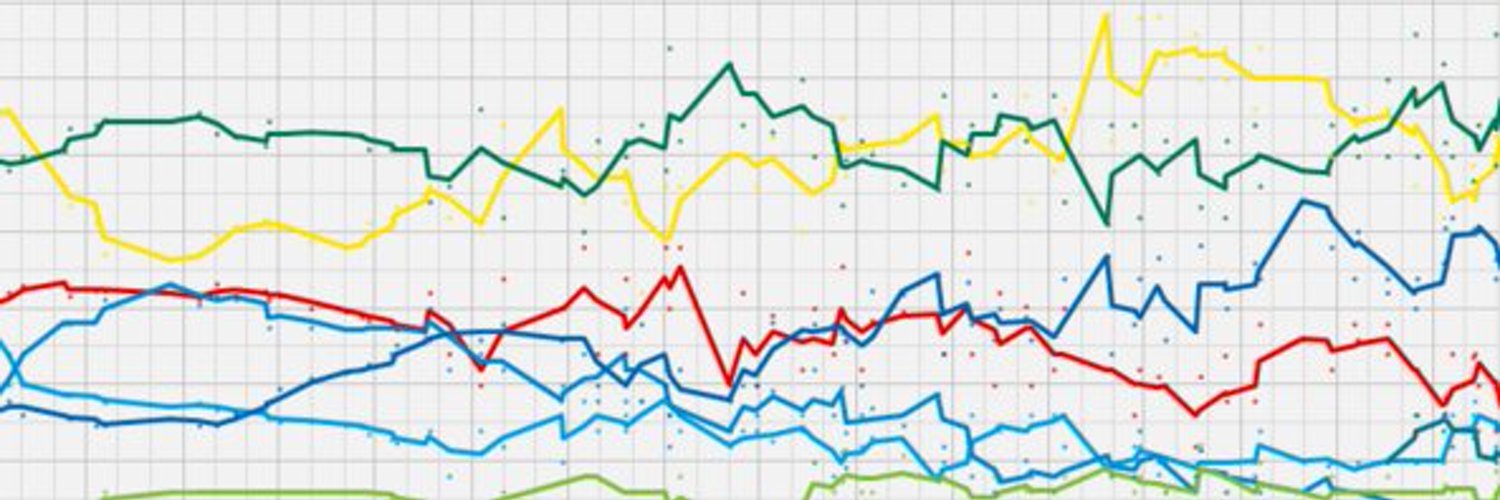
Democrats are entering the midterm cycle with early strategic positioning, while questions linger over endorsement dynamics in key 2026 races. Congress continues grappling with recurring shutdown disputes as fiscal negotiations drag into the new year.
Democratic Midterm Strategy: Emanuel's Six-Point Plan
Former White House chief of staff Rahm Emanuel unveiled a "six for '26" Democratic midterm agenda during remarks at Saint Anselm College's New Hampshire Institute of Politics. The proposal outlines six legislative priorities intended to shape Democratic messaging ahead of the 2026 elections. The plan signals early party preparation for the midterm cycle.
California Senate Race: Trump Endorsement Effect
Former President Donald Trump's endorsement in California's 2026 Senate race is drawing scrutiny as a potential decisive factor. The endorsement's impact on candidate positioning and primary dynamics remains unclear.
Congressional Dysfunction: Shutdown Tactics
Representative Jim Himes (D CT-04) criticized lawmakers for routinely employing government shutdowns as negotiating leverage, citing the unfunded Department of Homeland Security as evidence of institutional dysfunction. The pattern reflects recurring legislative gridlock over appropriations.
```Polls
```htmlGeneric Ballot: Democratic Lead Persists Across Surveys
Recent generic ballot polling shows Democrats maintaining a consistent advantage heading into the 2026 midterm cycle. Across ten surveys conducted over the past two weeks, Democrats average 47.1 percent support compared to 41.9 percent for Republicans, a 5.2-point gap. The range spans from Reuters/Ipsos at a narrower 2-point spread to Harvard-Harris at 4 points, with most major pollsters clustering between 5 and 7 points. The consistency of the advantage across methodologically different firms—from Morning Consult's large 2,203-person sample to smaller outlets—suggests the pattern reflects genuine underlying sentiment rather than outlier variation.
The most recent data from Cygnal (April 3) shows Democrats at 49 percent, their highest mark in this dataset, with Republicans at 43 percent. This represents a potential tightening baseline compared to earlier March surveys, though the sample size of 1,500 carries standard margins of error. Current generic ballot positioning typically correlates with House environment strength, though historical precedent warns against treating midterm-year polling as predictive of final outcomes.
North Carolina Senate: Cooper Leads Whatley
Roy Cooper (D NC-SEN) holds a 49-44 lead over Chuck Whatley (R NC-SEN) in a Quantus Insights survey ending April 1, with a sample of 987 respondents. The 5-point advantage places the race in competitive territory, though the modest sample size warrants caution in interpretation.
```Follow the Money
California House Race: Democratic Financial Advantage
Democrats hold a substantial fundraising lead in this contest. Combined receipts for Rohit Khanna (D CA-13), Saikat Chakrabarti (D CA-13), Pete Aguilar (D CA-31), Derek Tran (D CA-39), Scott Wiener (D CA-11), George Whitesides (D CA-27), and Adam Gray (D CA-13) total approximately 34.5 million dollars, compared to roughly 20.9 million for Republican candidates Young Kim (R CA-40), Ken Calvert (R CA-41), and David Valadao (R CA-20).
Rohit Khanna (D CA-13) leads all candidates with 11.4 million in receipts and maintains the largest cash position at 16.1 million, despite modest spending to date. Young Kim (R CA-40) trails significantly with 7.6 million in receipts and 5.7 million cash on hand, though she has spent less than half of what Khanna has deployed.
Saikat Chakrabarti (D CA-13) has nearly exhausted his cash reserves (208,000 remaining) after spending 4.9 million of 5.1 million raised, indicating intensive late
Headlines
- Swalwell-FBI clash draws attention to Trump foe’s California governor bid (The Hill)
Rep. Eric Swalwell (D-Calif.), a Democratic gubernatorial candidate, has sent a cease-and-desist letter to the FBI ov... - Narrow majority in Virginia backs redistricting to favor Democrats: Poll (The Hill)
A narrow 52% majority of Virginia voters support a redistricting measure that would favor Democrats in upcoming House... - Us Democrats Must Take Ownership for Our Failures (RealClearPolitics)
A Democratic commentary argues that California Democrats must take responsibility for their role in enabling Donald T...
What to Watch
House Competitive Races in Southwest and California
Four House races rated as tossups merit close monitoring. In Arizona, AZ-01 and AZ-06 remain evenly matched according to Cook Political Report. California presents two additional tossups: CA-13 and CA-22. These districts will test whether either party can consolidate advantages in traditionally competitive suburban terrain. Watch for late polling releases and candidate spending patterns in these districts, which often signal campaign confidence assessments.
Senate Races: Georgia and Florida
Georgia's Senate race is rated Lean D by Cook Political Report, making it one of the cycle's most competitive statewide contests. Meanwhile, Florida's Senate race carries a Likely R rating from Sabato's Crystal Ball, suggesting a steeper Democratic climb in that state. Movement in either race would signal significant shifts in the overall Senate environment.
Additional House Races to Monitor
CA-45 and CA-47 are rated Lean R, while CO-08 carries the same designation. Iowa's 1st District is rated Likely R. These races represent potential pickup opportunities or consolidation points depending on national conditions and local dynamics.
New Polls (0)
No polls with fresh fieldwork today.
How was today's briefing?
Get this briefing in your inbox every morning
Free. No password required. Unsubscribe anytime.