
Sabato's Crystal Ball reclassified three Senate races this week, moving North Carolina to Leans Democratic and shifting Alaska and Ohio to Toss-ups. The shifts signal potential Democratic gains in traditionally competitive battlegrounds, though forecasters maintain that the overall Senate majority race remains competitive rather than favoring either party decisively.
Senate Ratings: Three Races Shift Democratic Direction
Sabato's Crystal Ball upgraded North Carolina from Toss-up to Leans Democratic this week, reflecting movement in a race previously viewed as highly competitive. Simultaneously, Alaska and Ohio moved into Toss-up territory, indicating tightening conditions in both states. These changes suggest Democrats are gaining ground in specific Senate battlegrounds, though the outlet noted that the overall race for majority control remains genuinely competitive rather than tilted toward either party.
California: Vote Counting Extends Nine Days After Primary
Nine days after California's primary election, vote counting remains ongoing in races including the state's Senate contest. The extended timeline reflects California's procedures for processing absentee and mail-in ballots, which take significantly longer than in-person voting tallies. The delayed results underscore the gap between election day and final outcomes in high-volume mail-in states, a pattern that has become standard in California and affects when race outcomes are officially determined.
Watch tomorrow for updated California primary results and any subsequent shifts in forecaster ratings for competitive Senate and House races.
Polls
Generic Ballot: Democratic Advantage Widens
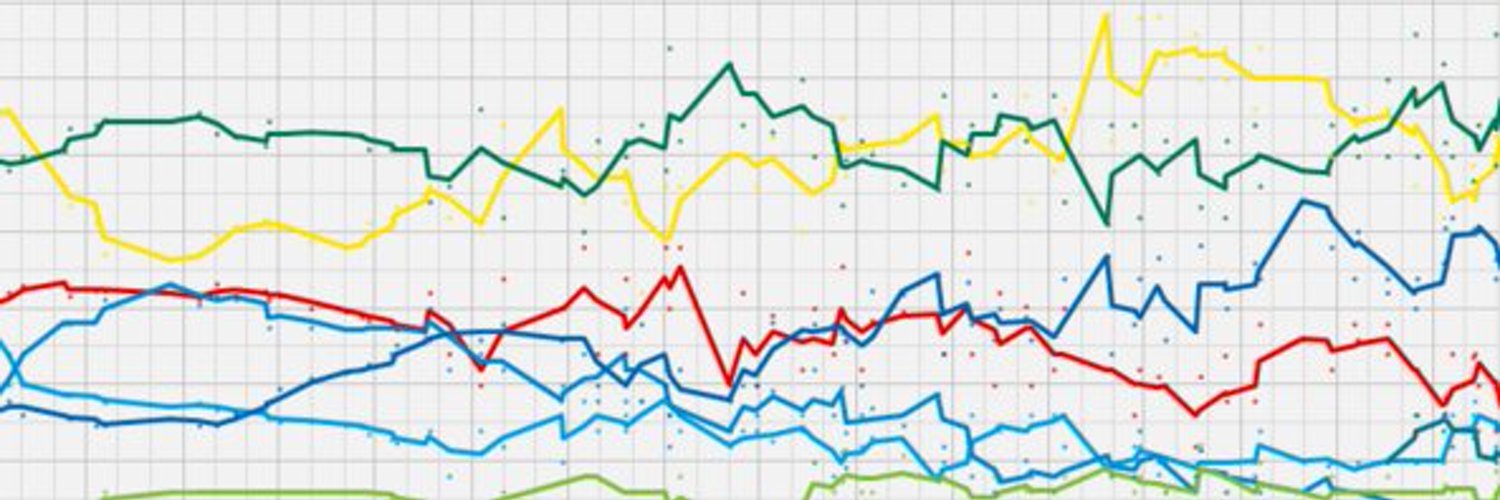
Recent generic ballot polling shows Democrats maintaining a consistent edge over Republicans ahead of the 2026 midterms. Across ten surveys conducted in early June, Democrats average 47.4 percent to Republicans' 42.2 percent, a 5.2-point gap. The range spans from a 4-point advantage (Reuters/Ipsos) to an 8-point lead (Harvard-Harris). Most polls cluster between 45-49 percent for Democrats and 41-45 percent for Republicans, suggesting modest but persistent support for the party in power.
Sample size variations merit scrutiny. Reuters/Ipsos polled 4,531 respondents, providing greater statistical reliability than smaller surveys like Cygnal (1,500). The Big Data Poll's 13-point Democratic lead stands as an outlier and warrants caution given potential methodological differences. Most credible surveys indicate a narrower but stable Democratic advantage in the 4-6 point range.
Ohio Senate: Brown Leads Husted
In the Ohio Senate race, Sherrod Brown (D OH-SEN) leads Jon Husted (R OH-SEN) 53-45 percent in FOX News' survey of 1,105 respondents, a decisive 8-point margin. This represents significant Democratic strength in a traditionally competitive state.
Follow the Money
Maine Senate: Platner's Financial Edge Masks Depleted Cash Position
Graham Platner (D ME-SEN) leads the race in total fundraising with 16.3 million in receipts, but has spent aggressively—disbursing 14.1 million while retaining only 2.2 million cash on hand heading into the general election. This burn rate exceeds his available resources by a significant margin, leaving limited runway for the fall campaign against Susan Collins (R ME-SEN).
Collins (R ME-SEN) operates from a fundamentally different financial position. Her 12.2 million in total receipts trails Platner substantially, but she has spent only 5.1 million, leaving 9.7 million cash on hand—more than four times Platner's remaining funds. This cash cushion provides Collins significant flexibility for the remaining campaign period without additional fundraising constraints.
The secondary Democratic candidates—Janet Mills (D ME-SEN), Jordan Wood (D ME-SEN)—have raised 5.8 million and 5.7 million respectively but depleted nearly all resources, leaving minimal cash reserves. Both candidates' spending patterns indicate they functioned as primary challengers rather than general election contenders.
Headlines
- California’s election results timeline and what to know about how states count absentee/mail-in ballots (Ballotpedia News)
Nine days after California's primary election, vote counting remains ongoing, highlighting the extended timeline for ... - The Senate: The Race for the Majority is Not a Toss-up, But the Races That Will Decide It Are (Sabato Crystal Ball)
Sabato's Crystal Ball made three Senate rating changes favoring Democrats this week, moving North Carolina to Leans D...
What to Watch
Arizona House Races: AZ-01 and AZ-06
Both Arizona's 1st District and 6th District remain rated as tossups by Cook Political Report, making them critical bellwethers for House control. These districts have shown volatility in recent cycles, with performance diverging from statewide trends. Monitor early voting patterns and cash-on-hand reports over the coming weeks, as both races will likely see significant spending from national party committees.
California's Competitive Seats: CA-13, CA-22, CA-45, and CA-47
California's 13th and 22nd Districts are tossups, while CA-45 and CA-47 lean Republican. These four seats will collectively signal whether Democrats can hold ground in the state's suburban regions. CA-45 and CA-47 are particularly worth tracking for any movement toward Democratic territory, which would suggest a stronger-than-expected cycle for the opposition.
Senate Races: Georgia and Florida
Georgia's Senate race rates as lean Democratic, while Florida is likely Republican. Georgia remains the more competitive seat and could determine Senate control depending on results elsewhere. Watch for polling movement in both races through the final weeks, as they will anchor regional and national narratives.
How was today's briefing?
Get this briefing in your inbox every morning
Free. No password required. Unsubscribe anytime.