
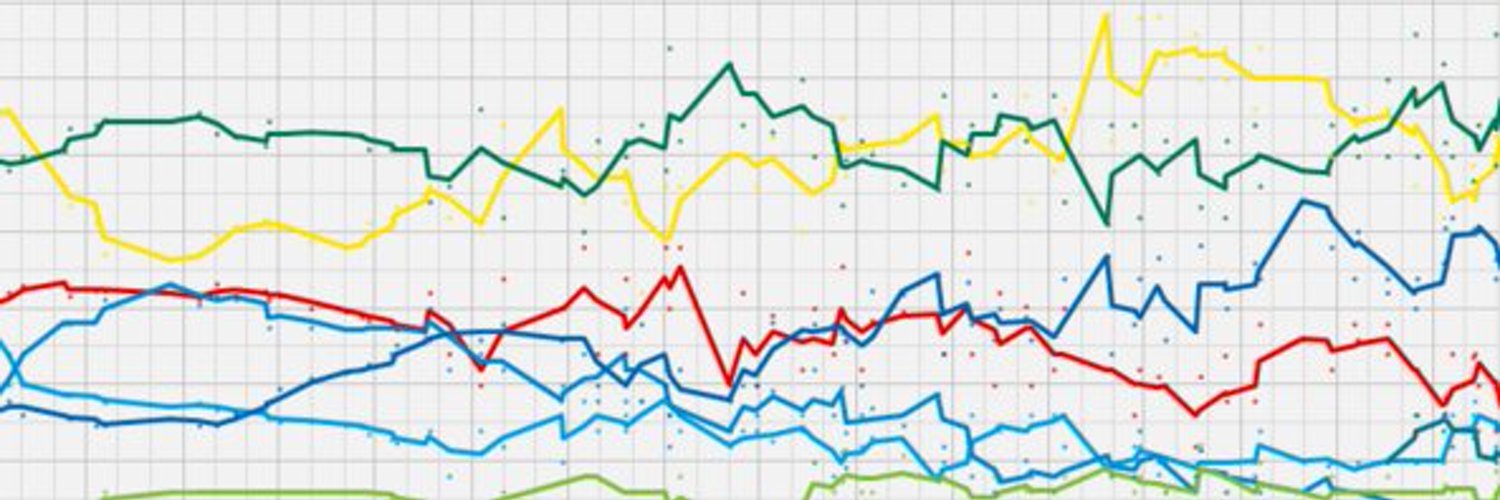
Generic Ballot: Democratic Lead Narrows Amid Methodological Divergence
Two national generic ballot surveys released today show continued Democratic positioning but with widening measurement gaps depending on sample construction. CBS News (2,264 adults) measured Democrats at 45 percent versus Republicans at 40 percent among an unspecified population type. TIPP (1,264 registered voters) recorded Democrats at 46 percent and Republicans at 44 percent. The five-point CBS spread versus the two-point TIPP margin reflects the persistent methodological variance that has characterized generic ballot measurement throughout February.
Today's releases show compression from the four-point Democratic advantages recorded by Economist/YouGov and Reuters/Ipsos on February 25 and 26, suggesting the Democratic edge may be stabilizing in the 2-5 point range rather than the 9-point likely voter measurement from mid-month. The CBS figure of 45 percent Democratic support aligns with the lower end of Democratic positioning observed across recent high-frequency pollsters, while TIPP's 46 percent Democratic reading sits at the upper boundary. Republican support ranges from 40-44 percent across recent releases, indicating less volatility on the Republican side.
The shift toward tighter margins warrants continued monitoring for evidence of genuine voter movement versus seasonal survey fluctuation. Additional releases from Reuters/Ipsos or Economist/YouGov over the coming days will clarify whether current two-to-five point Democratic positioning represents the operative aggregate heading into March.
``` ```This Week in Review
```htmlGeneric Ballot: Week of Sharp Compression
The national generic ballot contracted sharply this week, moving from a nine-point Democratic advantage on February 19 to a 50-50 tie by February 26. Two intermediate surveys released February 24-25 showed Democrats holding two-to-four point leads, positioning the week's trajectory as a steady compression rather than a sudden collapse. The movement tracks across multiple pollsters with varying sample sizes, suggesting either genuine voter movement or accumulating methodological variance across different survey designs.
The range of outcomes this week—from +9 Democratic to tied—underscores the measurement uncertainty inherent in national preference polling this far from the general election. Reuters/Ipsos (3,686 respondents) and Economist/YouGov (1,402 respondents) both recorded Democratic leads in the two-to-four point range, while Harvard-Harris (1,999 respondents) showed exact parity. The larger sample size of Reuters/Ipsos typically produces more stable estimates, though all three surveys fall within expected statistical ranges given their respective sample sizes. The divergence highlights how methodological choices—universe definition, likely voter screening, weighting procedures—produce meaningfully different results at the aggregate level.
Whether this week's compression reflects genuine voter movement toward Republicans or normal polling fluctuation remains unclear. Single-pollster readings, particularly when released four days apart, carry limited predictive weight this far from Election Day. Confirmation from high-frequency pollsters over the coming days will establish whether 50-50 represents a sustained equilibrium or a momentary data point in a volatile measurement landscape. Absent corroborating releases, the week's closing position should be treated as a data point rather than a trend.
``` ```Polls
| National Generic CBS News (n=2264 A) | Democrats 45.00% · Republicans 40.00% |
| National Generic TIPP (n=1264 RV) | Democrats 46.00% · Republicans 44.00% |
Follow the Money
Fundraising Disparity in Competitive Virginia House Race
Yevgeny Vindman (D VA-02) has built a substantial financial advantage in this lean-Republican district, raising 9.67 million dollars against Jennifer Kiggans (R VA-02)'s 4.75 million. Vindman retains 5.27 million in cash on hand compared to Kiggans's 3.03 million, translating to a 74 percent liquidity advantage heading into the final stretch. The Democrat's 2-to-1 fundraising edge is unusual in a district rated toward the Republican incumbent.
Spending patterns reveal divergent strategies. Vindman has deployed 4.54 million dollars (47 percent burn rate), suggesting sustained advertising and field operations. Kiggans has spent only 1.76 million (37 percent burn rate), preserving capital despite trailing in total receipts. Her lower disbursement rate may indicate either resource constraint or a late-cycle advertising strategy.
James Walkinshaw (D VA-02) trails both frontrunners with 2.28 million raised and 796,000 cash on hand, positioning him as a distant third in a three-candidate Democratic primary or general election scenario depending on district boundaries.
Headlines
Visit pollingsource.com for the latest political news.
What to Watch
House Tossups in Arizona and California
Arizona's 1st District and Arizona's 6th District remain rated tossups by Cook Political Report, making both seats potential swing points in the chamber's balance. Meanwhile, California's 13th District and California's 22nd District also carry tossup ratings, concentrating competitive House terrain in the Southwest. Monitor early voting data and internal polling releases from these districts for signals about candidate momentum and turnout patterns.
Senate Race to Watch: Georgia
Georgia's Senate race is rated lean Democratic by Cook Political Report, representing one of the chamber's genuinely competitive contests. Tracking polling movement, spending levels, and candidate event schedules in Atlanta and surrounding metro areas will provide insight into whether the race tightens or consolidates.
Leaning Republican House Districts
California's 45th District (lean Republican per Inside Elections
How was today's briefing?
Get this briefing in your inbox every morning
Free. No password required. Unsubscribe anytime.