
Generic Ballot: Dead Even in Harvard-Harris Survey
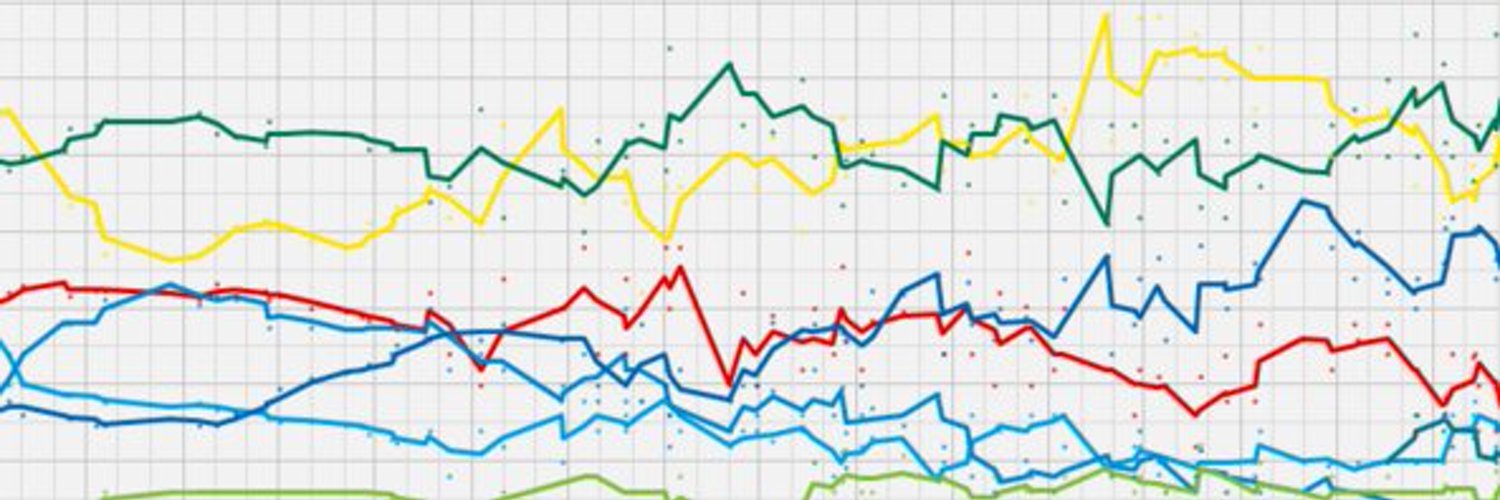
Harvard-Harris released a national generic ballot survey today showing Democrats and Republicans tied at 50 percent each among 1,999 registered voters. The finding represents a compression from earlier this week's measurements, which ranged from a two-point Democratic advantage to a nine-point spread depending on sample construction and likely voter screening.
The even split contrasts with the two-to-four point Democratic positioning recorded by Reuters/Ipsos and Economist/YouGov on February 24 and 25. Aggregate movement toward parity over four days reflects either genuine voter shifts or methodological variance inherent in surveys of this size. Harvard-Harris's registered voter universe and sample size place it in the middle range of recent releases by respondent count.
The week's trajectory—from a nine-point Democratic advantage Wednesday to parity today—warrants monitoring for confirmation. If additional releases from major pollsters converge near 50-50, it would signal compression of the Democratic advantage observed in mid-week measurements. Single-pollster readings this volatile this far from the general election carry limited predictive weight.
Watch for releases from Reuters/Ipsos, Economist/YouGov, or other high-frequency pollsters over the weekend to determine whether today's even split represents a genuine trend or normal statistical fluctuation.
```Polls
| National Generic Harvard-Harris (n=1999 RV) | Democrats 50.00% · Republicans 50.00% |
Follow the Money
NY House Race: Democratic Fundraising Dominance Masks Spending Efficiency Disparities
Alexandria Ocasio-Cortez (D NY-14) commands the financial landscape with 27.7 million in total receipts and 14.7 million cash on hand, but her spending rate reveals intensive resource deployment. She has burned through 60.5 percent of receipts (16.8 million disbursed), the fastest rate among top Democratic contenders, suggesting heavy investment in field and media operations or preparation for a competitive general election environment.
Ritchie Torres (D NY-15) presents an anomaly: 5.9 million raised but 14.8 million cash on hand, indicating either substantial transfers from external committees or prior-cycle reserves. His 44 percent disbursement rate is the most conservative among listed candidates, leaving maximum flexibility for late-stage spending. In contrast, Peter Chatzky (D NY-22) and Hakeem Jeffries (D NY-13) each spent roughly 52 percent of receipts, maintaining moderate cash positions.
Michael Lawler (R NY-17) shows the tightest Republican position, with 6.7 million raised but only 39.5 percent spent—substantially lower deployment than Democratic counterparts. This retention suggests either late-cycle strategy or constrained fundraising momentum relative to competitive Democratic efforts across these New York seats.
Headlines
Visit pollingsource.com for the latest political news.
What to Watch
Southwest House Races Entering Critical Phase
Arizona's 1st and 6th Districts (AZ-01, AZ-06) and California's 13th and 22nd Districts (CA-13, CA-22) remain rated tossups by the Cook Political Report, indicating tight competition with minimal structural advantage to either party. These four seats will likely determine overall House margin shifts in the Southwest. Monitor early voting data and candidate spending allocations in coming weeks, as resource deployment often signals confidence levels in competitive terrain.
Senate Dynamics in Georgia and Florida
Georgia's Senate race (D GA-SEN) is rated lean Democratic by the Cook Political Report, while Florida's Senate seat (R FL-SEN) carries a likely Republican rating from Sabato's Crystal Ball. The Georgia race remains the only Democratic-leaning statewide contest in this cycle. Watch for movement in Georgia polling, particularly among independent and suburban voters, as this seat could determine Senate control under various scenarios.
California Lean Republican Contests
California's 45th and 47th Districts (CA-45, CA-47) are rated lean Republican, suggesting Republican structural advantages in coastal territory traditionally Democratic. These seats merit attention as indicators of whether Republicans can consolidate gains in traditionally blue areas.
How was today's briefing?
Get this briefing in your inbox every morning
Free. No password required. Unsubscribe anytime.