
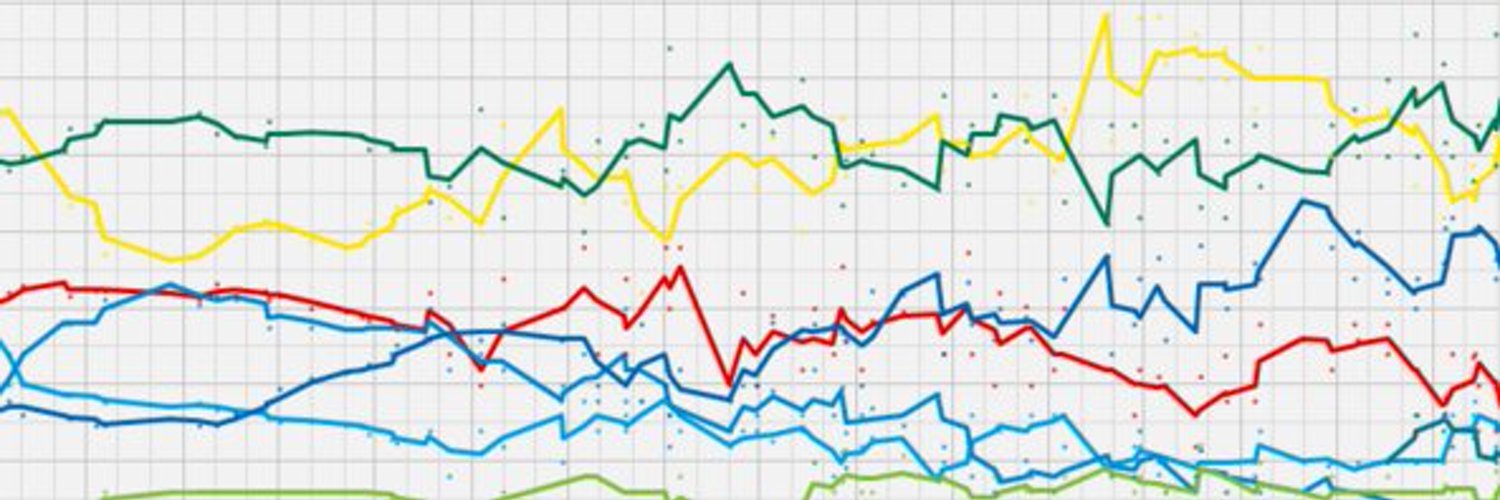
Generic Ballot: Democratic Lead Holds at 4-6 Points
National generic ballot polling this week showed consistent Democratic advantages, with results clustering around a 4-6 percentage point lead over Republicans. Emerson measured the gap at 6 points (48-42 percent), Economist/YouGov at 4 points (43-39 percent with 18 percent undecided), and Quantus Insights at 6 points (47-41 percent). The persistence of this range across multiple pollsters and methodologies suggests a genuine baseline Democratic preference at the aggregate level, though significant variance remains depending on voter screen and weighting decisions.
The methodological differences driving variation merit attention. Surveys using registered voter screens—like Quantus Insights—produced results at the higher end of the Democratic range, while surveys using likely voter models generated tighter margins. Sample sizes also varied substantially, from 1,000 respondents in Emerson's survey to 1,549 in Economist/YouGov's poll. These technical distinctions are not noise but reflect real choices about which population each firm believes will actually vote.
At this stage in the cycle—nearly two years before the 2026 general election—generic ballot aggregates carry limited utility for forecasting seat outcomes. District-level candidate quality, incumbent vulnerability profiles, and spending patterns will prove far more predictive of the eventual House composition than current national preference measures. The briefing appropriately cautioned against over-interpreting week-to-week movements or convergence around any particular numerical range.
What the Week Signals
The week's polling consistency suggests that any Democratic edge is neither collapsing nor expanding dramatically. The 4-6 point range represents relative stability rather than trend. Whether this reflects a durable structural advantage or merely a snapshot from a period of low political salience remains unclear. The influx of candidate announcements and early fundraising reports will provide more actionable intelligence than additional national surveys conducted at similar remove from election day.
Observers should monitor whether next week's releases continue to cluster within the current range or revert to the wider 2-8 point volatility observed in earlier reporting. Sustained convergence would suggest methodological consensus around Democratic positioning; renewed divergence would indicate that pollster choices about voter composition remain consequential and that no stable aggregate preference has yet solidified.
```Polls
Generic Ballot: Democratic Lead Persists Across Polls
Recent generic ballot surveys show Democrats maintaining a consistent advantage heading into the 2026 midterm cycle. Across ten polls conducted between January 13-22, Democrats averaged 45.9 percent support compared to 41.2 percent for Republicans, a 4.7-point gap. Most surveys cluster tightly in the 47-48 percent range for Democrats, with Republican support ranging from 38 to 43 percent. The NY Times/Siena poll (1,625 respondents) and Emerson survey (1,000 respondents) both showed Democrats at 48 percent, representing the high-water mark for the party across this period.
Reuters/Ipsos returned the narrowest margin at 2 points, with Democrats at 40 percent and Republicans at 38 percent—the only survey where both parties failed to reach the low 40s. Morning Consult's larger sample (2,201 respondents) showed the tightest competitive environment, with Democrats at 45 percent and Republicans at 43 percent. The consistency of the Democratic advantage across methodologically different firms suggests the current environment favors the party, though the absence of significant undecided populations in these generic measures warrants caution in interpretation.
North Carolina Senate: Cooper Holds Substantial Lead
Roy Cooper (D NC-SEN) leads Chuck Whatley (R NC-SEN) 48 to 24 percent in a TIPP survey of 1,512 respondents conducted through January 15. The 24-point margin and substantial undecided pool (28 percent implied) suggest the race remains in early formation, with significant persuadable voters remaining in the electorate.
Follow the Money
Ohio Senate: Sherrod Brown's Cash Advantage
Sherrod Brown (D OH-SEN) reported 25.98 million in total receipts with 17.03 million cash on hand, the largest war chest among the candidates in this filing. His 8.95 million in disbursements reflects active spending, though his cash position remains substantially ahead of typical competitive Senate races. The Ohio seat is a key 2024 battleground in a state that has trended Republican in recent cycles.
Michigan Senate: Competing Democratic Campaigns
Haley Stevens (D MI-SEN) and Mallory Mcmorrow (D MI-SEN) are both running in Michigan's Senate race with similar funding levels. Stevens has raised 8.87 million with 3.39 million remaining, while Mcmorrow has raised 8.62 million with 3.69 million on hand. Both candidates show high disbursement rates relative to cash on hand, indicating sustained spending throughout their campaigns.
Kentucky Senate: Morris Depletes Resources
Nate Morris (R KY-SEN) reported 8.59 million in total receipts against 7.88 million in disbursements, leaving only 708,324 in cash on hand. His exceptionally low cash position relative to fundraising suggests either late-stage spending intensity or resource constraints heading into the final phase of the race. This funding posture contrasts sharply with Brown's substantial reserve.
Headlines
Visit pollingsource.com for the latest political news.
What to Watch
House Races in Southwest and California Tossups
Four House races rated as tossups merit close monitoring: AZ-01 and AZ-06 in Arizona, along with CA-13 and CA-22 in California. These seats will test Democratic performance in areas where margins have tightened in recent cycles. Watch for shifts in early voting patterns and candidate spending allocations as indicators of which campaigns view their position as strengthening or weakening.
Senate Races: Georgia and Florida Diverging
Georgia's Senate race, rated Lean Democratic (D GA-SEN), remains the most competitive statewide contest on the board. Polling movement in this race will signal broader regional trends. By contrast, Florida's Senate race (R FL-SEN) is rated Likely Republican, indicating the Republican candidate has built a more durable lead. Movement in either direction would carry outsized significance for overall Senate balance projections.
Lean Republican House Districts
Three House seats lean Republican: CA-45, CA-47, and CO-08. Track whether Democratic challengers can narrow deficits in suburban areas where party performance has shifted in recent elections. IA-01, rated Likely Republican, represents a Democratic vulnerability in traditionally marginal territory.
How was today's briefing?
Get this briefing in your inbox every morning
Free. No password required. Unsubscribe anytime.