
Exactly six states hold elections today: Maine, South Carolina, and North Dakota conduct primary elections, while Virginia, Mississippi, and Nevada hold general elections and primaries in various combinations. Maine's Democratic Senate primary dominates the field as frontrunner Graham Platner (D ME-SEN) confronts intensifying party doubts, while general election contests in Virginia test Democrats' legislative gains and incumbency advantages.
Maine: Platner's Primary Viability Under Pressure
Maine Democrats face a consequential choice in their Senate primary on Tuesday. Graham Platner (D ME-SEN), an oysterman and political newcomer, leads in fundraising with 16.3 million in total receipts but holds only 2.2 million in cash on hand as primary day arrives. Governor Janet Mills (D ME-SEN) remains on the ballot after ceasing active campaigning, effectively offering a fallback option. The primary unfolds under cloud of recent allegations involving reported personal misconduct and a Nazi symbol tattoo; Platner has denied the claims and attributed them to political motivation.
Internal party friction is tangible. Some Maine Democrats who initially supported Platner now express hesitation about his viability in a general election. Rep. Ro Khanna (D CA-20) defended his endorsement on Sunday, asserting the accusations are already known to Maine voters. Platner criticized Sen. John Fetterman (D PA-SEN) at a town hall this week, pledging to be more functional and relationship-focused in the Senate—a statement suggesting internal doubt about his own political standing. No recent polling data is available, leaving the primary outcome uncertain despite Platner's financial advantage.
The general election picture depends entirely on Tuesday's outcome. The winner faces Senator Susan Collins (R ME-SEN), the incumbent, in a race forecasters rate as a tossup. Collins has raised 12.2 million and maintains 9.7 million cash on hand—a substantial resource cushion over Platner's 2.2 million available. If Mills wins the primary, she enters the general election with only 716,000 in cash on hand and a suspended campaign apparatus, though she carries the sitting governor's institutional profile. House and gubernatorial primaries are also occurring in Maine; Jared Golden (D ME-02) has raised 2.5 million with zero cash remaining, indicating intensive primary spending.
South Carolina: Graham Secures Republican Nomination Path
Lindsey Graham (R SC-SEN) faces a Republican primary on Tuesday but holds a commanding position in both primary and general election contexts. Mark Lynch (R SC-SEN), his main primary challenger, has raised 5.9 million but holds only 1.3 million cash on hand, suggesting he has deployed resources heavily. Graham has raised 6.2 million and maintains 4.2 million in available funds. Democrat Annie Andrews (D SC-SEN) has raised 8.1 million, the highest total receipts in the South Carolina Senate race, but holds 2.9 million cash on hand. Major forecasters—Cook Political Report, Sabato's Crystal Ball, and Inside Elections—all rate the general election as Solid Republican or Safe Republican, indicating minimal Democratic pickup potential.
South Carolina's Republican primary for Senate occurs alongside two open House seats created by the retirements of Nancy Mace (R SC-01) and Ralph Norman (R SC-05), both departing to run for governor. Jim Clyburn (D SC-06) reported record-breaking early voter turnout in South Carolina this cycle, which Clyburn attributed to voter anger over redistricting measures. State legislative contests show 36 incumbents facing primary challenges—24 Republicans and 12 Democrats—matching 2018 levels.
Full coverage on South Carolina →
North Dakota: Constitutional Amendment Vote
North Dakota voters decide Constitutional Amendment 1 on Tuesday, a single-subject rule for ballot initiatives that would restrict measures to addressing one issue. If approved, North Dakota would become the 17th state to adopt such a requirement. The measure also establishes separate voting requirements for legislatively referred constitutional amendments. No recent polling or controversy has surrounded the amendment. Julie Fedorchak (R ND-01) has raised 1.5 million in the state's House race, maintaining 1.1 million cash on hand.
Full coverage on North Dakota →
Money Flows and Closing Positioning
Fundraising disparities shape Tuesday's outcomes. In Maine's Democratic primary, Platner's 16.3 million total raised reflects national donor interest in his candidacy, yet his thin cash-on-hand position suggests late-stage spending intensity. Collins enters the general election with superior available resources. In South Carolina, Andrews' 8.1 million total raised is noteworthy for a Democrat in a Safe Republican race, but forecaster ratings suggest the investment faces long odds. Resource gaps in House races—Jordan Wood (D ME-SEN) holds 422,000 cash on hand after raising 5.7 million—indicate candidates have committed spending through primary day.
What to Watch Tonight
Maine's Democratic primary result will signal whether party doubts about Platner translate into primary rejection or whether his fundraising advantage and core base hold firm. A Mills victory would reframe the general election as a matchup between the sitting governor and an incumbent senator; a Platner victory would confirm Democratic voters chose to proceed despite allegations. In South Carolina, Graham's primary margin—whether he wins decisively or faces closer opposition from Lynch—indicates Republican cohesion heading toward a November race forecasters view as settled. Open House seat dynamics in South Carolina's 1st and 5th Districts will shape Republican candidate positioning for the general election.
Polls
Generic Ballot: Democratic Lead Widens
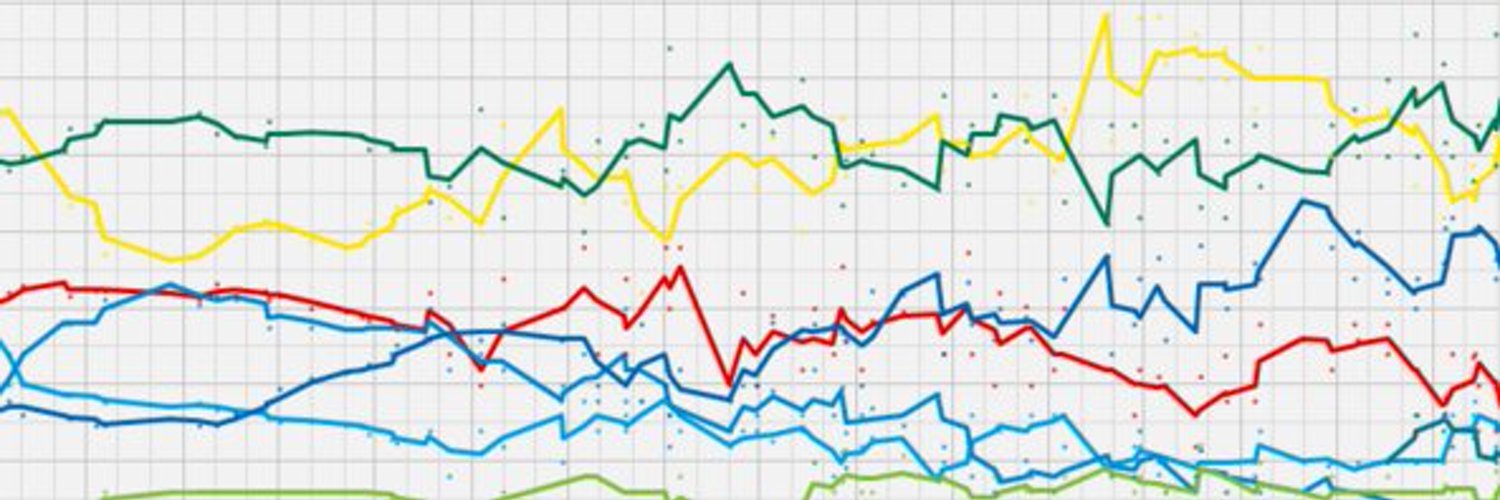
Recent generic ballot polling shows Democrats maintaining a consistent advantage heading into the midterm cycle. Most surveys from late May through early June place Democrats in the 46–52 percent range, with Republicans between 37–48 percent. The Reuters/Ipsos poll (4,531 respondents) recorded a 4-point Democratic edge, while RMG Research, Quantus Insights, and Financial Times all show Democratic leads of 4–5 points. Higher-end estimates from Harvard-Harris and Big Data Poll push the Democratic advantage to 4 and 13 points respectively, though the latter's 13-point margin is an outlier and warrants scrutiny given methodological differences.
The aggregate trend suggests a relatively stable Democratic position rather than momentum in either direction. The Marquette poll showing a near-tie (49-48) represents the tightest result but draws from a smaller sample of 576 respondents. Across the broader sample, Democrats average approximately 48 percent support while Republicans average 43 percent, implying a 5-point working advantage in the generic contest.
Ohio Senate: Brown Leads Husted
In Ohio's Senate race, Sherrod Brown (D OH-SEN) leads Jon Husted (R OH-SEN) by 8 points in a FOX News survey of 1,105 respondents (53–45 percent). Ohio has trended Republican in statewide contests, making this reading noteworthy if sustained across additional polling.
Follow the Money
Iowa House Races: Democratic Cash Advantage Masks Structural Disadvantage
Democrats hold a modest cash-on-hand advantage across Iowa House races covered in this data, with combined available funds of 7.3 million compared to Republicans' 8.7 million. However, this aggregate figure obscures a critical structural problem: Christina Bohannan (D IA-01) and Sarah Trone Garriott (D IA-03) together account for 7.0 million of Democratic cash, concentrating resources in just two districts while Republicans distribute funding across more candidates.
Mariannette Miller-Meeks (R IA-01) significantly outraised her Democratic opponent, collecting 6.2 million to Bohannan's 5.6 million, though Bohannan maintains slightly higher cash reserves. Zach Nunn (R IA-03) trails Trone Garriott in both metrics but still maintains competitive positioning with 3.2 million cash on hand. The rating of Likely Republican reflects fundamentals beyond fundraising, as Iowa has shifted toward GOP alignment in recent cycles.
Randall Feenstra (R IA-04) shows zero cash on hand despite spending 2.3 million, indicating full depletion of resources. Taylor Wettach (D IA-04) similarly exhausted all available funds after raising just 698,000, suggesting both candidates face severe resource constraints in that contest.
Headlines
- Some Maine Democrats are wavering on Graham Platner (Politico)
Some Maine Democrats are expressing hesitation about supporting Graham Platner, an oysterman with a strong core base,... - Becerra, Trump-backed Hilton set to duke it out in California governor’s race (The Hill)
Democrat Xavier Becerra and Republican Steve Hilton, who secured Trump's endorsement, are advancing to California's g...
What to Watch
June 9 Primary Elections Across Six States
Six states hold primaries on June 9, 2026, with competitive races for Senate, House, and gubernatorial offices. Maine, Mississippi, Nevada, South Carolina, and Virginia will hold primaries across all three office types, while North Dakota conducts primaries for Senate and House only. These contests will shape general election matchups and test candidate viability in both swing and non-competitive states.
House Races Requiring Close Monitoring
California's 13th District and 22nd District are rated tossups by Cook Political Report, representing competitive territory in a state Democrats hold statewide. Arizona's 1st and 6th Districts carry identical tossup ratings. California's 45th and 47th Districts lean Republican according to Inside Elections and Cook Political Report respectively, indicating potential Republican gains in traditionally Democratic areas. Watch primary turnout and candidate recruitment in these districts as early indicators of general election competitiveness.
Senate and Statewide Races
Florida's Senate race is rated Likely Republican, while Georgia's Senate race rates as Lean Democratic per Cook Political Report—signaling continued partisan sorting in the two largest swing states. Iowa's 1st District House race leans Republican. Monitor candidate emergence and fundraising in these races through the primary cycle.
How was today's briefing?
Get this briefing in your inbox every morning
Free. No password required. Unsubscribe anytime.