
North Dakota voters will decide on Constitutional Amendment 1 on June 9, which would require all future constitutional amendments to address a single subject and establish separate voting thresholds for legislatively referred amendments. The measure aims to streamline the amendment process and prevent omnibus constitutional changes. The vote comes as states nationwide face ongoing debates over amendment procedures and ballot access rules.
North Dakota Constitutional Amendment 1: Single-Subject Requirement
North Dakota's Constitutional Amendment 1 would impose a single-subject requirement on future constitutional amendments and create distinct voting procedures depending on whether amendments are legislatively referred or citizen-initiated. Supporters argue the measure would prevent logrolling and ensure voters consider constitutional changes individually rather than as bundled proposals. The amendment addresses procedural governance of the state constitution itself, not substantive policy.
What to Watch
Monitor North Dakota voting patterns on June 9 to assess voter appetite for constitutional process reforms. Results may signal broader state-level sentiment on amendment procedures ahead of November's general election cycle.
Polls
Generic Ballot: Democratic Lead Widens
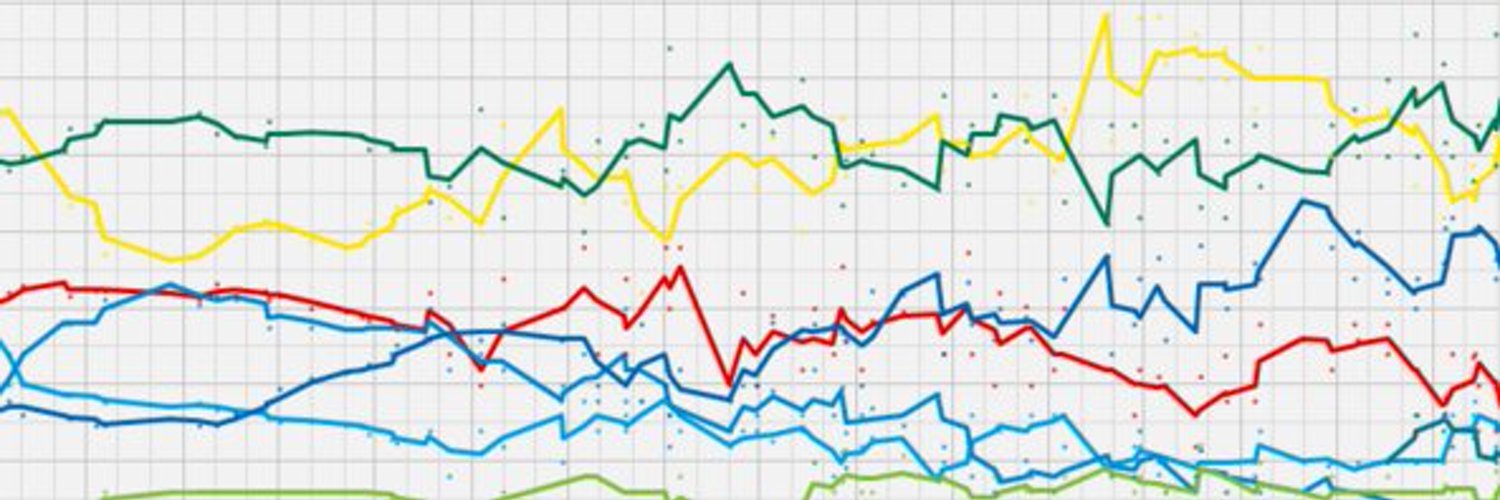
Recent generic ballot polling shows Democrats maintaining a consistent advantage heading into the 2026 midterms. Across ten surveys spanning late May through early June, Democrats averaged 49 percent support compared to 42 percent for Republicans. The most recent Economist/YouGov poll (June 1) registered Democrats at 46 percent versus Republicans at 42 percent, while Harvard-Harris showed a wider gap at 52-48. The Big Data Poll (May 27) produced an outlier result of 51-38, suggesting measurement variation across methodologies.
Ohio Senate: Brown Commands Double-Digit Lead
Sherrod Brown (D OH-SEN) holds a substantial advantage over Jon Husted (R OH-SEN) in the FOX News poll conducted through June 1. Brown leads 53 percent to 45 percent among 1,105 likely voters—an eight-point margin in a state trending Republican in recent cycles. This represents a notable position for an incumbent facing midterm headwinds.
Michigan Senate: Competitive Race Takes Shape
Abdulrahman El-Sayed (D MI-SEN) and Jack Rogers (R MI-SEN) remain virtually tied in the TIPP survey (May 23), with El-Sayed at 43 percent and Rogers at 42 percent. The one-point margin within the poll's margin of error indicates an unsettled race.
Follow the Money
Georgia Senate: Ossoff's Financial Dominance
Jon Ossoff (D GA-SEN) holds a commanding financial advantage, having raised 60.4 million and maintaining 32.5 million in cash reserves. His spending rate—54 percent of total receipts—suggests disciplined resource management with substantial runway remaining. The Democratic nominee's cash advantage exceeds the combined reserves of all Republican candidates in the race.
Republican Field Fragmentation and Burnout
The Republican field shows acute financial stress. Combined, the three leading Republican candidates—Earl Carter (R GA-SEN), Michael Collins (R GA-SEN), and Derek Dooley (R GA-SEN)—raised only 15.3 million against Ossoff's total. Earl Carter burned through 119 percent of receipts, exhausting resources; Michael Collins spent 77 percent; Derek Dooley spent 56 percent. The field's cash-on-hand totals approximately 5 million across all candidates, creating a 6-to-1 reserve disparity favoring Ossoff heading into the general election phase.
Headlines
- North Dakota voters to decide single-subject requirement for future constitutional amendments on June 9 (Ballotpedia News)
North Dakota voters will decide on Constitutional Amendment 1 on June 9, which would require future constitutional am...
What to Watch
June 9 Primary Elections Across Six States
Six states hold primary elections on June 9, 2026, selecting nominees for senate, house, and gubernatorial races. Maine, Mississippi, Nevada, South Carolina, and Virginia will conduct concurrent contests across all three offices, while North Dakota holds senate and house primaries. These elections will determine general election matchups in competitive markets, particularly in Nevada and Virginia, which feature swing-state dynamics in statewide races.
House Races Rated Competitive or Lean Republican
Multiple House districts merit close monitoring through 2026. Arizona's 1st and 6th Districts and California's 13th and 22nd Districts are rated tossups by Cook Political Report. California's 45th and 47th Districts lean Republican according to Inside Elections and Cook Political Report respectively, as does Colorado's 8th District. Iowa's 1st District is rated likely Republican. These races indicate potential vulnerability in currently held Democratic seats and possible Republican gains in suburban districts.
Senate Races: Georgia and Florida
Georgia's Senate race leans Democratic per Cook Political Report, while Florida's Senate race is rated likely Republican by Sabato's Crystal Ball. The Georgia contest will be central to determining overall Senate control dynamics heading into 2026.
How was today's briefing?
Get this briefing in your inbox every morning
Free. No password required. Unsubscribe anytime.