
Seven states hold primary elections on Tuesday, June 2, determining nominees across Senate and House races. California dominates the slate with 113 local ballot measures and competitive House districts; Montana and Iowa feature Senate primaries with general election implications.
California: House Fundraising Disparities and Redistricting Fallout
Rohit Khanna (D CA-17) holds the largest cash reserve of any candidate nationwide at 16.7 million dollars, while Saikat Chakrabarti (D CA-13) has depleted reserves to 384,880 dollars despite raising 9.2 million total. Young Kim (R CA-40) raised 8.2 million and retains 3.1 million in a district rated Tilt R by Inside Elections. Eric Jones (D CA-45) and Ken Calvert (R CA-42) compete in a Lean R district, with Jones holding 4.3 million cash reserves. Voters across 34 counties will simultaneously decide 113 local ballot measures spanning education, infrastructure, and governance issues.
Redistricting transformed California's 41st District into solid Democratic territory, creating a primary contest between Democrats Linda Sánchez (D CA-41) and Hector De La Torre (D CA-41) and one Republican candidate. Both Democrats have established fundraising and endorsement advantages. A report published June 1 indicated declining Democratic voter enthusiasm for the state's gubernatorial race, potentially affecting turnout in House primaries.
Iowa: Senate Race Funding Imbalance
Ashley Arenholz (R IA-SEN) leads fundraising with 8.2 million raised and 5.9 million cash on hand. Zach Wahls (D IA-SEN) and Joshua Turek (D IA-SEN) compete on the Democratic side; Wahls holds 700,986 dollars while Turek retains 726,409 dollars from similar fundraising totals of 3.6 to 3.5 million respectively. Cook Political Report and Sabato's Crystal Ball rate the Senate seat Solid R and Safe R. House races in districts 1 and 3 are rated Likely R by both outlets, constraining Democratic opportunities in the state.
Montana: Republican Primary Intraparty Division
Steve Daines (R MT-SEN) raised 4.5 million but carries zero cash on hand, indicating intensive late-stage spending. Kurt Alme (R MT-SEN) retains 922,252 dollars from 1.2 million raised. Independent Seth Bodnar (I MT-SEN) holds 963,921 dollars despite lower overall receipts of 2.1 million. A May 19 report noted that Montana Republicans censured state senators who voted with Democrats on procedural rules during the 2025 legislative session, creating tension between moderate and conservative wings heading into the primary. All three major rating firms assess the general election seat as Solid R or Safe R.
Alabama
Polls
Generic Ballot: Democratic Lead Varies Widely Across Pollsters
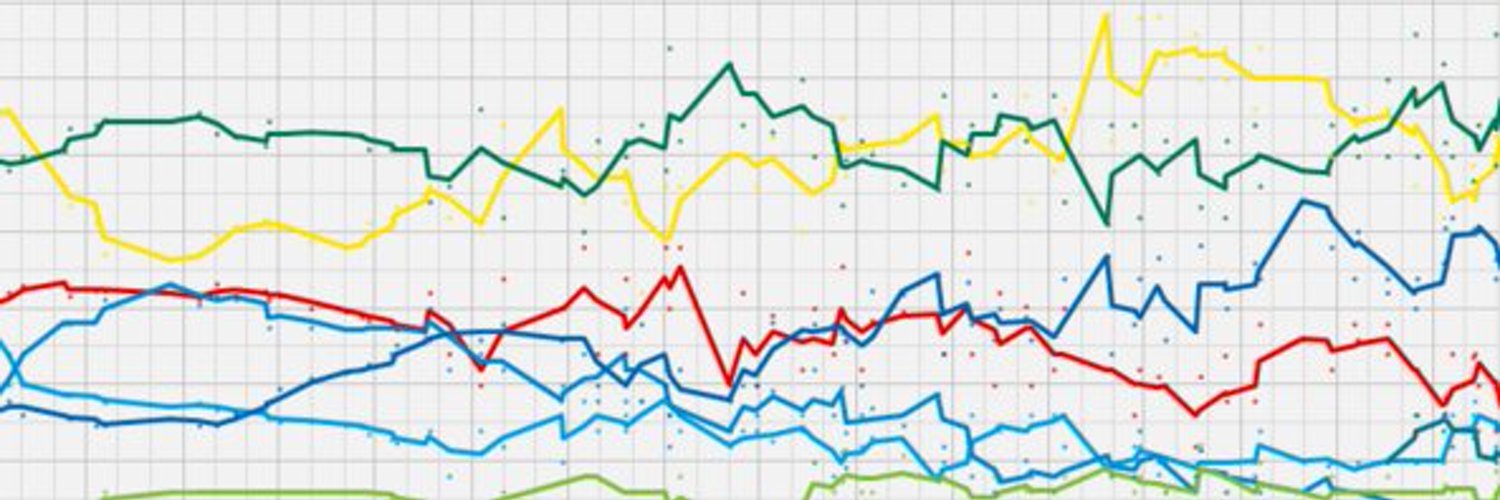
Generic ballot surveys released over the past 30 days show Democrats holding advantages ranging from 3 to 13 percentage points, with considerable methodological variation. Big Data Poll (May 27) found the largest Democratic margin at 51–38 percent, while Reuters/Ipsos (May 18) showed a near-tie at 39–38 percent. Most other major pollsters—Emerson, Quinnipiac, and Wall Street Journal—clustered in the 48–50 percent range for Democrats, with Republicans at 39–41 percent.
The dispersion reflects known differences in weighting and turnout assumptions. Reuters/Ipsos's outlier result (39–38) uses a smaller sample (984 respondents) and may reflect different likely-voter modeling. Conversely, Big Data Poll's 13-point spread used the largest sample (2,784) but similarly warrants scrutiny on methodology. A weighted average excluding extremes suggests Democrats holding roughly a 7-point advantage nationally, though undecided voters and third-party preferences—not detailed here—could materially shift final outcomes.
Follow the Money
Colorado House Race: Democratic Fundraising Dominance
Democratic candidates in this Colorado House race have outraised their Republican counterparts by a substantial margin. Democrats have collected 19.4 million dollars across six candidates, while Republicans have raised 7.3 million dollars across three candidates. Eileen Laubacher (D CO-##) leads all candidates with 8.6 million in receipts, nearly double the total raised by the top Republican, Timothy Evans (R CO-##), who has brought in 4.3 million dollars.
Cash reserves tell a different story. Timothy Evans (R CO-##) maintains 3.4 million dollars on hand despite lower overall receipts, suggesting efficient spending or late-stage fundraising momentum. Laubacher (D CO-##) holds 3.1 million in reserves after spending 5.5 million dollars. Jeffrey Hurd (R CO-##) retains 1.9 million from 3.0 million raised, positioning both top Republican candidates with comparable liquidity heading into the final stretch.
The Lean R rating indicates Republican structural advantage despite Democratic spending intensity. Republicans have consolidated resources among fewer candidates, while Democrats have distributed funding across a larger field, potentially fragmenting their impact in primary or competitive general election scenarios.
Headlines
- California Dems Bored Their Own Voters Into Submission (RealClearPolitics)
California Democrats are struggling to generate voter enthusiasm for the 2026 gubernatorial race, with the state's po... - Paxton set to meet with Thune after Cornyn loss (The Hill)
Texas Attorney General Ken Paxton won the GOP runoff to replace retiring Senator John Cornyn and plans to meet with i...
What to Watch
June 2026 Primary Elections Across Seven States
Seven states will hold primaries on June 2, 2026, featuring competitive races for Senate, House, and gubernatorial offices. Alabama, California, Iowa, Montana, New Jersey, New Mexico, and South Dakota will determine their general election nominees. California's primary will be particularly consequential given the state's size and influence on national House dynamics. Iowa and Montana primaries will establish nominees for competitive Senate races expected in the general election.
House Races Requiring Close Monitoring
Six House districts currently rate as competitive heading into the general election cycle. In California, CA-13 and CA-22 are rated tossups, while CA-45 and CA-47 lean Republican. Two Arizona districts—AZ-1 and AZ-6—are tossups. CO-8 leans Republican. Observers should track whether primary outcomes in California, Iowa, and Montana produce nominees who shift the competitiveness of these general election matchups.
Senate Races and Longer-Term Outlook
Florida's Senate race is rated likely Republican, while Georgia's Senate seat leans Democratic. Iowa's IA-1 House race leans Republican. Primary results in June will establish whether these ratings hold as nominees become finalized.
How was today's briefing?
Get this briefing in your inbox every morning
Free. No password required. Unsubscribe anytime.