
Seven states conduct primary elections on June 2, 2026, determining nominees in competitive Senate and House races. California leads the slate with its top-two primary system, while Montana and New Mexico feature Senate contests that could influence chamber control in the general election.
California: House Races Drive Fundraising
California's primary features multiple House races attracting substantial funding, with Rohit Khanna (D CA-17) leading all candidates nationwide in cash on hand at 16.7 million dollars. Young Kim (R CA-40) raised 8.2 million dollars and retains 3.1 million, positioning her competitively in a district rated Tilt R by Inside Elections. Eric Jones (D CA-45) and Ken Calvert (R CA-42) compete in a Lean R district, with Jones holding 4.3 million cash reserves against Calvert's 2.4 million. Voters across 34 counties will also decide 113 local ballot measures spanning education, infrastructure, and governance issues.
Redistricting has transformed California's 41st District into solid Democratic territory, creating a primary contest among Democrats Linda Sánchez (D CA-41) and Hector De La Torre (D CA-41) alongside a Republican candidate. Sánchez and De La Torre have established fundraising and endorsement advantages heading into the primary.
Montana: Senate Intraparty Tensions
Montana's Republican Senate primary reflects division within the state GOP. Steve Daines (R MT-SEN) leads fundraising with 4.5 million in receipts but zero cash on hand, suggesting late-stage spending intensity. Kurt Alme (R MT-SEN) retains 922,252 dollars in reserves from 1.2 million raised. Independent Seth Bodnar (MT-SEN) holds 963,921 dollars despite lower overall receipts of 2.1 million, positioning him as a potential general election alternative if Republican primary dynamics remain fractious. Cook Political Report, Sabato's Crystal Ball, and Inside Elections all rate the Senate seat Solid R or Safe R, indicating Republican advantage regardless of primary outcome.
The primary occurs after state Republicans censured GOP senators for procedural votes with Democrats during the 2025 legislative session, creating factional tension between moderate and conservative wings of the party.
New Mexico: Democratic Financial Dominance
Ben Lujan (D NM-SEN) dominates the Senate race with 5 million in total receipts and 4.2 million cash on hand, establishing substantial general election resources. Cook Political Report, Sabato's Crystal Ball, and Inside Elections all rate the seat Solid D or Safe D. Democratic House candidates Gabriel Vasquez (D NM-02) and Melanie Stansbury (D NM-01) lead House fundraising, with Vasquez holding 2 million in cash reserves. CA-2's rating as Lean D by Cook Political Report and Sabato's Crystal Ball indicates the only potentially competitive House district in the state.
Polls
Generic Ballot: Democratic Lead Widens but Shows Volatility
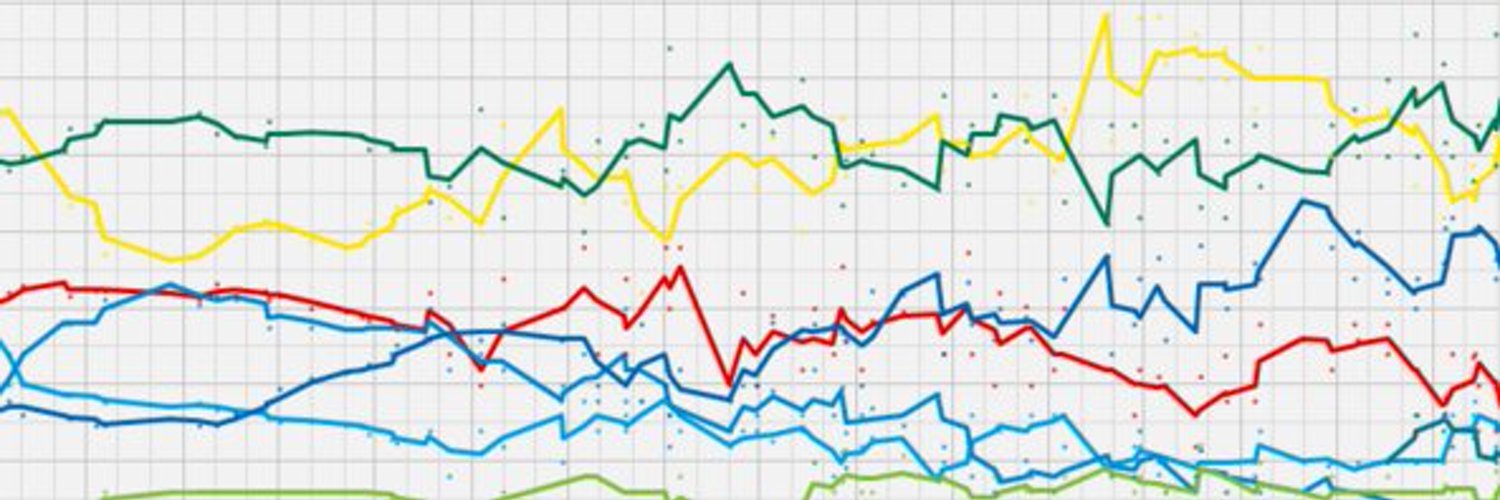
Recent generic ballot polling reveals a Democratic advantage ranging from 3 to 13 percentage points, with most surveys clustering in the 5–9 point range. Big Data Poll's May 27 survey showed the widest gap at 13 points (Democrats 51, Republicans 38), while Reuters/Ipsos produced the tightest result at 1 point (39–38). The median Democratic edge across the 10 polls sits near 7 points, suggesting structural Democratic strength heading into the 2026 cycle, though individual pollster methodologies and sample composition generate meaningful variation.
The volatility warrants caution in interpretation. Reuters/Ipsos's single-digit result stands as an outlier; its sample of 984 respondents is among the smallest here, and it shows unusually low Democratic support (39 percent) compared to peers. Larger, more recent surveys from Big Data Poll, Emerson, and Quinnipiac consistently place Democrats in the 50–51 percent range. Undecided voters and third-party support remain implicit rather than explicit in these toplines, leaving the full picture incomplete for assessing actual electoral dynamics.
Follow the Money
Arizona House Races: Cash Disparity and Spending Intensity Signal Different Campaign Strategies
Eli Crane (R AZ-02) leads the field in total receipts at 7.4 million but has depleted his cash reserves through aggressive spending, retaining only 2.3 million. His 5.4 million in disbursements—the highest among all candidates—indicates a front-loaded media and field operation. Joanna Mendoza (D AZ-02) has raised less (5.3 million) but maintains superior cash on hand at 3.5 million, having spent only 1.8 million, suggesting a reserve-intensive strategy approaching the general election.
Juan Ciscomani (R AZ-06) has raised 5.1 million with minimal spending (1.5 million), holding 3.8 million cash on hand—the strongest position relative to receipts. Jonathan Nez (D AZ-04) and Jonathan Treble (D AZ-06) trail significantly in receipts, at 2.3 million and 2.5 million respectively, limiting their ability to sustain independent expenditure campaigns.
David Schweikert (R AZ-05) has exhausted his cash completely, having raised and spent 1.7 million, indicating a concluded campaign or reallocation of resources. The financial gap between leading candidates suggests resource-constrained races will rely heavily on partisan infrastructure investment rather than candidate-controlled spending.
Headlines
- Trump snubs Mace with S.C. gov endorsement of Pam Evette (The Hill)
President Trump endorsed Lt. Gov. Pam Evette over Rep. Nancy Mace in South Carolina's gubernatorial race, calling Eve...
What to Watch
June 2 Primary Wave: Seven States Holding Simultaneous Elections
Seven states—Alabama, California, Iowa, Montana, New Jersey, New Mexico, and South Dakota—will hold primary elections on June 2, 2026, across Senate, House, and gubernatorial races. California's primary will be the largest in terms of delegate allocation and competitive House contests. Iowa's primary precedes a general election environment where CA-13 and CA-22 are rated as tossups by Cook Political Report, suggesting vulnerable incumbents in both parties.
House Competitive Seats: Arizona and California Lead Tossup Count
Arizona's 1st and 6th Districts are rated as tossups, while CA-45 and CA-47 lean Republican according to Cook Political Report. Watch CO-8, rated lean Republican, for Democratic recruitment intensity. These races will indicate whether Republicans can consolidate gains or face suburban erosion.
Senate Races: Georgia and Florida Diverge
Georgia's Senate race leans Democratic, while Florida's Senate race rates as likely Republican. Movement in either contest would signal broader regional shifts heading into the general election cycle. Iowa's 1st District House race, rated likely Republican by Inside Elections, provides a bellwether for rural and exurban voter sentiment.
How was today's briefing?
Get this briefing in your inbox every morning
Free. No password required. Unsubscribe anytime.