
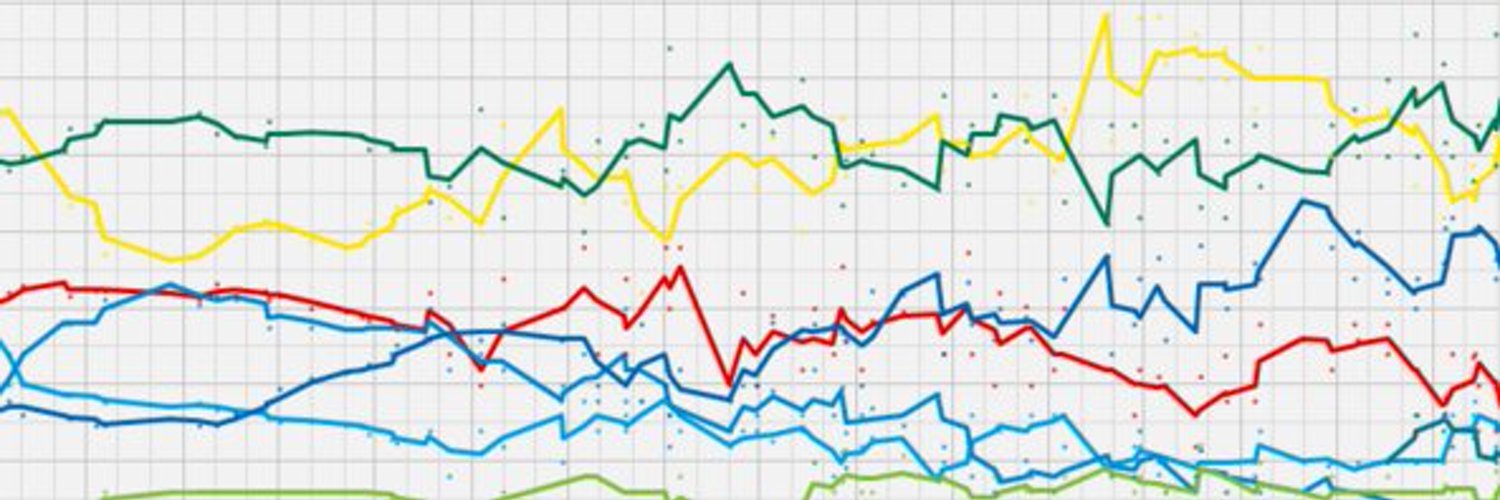
California's gubernatorial primary faces a Democratic fragmentation crisis as eight liberal candidates split the vote while Republicans Steve Hilton (R CA-GOV) and Chad Bianco (R CA-GOV) consolidate support and lead in polling. The fractured Democratic field creates a scenario where a Republican could win statewide despite California's traditional Democratic lean—a structural vulnerability rather than a shift in voter preference.
California Gubernatorial Race: Republican Consolidation vs. Democratic Division
Eight Democratic candidates are competing in California's gubernatorial primary, fragmenting the liberal electorate while two Republicans have coalesced around Steve Hilton (R CA-GOV) and Chad Bianco (R CA-GOV). Current polling shows the Republican candidates leading, a positioning that reflects primary dynamics rather than general election strength. If a Republican advances from the primary with unified backing while Democrats remain split, the general election could present unexpected competitive terrain in a state where Democrats hold substantial voter registration advantages.
California Gubernatorial Race: Recall Threat Signals Post-Election Conflict
Republican candidates have signaled an immediate recall effort against California's Democratic governor if a GOP candidate wins the general election. The stated intention to pursue a recall upon taking office reflects the depth of partisan polarization in the state's executive race and indicates contentious governance ahead regardless of which party prevails in November.
Texas Senate GOP Runoff: Trump Withholds Endorsement
Former President Trump has declined to endorse either candidate in the Texas Senate Republican runoff, a departure from his typical active involvement in GOP primary contests. Trump's non-endorsement is being interpreted strategically by his supporters as a signal rather than neutral positioning, though his specific rationale remains unstated. The decision leaves the race without a clear frontrunner endorsement from the party's most influential figure among Republican primary voters.
Alabama Foreign Contribution Ban Becomes 24th State Law
Alabama enacted legislation prohibiting foreign nationals and governments from contributing to ballot measure committees, with House Bill 214 passing unanimously on March 17. The law classifies violations as a Class C felony and applies to both contributions and the acceptance of foreign funding related to ballot measures. Alabama's passage brings the total number of states with such restrictions to 24, indicating a broad policy consensus on foreign financing limitations in state electoral processes.
Watch: California primary and general election dynamics; Texas runoff turnout signals; Supreme Court decision timeline on Mississippi voting procedures.
```This Week in Review
```htmlGeneric Ballot: Democrats Extend Midterm Lead to 8 Points
National polling throughout the week revealed a consistent and widening Democratic advantage heading into the 2026 midterm cycle. The Big Data Poll on March 24 recorded Democrats at 48 percent versus Republicans at 40 percent among 3,003 likely voters—the largest Democratic lead captured in the week's surveys. Subsequent polls on March 26 from Quantus Insights (47-41) and Harvard-Harris (52-48) sustained the Democratic edge, though sample size variation and methodological differences produced a 4-to-12-point range. The consistency across multiple pollsters suggests genuine Democratic momentum rather than outlier methodology, though the magnitude of advantage fluctuates based on weighting and population selection.
North Carolina Senate: Cooper Holds Steady 8-Point Lead
Former Governor Roy Cooper (D NC-SEN) maintained an 8-point lead over Michael Whatley (R NC-SEN) in the race to replace retiring Senator Thom Tillis, according to Carolina Journal polling conducted through late March. Cooper held 49 percent support in the 600-voter survey, a consistent positioning across multiple survey dates. This result aligns with the week's broader generic ballot trend and suggests Democratic strength in a traditionally competitive Senate seat, though the race remains nine months from Election Day.
Florida Special Elections: Democrats Flip Two State Legislative Seats
Emily Gregory (D FL-87) defeated Trump-backed Jon Maples (R FL-87) in a special election for Florida's 87th House District on March 24, flipping a traditionally competitive Palm Beach County seat containing Mar-a-Lago. The same day, Brian Nathan (D FL-SEN), a Navy veteran and union leader, defeated state Representative Josie Tomkow (R FL-SEN) in the Tampa-area state Senate race. These consecutive Democratic victories in traditionally competitive or Republican-leaning districts represent concrete losses of ground for Republicans in a key swing state and suggest potential vulnerability in state legislative defenses heading into November's general election cycle.
North Carolina Republican Primary: Berger Loses Primary Recount by 23 Votes
State Senate leader Phil Berger (R NC-SEN) conceded defeat to Sam Page (R NC-SEN), a Rockingham County Sheriff, in a Republican primary recount for North Carolina State Senate District 26 decided by 23 votes. The narrow margin and unexpected upset of an incumbent leadership figure during a hand recount reflects the fluid dynamics in Republican-held districts and internal party competition unfolding alongside Democratic momentum at the national level.
Georgia's 14th District: Harris Leads Fuller Heading Into April 7 Runoff
Shawn Harris (D GA-14) and Trump-endorsed Clayton Fuller (R GA-14) advanced to an April 7 special runoff election for Georgia's 14th Congressional District after neither secured a majority in the March 10 primary. Harris led with 37.3 percent to Fuller's 34.9 percent, positioning the Democrat with a structural advantage in the runoff format. The candidates debated Iran policy and economic issues during the week, presenting distinct rhetorical approaches on foreign policy heading into the second round.
Colorado Ballot Measures and Kentucky Education Policy
Colorado voters will decide on two ballot measures in November addressing transgender policy issues, including sex-based school sports eligibility and restrictions on gender-affirming surgeries for minors under 18. The measures, certified March 16-17, inject cultural policy questions into the state's electoral cycle. Meanwhile, Kentucky's legislature overrode Democratic Governor Andy Beshear's veto of House Bill 1, advancing the federal school choice tax credit scholarship program despite executive opposition, demonstrating legislative override of gubernatorial veto on education funding methodology.
Supreme Court Considers Mississippi Absentee Voting Procedures
The U.S. Supreme Court heard oral arguments in Watson v. Republican National Committee regarding the constitutionality of Mississippi's absentee ballot return procedures. The decision will determine state voting procedure compliance with federal election standards and could establish precedent affecting ballot access rules nationwide. No timeline for the Court's decision was provided, but the case represents a significant ballot access question pending resolution during the midterm election cycle.
```Polls
Generic Ballot: Democrats Lead Across Pollsters
Generic ballot polling shows Democrats maintaining a consistent advantage heading into 2026 midterm races. Nine surveys conducted between March 19–26 yield a median Democratic support of 47 percent versus 41 percent for Republicans. The range spans from Harvard-Harris at a 4-point Democratic edge to Reuters/Ipsos at a narrower 2-point margin. Quinnipiac and Big Data Poll register some of the largest Democratic leads at 11 points each, though both rely on smaller samples or undisclosed methodologies.
The consistency across pollsters of different methodologies suggests the Democratic advantage is stable rather than an artifact of sampling variation. Morning Consult's large sample of 15,029 respondents shows a 5-point Democratic edge, reinforcing the aggregate picture. However, undecided voters remain significant in most surveys, meaning the final composition of the electorate will materially affect outcomes.
North Carolina Senate: Cooper Leads Whatley
A Carolina Journal/Harper poll conducted through March 23 shows Roy Cooper (D NC-SEN) at 49 percent against Chuck Whatley (R NC-SEN) at 41 percent in the North Carolina Senate race. The 8-point advantage reflects early polling dynamics in a state trending competitive. The 600-person sample size warrants caution; additional measurement is needed to confirm the magnitude of Cooper's lead.
Follow the Money
```htmlMaine House Race: Wood's Cash Advantage in Lean D District
Jordan Wood (D ME-02) maintains a substantial financial edge in this competitive Maine House race, having raised 5.1 million dollars against 1.9 million for his Republican opponent Paul LePage (R ME-02). Wood has spent 4.4 million dollars to date, leaving him with approximately 696,000 dollars in cash on hand versus LePage's 1.3 million dollars remaining.
LePage's lower burn rate—spending only 532,000 dollars of 1.9 million raised—suggests a more modest campaign operation or later campaign activation. Wood's expenditure ratio indicates sustained, higher-intensity spending throughout the cycle. Two other Democrats, Jared Golden (D ME-02) and Matt Dunlap (D ME-02), have raised considerably less and appear to be secondary candidates in what may be a multi-candidate primary or general election environment.
The fundraising disparity reflects Wood's establishment positioning in a district rated Lean Democratic. LePage's cash reserves suggest potential for late-cycle spending, though Wood's cumulative advantage and burn-through rate indicate he has invested more aggressively in early voter contact and advertising.
```Headlines
- Alabama becomes the 24th state to enact a law prohibiting foreign nationals or governments from contributing to ballot measure committees (Ballotpedia News)
Alabama became the 24th state to enact legislation prohibiting foreign nationals and governments from contributing to... - There'll Be an Immediate Recall If GOP Wins CA Gov Race (RealClearPolitics)
Republican candidates have signaled they would pursue an immediate recall effort against California's Democratic gove... - Trump plays Texas hold ’em with Senate endorsement (Politico)
Former President Trump has refrained from endorsing either candidate in the Texas Senate GOP runoff, a decision that ...
What to Watch
```htmlHouse Tossups in Southwest and California
Four House races rated as tossups demand close monitoring: AZ-01 and AZ-06 in Arizona, and CA-13 and CA-22 in California. These districts will likely determine chamber control. Watch for late-stage polling shifts and candidate spending allocation, which often signals internal campaign assessments in final weeks.
Georgia and Florida Senate Races
The Georgia Senate race is rated Lean D (D GA-SEN), while Florida's Senate contest leans Likely R (R FL-SEN). Georgia remains the more competitive of the two and will absorb significant national attention and resources. Monitor turnout operations and early voting patterns in both states as potential indicators of final margins.
Lean Republican House Seats
CA-45, CA-47, and CO-08 are rated Lean R, suggesting Republican advantages but not certainty. Combined with the tossups, these races represent territory where Democrats could gain seats. Track candidate cash-on-hand and outside spending in these districts to gauge confidence levels from national committees.
```How was today's briefing?
Get this briefing in your inbox every morning
Free. No password required. Unsubscribe anytime.