
House Republicans have escalated partisan tensions by threatening to block all Senate legislation until the chamber passes the SAVE America Act, a GOP-backed voting requirements bill led by Rep. Brandon Gill (R TX-26). The blockade exempts only Department of Homeland Security funding and represents a hardline tactic that could gridlock legislative activity across both chambers.
House Republican Legislative Blockade
Rep. Brandon Gill (R TX-26) and House Republicans are leveraging their procedural power to demand Senate action on the SAVE America Act, which would establish new voting eligibility standards. The threat to block all Senate bills except DHS funding represents an escalation in partisan conflict over voting requirements and signals willingness to use legislative obstruction as leverage on a contentious electoral issue.
Senate Housing Legislation
The Senate passed comprehensive housing legislation with support from most Republicans, advancing a major policy bill addressing housing affordability and market conditions. The measure received backing across party lines, with the vote count reflecting broader agreement on the housing issue despite the chamber's general partisan polarization.
Texas Senate Candidate Positions on Military Action
Democratic Senate nominee James Talarico (D TX-SEN), who won his primary last week, condemned a U.S. military airstrike in Iran that struck a girls' school, characterizing the attack as deeply troubling. Talarico's statement positions him against the military action ahead of the general election matchup against the Republican nominee.
Illinois Democratic Primary Campaign Finance Dispute
Democratic Senate primary candidates in Illinois, Michigan, and Minnesota are divided over whether to accept corporate PAC money, creating internal party tensions over campaign finance and corporate influence. The disagreement largely reflects symbolic differences within the Democratic base but indicates substantive divisions on fundraising strategy among primary contenders.
Watch tomorrow: House Republican response to Senate activity and whether the SAVE America Act advances toward a floor vote; developments in Illinois primary races ahead of the March 17 voting, including results on the federal school choice tax credit measure.
```This Week in Review
```htmlNational Ballot: Democrats Maintain Modest Edge
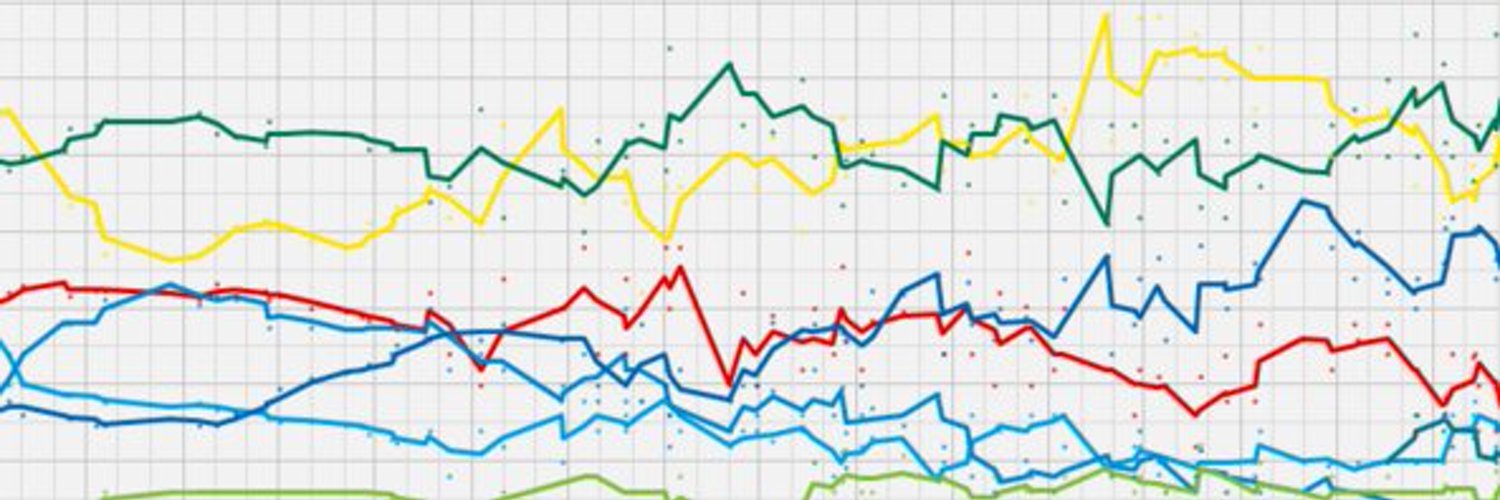
The Economist/YouGov generic ballot poll released Monday showed Democrats at 45 percent versus Republicans at 42 percent among registered voters, a three-point Democratic advantage. The result represents stabilization after earlier volatility in the week's polling, falling between tighter likely-voter samples and higher registered-voter outliers. The modest spread suggests neither party holds commanding national momentum heading into the 2026 cycle.
House Recruitment: Democrats Expand Field While Republicans Lag
As of March 10, Democrats have fielded candidates in significantly more House races than Republicans. Only three districts lack Democratic nominees—New Jersey's 11th, Rhode Island's 1st, and Wyoming's At-Large—compared to 35 districts without Republican challengers. This recruitment disparity signals broader Democratic efforts to contest competitive and traditionally safe Republican seats, a tactical positioning that could affect turnout and resource allocation across the cycle.
Trump's Primary Interventions Signal Intra-GOP Discipline Push
Former President Trump's actions this week revealed a deliberate strategy to enforce party loyalty through endorsement leverage. Trump withheld his endorsement in the Texas Senate primary between Senator John Cornyn (R TX-SEN) and Attorney General Ken Paxton (R TX-SEN), conditioning support on GOP senators' backing for his SAVE America Act legislation. More directly, Trump traveled to Kentucky's 4th District to campaign against incumbent Representative Thomas Massie (R KY-04), calling him "the worst" and publicly supporting challenger Ed Gallrein (R KY-04) over a seven-term Republican with a record of voting against Trump priorities. These moves reflect Trump's willingness to challenge sitting GOP members on policy alignment rather than party stability.
Competitive Democratic Primaries Expose Leadership Divides
Succession battles in Democratic races exposed institutional tensions within the party. In Maryland's 5th District, former House Speaker Nancy Pelosi endorsed Harry Dunn (D MD-05), a former Capitol Police officer, directly against retiring incumbent Representative Steny Hoyer's (D MD-05) preferred successor and Hoyer's former campaign manager. The endorsement contest highlighted competing visions of the seat's future rather than unified party leadership. Meanwhile, Texas's 33rd District saw incumbent Julie Johnson (D TX-33) advance to a May 26 runoff with 45.5 percent against Colin Allred (D TX-18) at 34.0 percent, while Texas's 18th District produced an upset dynamic where challenger Christian Menefee (D TX-18) narrowly led incumbent Al Green (D TX-18) by 1.8 points in the initial primary count.
Special Elections and Runoff Contests Shape Immediate Dynamics
Georgia's 14th District special election on March 10 produced a competitive runoff matchup for April 7. Democrat Shawn Harris (D GA-14) led with 37.3 percent while Republican Clayton Fuller (R GA-14) secured 34.9 percent, neither clearing the threshold for outright victory. The head-to-head format will determine whether Democrats can hold an open seat in a district with shifting partisan composition. Separately, North Carolina's 4th District moved to the general election after incumbent Representative Valerie Foushee (D NC-04) won the Democratic primary on March 3, building on existing advantages in endorsements, fundraising, and media coverage.
Judicial Elections and Criminal Justice Policy Dominate Ballot Content
Thirty-two states will hold judicial elections this cycle for 64 seats across 34 state supreme courts, including Oklahoma and Texas, underscoring growing electoral competition for state-level courts. Colorado voters will decide Initiative 108 in November, a ballot measure establishing mandatory life sentences without parole for individuals convicted of human trafficking children. These contests reflect the increasing salience of criminal justice policy and judicial selection in electoral competition.
Senate Recruitment Continues Across Multiple States
Representative Kevin Hern (R OK-SEN) announced his candidacy for the open Oklahoma Senate seat, becoming the 16th House member to enter 2026 Senate races. The ongoing recruitment wave
Polls
```htmlGeneric Ballot: Democratic Lead Persists Amid Volatility
Generic ballot polling from the past 30 days shows Democrats maintaining a consistent advantage, though with notable variance across pollsters. Morning Consult (2,202 respondents) recorded Democrats at 47 percent versus Republicans at 43 percent, while NBC News similarly found Democrats at 50 percent to 44 percent. The outlier came from NPR/PBS/Marist, which showed the widest gap: 53 percent Democratic to 44 percent Republican. Conversely, RMG Research found the race deadlocked at 46-46. The median Democratic edge across these ten polls sits near 4-5 points, suggesting structural Democratic support but insufficient for safe House majority predictions given historical midterm dynamics and district-level variation.
Georgia Senate: Ossoff Opens Early Lead
A single Emerson poll of the Georgia Senate race shows Jon Ossoff (D GA-SEN) leading Herschel Walker (R GA-SEN) 48 percent to 43 percent among 1,000 respondents. The 5-point margin represents early positioning with significant time before November 2026, meaning substantial movement remains likely as the race develops.
```Follow the Money
```htmlPennsylvania House Races: Cash Reserves Show Disparate Positioning
Brian Fitzpatrick (R PA-01) holds the largest cash reserves among the field at $7.31 million, nearly double his closest competitor. His $5.7 million in total receipts and relatively modest $2.8 million in disbursements suggest a candidate preserving resources for the stretch run. Janelle Stelson (D PA-01) trails significantly with $3.35 million on hand despite raising $4.69 million, indicating heavier spending through the cycle.
Rob Bresnahan (R PA-07) and Scott Perry (R PA-03) each maintain $2.3 million in reserves after aggressive spending patterns, with Bresnahan having deployed 51 percent of receipts and Perry 49 percent. Paige Cognetti (D PA-07) holds $2.25 million with minimal spending, suggesting a later advertising ramp-up strategy.
Brendan Boyle (D PA-02) maintains $5.25 million despite collecting only $2.1 million, indicating substantial prior-cycle carryover. This cash advantage in a presumably safer seat contrasts with competitive districts where candidates are burning through resources faster.
```Headlines
- Senate Democrat calls for investigation into Texas drone incidents (The Hill)
Sen. Tammy Duckworth (D-Ill.), ranking member of the Senate Aviation Subcommittee, is calling for an investigation in... - House Democrat moves to sanction Ogles over anti-Muslim posts (The Hill)
Rep. Shri Thanedar (D-Mich.) filed a resolution to censure Republican Rep. Andy Ogles (R-Tenn.) for anti-Muslim posts... - Spanberger: Bait-and-Switch Democrat (RealClearPolitics)
A critical piece accuses Democratic candidate Abigail Spanberger of inconsistency between her campaign messaging and ...
What to Watch
Competitive House Races in Southwest and California
Arizona's 1st and 6th Districts and California's 13th and 22nd Districts remain rated as tossups by Cook Political Report, indicating close margins in races that could determine House control. Monitor candidate spending, field operation activity, and shifts in polling in these districts over the coming weeks. California's 45th and 47th Districts lean Republican according to Inside Elections and Cook Political Report respectively, though both remain competitive. Colorado's 8th District similarly leans Republican but warrants attention for any sign of Democratic momentum.
Senate Races: Georgia and Florida
Georgia's Senate race is rated lean Democrat by Cook Political Report, making it a key battleground for chamber control. Florida's Senate race rates as likely Republican according to Sabato's Crystal Ball, suggesting limited Democratic pickup opportunity in that state.
Iowa House District Watch
Iowa's 1st District is rated likely Republican by Cook Political Report, but observe whether Democratic candidate activity signals a challenge to that projection in the final weeks before Election Day.
How was today's briefing?
Get this briefing in your inbox every morning
Free. No password required. Unsubscribe anytime.