
Generic Ballot: Democratic Advantage Volatile and Unsettled
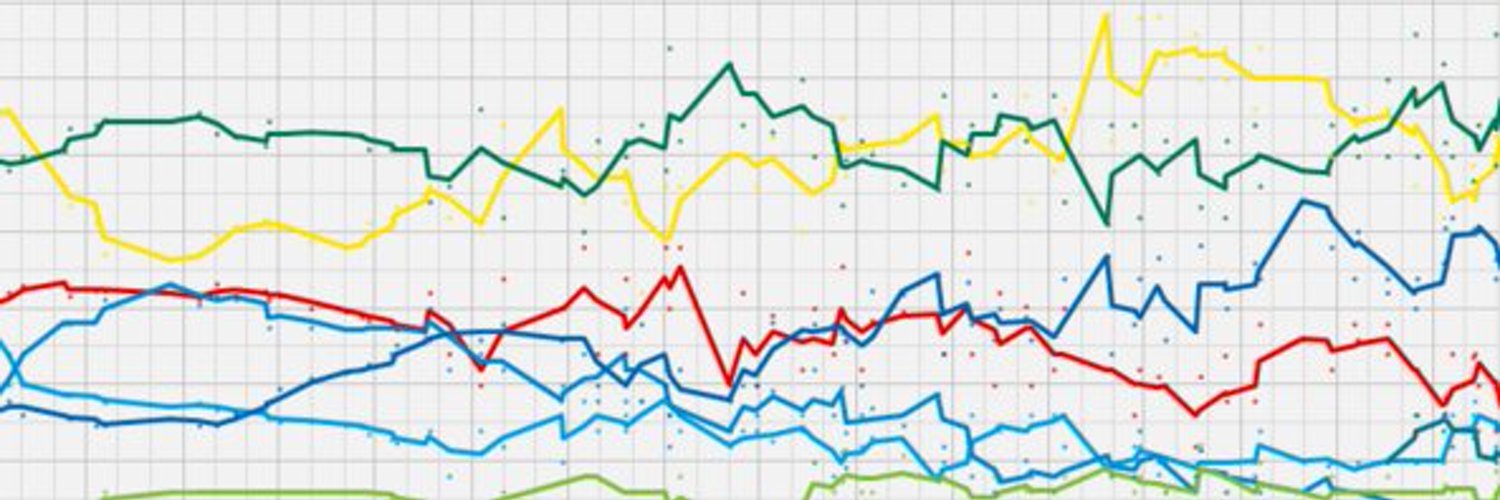
The week opened with Democrats holding a four-point generic ballot advantage in the Economist/YouGov survey (45 percent to 41 percent), a baseline that appeared stable through Wednesday morning. By Wednesday, two additional polls suggested the Democratic lead had expanded to six points, with Quantus Insights showing 48 percent Democratic to 42 percent Republican support among likely voters. However, Thursday's results introduced substantial volatility. Three concurrent surveys released the same day produced wildly divergent findings: NPR/PBS/Marist reported a nine-point Democratic advantage (53 percent to 44 percent), Cygnal found a four-point lead (49 percent to 45 percent), and RMG Research showed a dead heat (46 percent to 46 percent). The magnitude of these discrepancies—a five-point swing between the high and low end—signals that pollsters have not yet converged on consistent turnout models for the 2026 cycle.
The pattern across the week reveals a split between likely voter and registered voter samples. Cygnal's likely voter result (four points) tracked closer to the early-week registered voter samples, while NPR/PBS/Marist's nine-point registered voter lead stands as an outlier. This divergence suggests uncertainty about which voters will actually turnout in November. If Cygnal's likely voter profile proves more predictive, the Democratic advantage narrows significantly from the 9-point headline NPR/PBS/Marist produced. Conversely, if higher Democratic enthusiasm translates to actual turnout, NPR/PBS/Marist's result may forecast the eventual margin. The analytical question is whether the nine-point outlier reflects genuine Democratic consolidation or methodological overcorrection by one firm.
Georgia Senate: Ossoff Maintains Early Lead
Jon Ossoff (D GA-SEN) opened the week with a five-point lead over Kelly Loeffler Collins (R GA-SEN) in the Emerson poll (48 percent to 43 percent among likely voters). This result provided a single state-level data point before attention shifted to the national generic ballot volatility. The Ossoff lead remained unchanged through the week, as no new Georgia-specific polling was released after Monday. His 48 percent support level exceeds typical Democratic baselines in statewide Georgia races, suggesting he enters the cycle with structural advantages. However, the race remains nine months from election day, and historical patterns show substantial movement in Senate races during the general election phase.
Methodological Divergence Complicates Forecast
Thursday's polling collapse underscores a deeper methodological challenge facing the industry in 2026. The divergence between RMG Research's even split and NPR/PBS/Marist's nine-point Democratic advantage cannot be attributed to random sampling variation alone. RMG Research employed a larger sample (n=2,000) than NPR/PBS/Marist (n=1,392), suggesting sample size does not explain the discrepancy. Instead, differences in demographic weighting, turnout screening, and response rate patterns appear to be driving the divergence. Pollsters are calibrating assumptions about which voters will participate in November differently, producing estimates that span a nine-point range. Until firms converge on consistent turnout assumptions, point estimates will remain unreliable guides to the actual generic ballot position.
The week's data does establish one consistent finding across all seven polls released: Republicans do not hold a generic ballot advantage at any point in the week. The lowest Democratic result came from RMG Research (46 percent), which tied the Republican figure at 46 percent. Even this dead-heat scenario represents a departure from typical midterm dynamics favoring the opposition party. Historical patterns suggest the party holding the presidency faces structural headwinds in midterm elections. However, the absence of a Republican edge in any national poll—even at the low end of Democratic performance—indicates that structural disadvantage has not yet materialized into measurable Republican advantage.
Data Quality and Week-to-Week Interpretation
Analysts should approach this week's data with caution regarding directional conclusions. The Democratic advantage appeared to strengthen Tuesday through Wednesday, moving from four points to six points across two new polls. Thursday's addition of three new surveys did not validate that apparent trend. Instead, RMG Research's tie result suggests the six-point readings from earlier in the week may have reflected statistical noise or firm-specific methodology rather than genuine movement. The reappearance of four-point and even-split results in Thursday's data indicates the Democratic advantage remains in flux and has not stabilized around a specific value
Polls
```htmlGeneric Ballot: Democratic Advantage Persists Amid Variance
Ten generic ballot surveys conducted over the past week show Democrats holding a modest but consistent lead over Republicans. The range spans from a tie at 50-50 (Harvard-Harris) to a 9-point Democratic advantage (53-44 in the NPR/PBS/Marist poll). Most surveys cluster in the 46-50 percent range for Democrats against 40-46 percent for Republicans, suggesting a 4-6 point Democratic edge as a central tendency. The RMG Research poll stands alone at exact parity (46-46).
The variance across pollsters—particularly the 7-point spread between NPR/PBS/Marist and RMG Research—reflects methodological differences rather than movement. Sample sizes are consistent (1,000-2,264 respondents), indicating the dispersion stems from weighting, likely voter screens, or turnout assumptions rather than statistical noise. All surveys conclude within the past week, so timing differences are minimal.
Georgia Senate: Ossoff Leads Collins
The single state-level data point shows Jon Ossoff (D GA-SEN) ahead of Collins (R GA-SEN) 48-43 in the Emerson survey. The 5-point margin falls within typical general election volatility this far from Election Day.
```Follow the Money
New Mexico House Race: Democratic Fundraising Dominance
Democratic candidates in this race have outraised Republicans by a factor of approximately 7.5:1. Combined Democratic receipts total 4.96 million dollars across three candidates, while Republican candidates collectively raised 855,000 dollars across four candidates. Gabriel Vasquez (D NM-02) alone has raised nearly 2.9 million dollars—more than three times the total raised by the leading Republican candidate.
Vasquez maintains a substantial cash-on-hand advantage at 1.88 million dollars, while Melanie Stansbury (D NM-01) and Teresa Leger Fernandez (D NM-03) hold 356,000 dollars and 666,000 dollars respectively. The three Democratic candidates collectively possess 2.9 million dollars in available resources. The strongest Republican contender, Martin Zamora (R NM-02), has 278,000 dollars remaining.
Spending-to-receipts ratios indicate Republicans have deployed capital more rapidly: Zamora has spent 32 percent of receipts while Vasquez has spent 36 percent. This suggests Republican candidates are operating with tighter margins and may face resource constraints as the cycle intensifies.
Headlines
Visit pollingsource.com for the latest political news.
What to Watch
```htmlHouse Races in Play
Four House races rated as tossups merit close monitoring: AZ-01 and AZ-06 in Arizona, along with CA-13 and CA-22 in California. These districts will likely determine chamber control margins. Additionally, three California seats—CA-45 and CA-47—rated Lean Republican, and CO-08, also Lean Republican, could shift if Democrats outperform expectations in suburban areas. Monitor turnout patterns and candidate spending in these districts for early signals of national Democratic performance.
Senate Races: Georgia and Florida
Georgia's Senate race (D GA-SEN) remains rated Lean Democratic, making it a potential Democratic hold in otherwise difficult terrain. Florida's Senate race (R FL-SEN) is rated Likely Republican, indicating substantial Republican structural advantages. Watch for polling movement in Georgia through election day; any shift toward Republican should signal broader Democratic weakness nationally.
Lower-Profile Competitive Races
Iowa's 1st District (R IA-01) leans Republican but warrants attention given historical shifts in rural voting patterns. Track whether Democratic candidates in these typically safer Republican seats narrow margins, which could indicate a stronger cycle than current ratings suggest.
```How was today's briefing?
Get this briefing in your inbox every morning
Free. No password required. Unsubscribe anytime.