
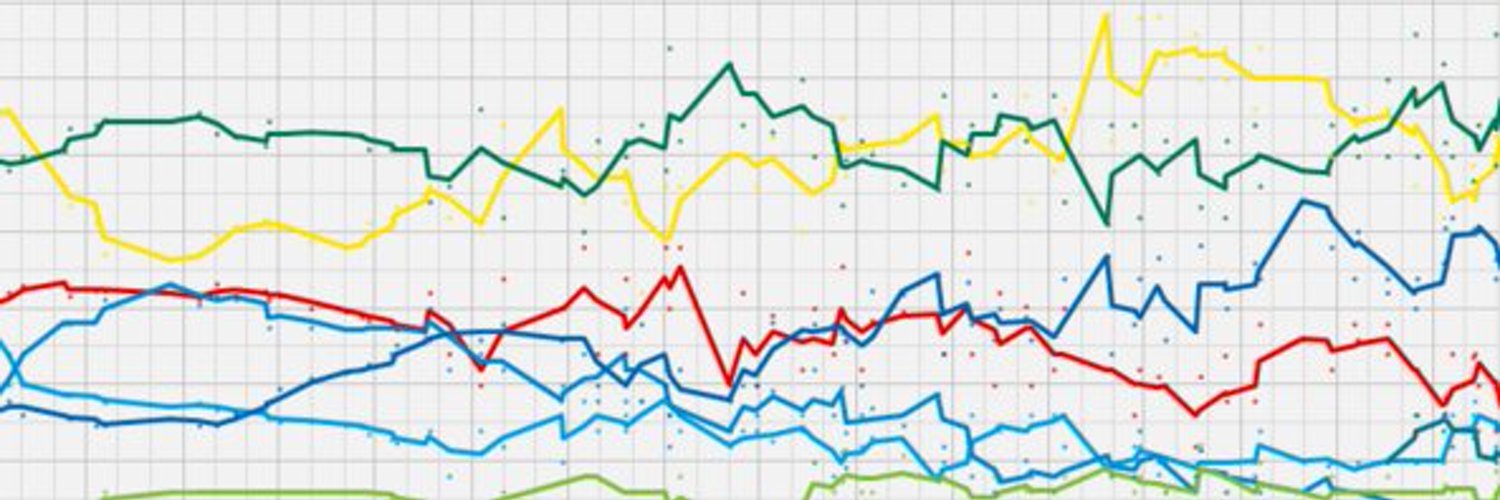
Generic Ballot: Democrats Widen Lead to Six Points
Two new national polls show Democrats maintaining a consistent advantage heading into the 2026 midterm cycle. NBC News reports Democrats at 50 percent versus Republicans at 44 percent among registered voters (n=1,000 RV), while Quantus Insights finds Democrats at 48 percent and Republicans at 42 percent among likely voters (n=1,624 LV). The six-point spread in the Quantus survey represents a slight expansion from yesterday's four-point Economist/YouGov result, suggesting consolidated Democratic support among the electorate most likely to vote.
The consistency across multiple pollsters and sample types indicates the Democratic advantage is not driven by methodological quirks. Both surveys capture the same fundamental finding: Republicans face a structural deficit in generic preference as the cycle enters its active phase. Historical patterns show generic ballot leads of this magnitude typically correlate with House seat swings, though nine months remain before November.
What to Watch
Monitor whether Republican messaging or legislative activity narrows the generic gap in coming weeks. Tracking polls from additional firms will clarify whether the six-point Quantus result represents an outlier or a genuine shift from the four-point range established earlier this week.
Polls
| National Generic NBC News (n=1000 RV) | Democrats 50.00% · Republicans 44.00% |
| National Generic Quantus Insights (n=1624 LV) | Democrats 48.00% · Republicans 42.00% |
Follow the Money
Nebraska Senate: Cash-on-Hand Advantage for Underdog Independent
Dan Osborn (I NE-SEN) holds a narrow cash-on-hand edge over Pete Ricketts (R NE-SEN) despite trailing in total receipts by roughly 1.0 million dollars. Osborn has burned through 72 percent of funds raised while Ricketts has spent 88 percent, indicating the Republican frontrunner is operating at a higher consumption rate heading into the general phase of the cycle.
Ricketts enters the stretch with 1.07 million in available resources against Osborn's 1.14 million—a functionally equivalent position for both candidates' immediate spending capacity. The spending differential suggests Ricketts frontloaded expenditures during primary positioning, while Osborn preserved liquidity as an independent candidate without primary constraints.
Benjamin Sasse (R NE-SEN) and Mike Marvin (O NE-SEN) are non-factors financially, with zero and negligible cash reserves respectively. The race remains effectively a two-candidate contest by resource measures.
Headlines
Visit pollingsource.com for the latest political news.
What to Watch
Arizona House Races: Twin Toss-Ups in AZ-01 and AZ-06
Both Arizona's 1st and 6th districts remain competitive according to Cook Political Report. These races will test whether Democrats can hold suburban gains made in recent cycles. Monitor turnout patterns and messaging around inflation and border security in the coming weeks, as both districts have shifted demographically but retain swing-voter populations.
California's Central Valley and Coastal Contests
CA-13 and CA-22 are rated toss-ups by Cook Political Report, while CA-45 and CA-47 lean Republican according to Inside Elections and Cook respectively. These four races will indicate whether Republicans can expand gains in California or if Democrats successfully defend territory. Watch for candidate positioning on agricultural policy and housing costs in the Central Valley seats and coastal development in the Orange County districts.
Georgia Senate and Statewide Dynamics
Georgia's Senate race rates as Lean Democratic per Cook Political Report. This contest will serve as a bellwether for broader electoral sentiment in the state. Meanwhile, Florida's Senate race leans Likely Republican according to Sabato's Crystal Ball, suggesting limited Democratic pickup opportunities in that state.
How was today's briefing?
Get this briefing in your inbox every morning
Free. No password required. Unsubscribe anytime.