
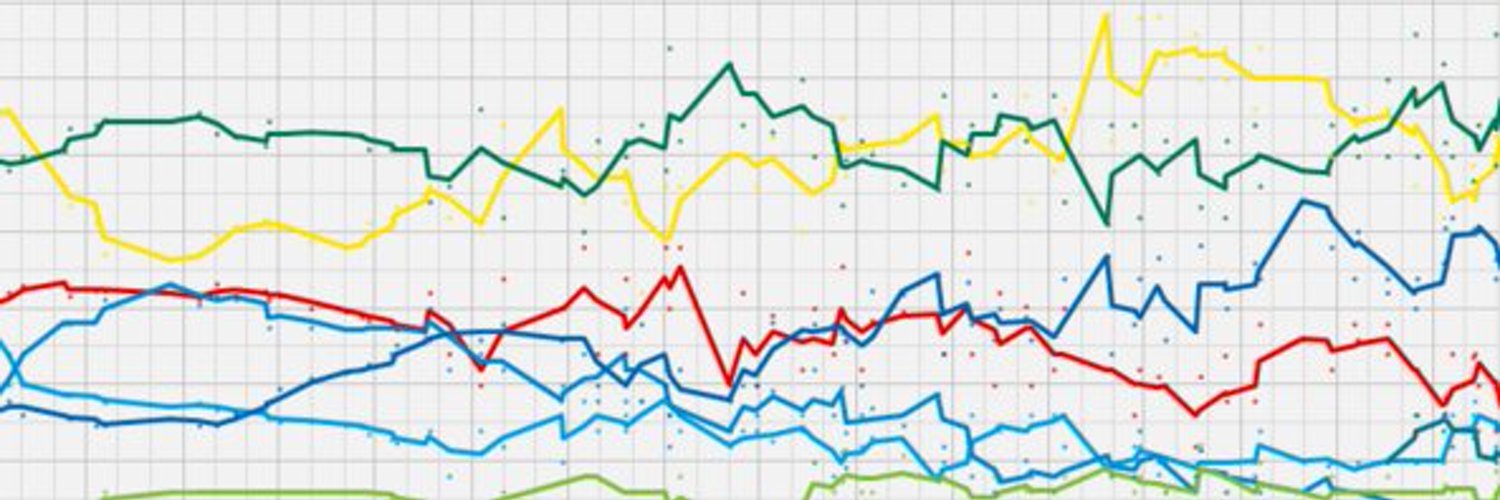
Generic Ballot: Volatility Dominates Week, Direction Unclear
The week's generic ballot measurements revealed substantial movement with no clear directional trend, reflecting the inherent volatility of national ballot preference at this stage of the cycle. Democrats began Monday at a seven-point advantage (47%-40% in Economist/YouGov), compressed to a two-point lead by Tuesday (47%-45% in ABC/Washington Post), then expanded to nine points by Wednesday (50%-41% in Big Data Poll). The range from Monday through Wednesday spans eleven percentage points—a variance too large to reflect genuine shifts in voter preference over 48 hours.
Methodological differences explain much of the observed movement. Economist/YouGov's sample of 1,512 registered voters yielded a seven-point margin on Monday, while ABC/Washington Post's larger sample of 2,087 registered voters produced a two-point margin the next day. Big Data Poll's use of likely voters rather than registered voters on Wednesday generated the week's largest Democratic advantage. These divergences highlight how sample construction and screening methodology produce substantially different baseline measurements rather than indicating meaningful shifts in underlying voter sentiment.
The pattern of volatility presents an interpretive challenge: either the electorate genuinely moved nine points in favor of Democrats between Tuesday and Wednesday, or the surveys capture normal statistical variance within overlapping confidence intervals. The fact that Wednesday's result used a different voter universe (likely voters versus registered voters) suggests caution in treating it as confirmation of upward Democratic movement. Subsequent polling from multiple firms will determine whether the two-point positioning from Tuesday or the nine-point measurement from Wednesday better represents current aggregate sentiment.
National generic ballot measurements remain poor predictors of House control this far from the general election. District-level dynamics, candidate recruitment and quality, and localized turnout patterns will ultimately determine seat distribution. The week's data establish that neither party holds a commanding national advantage, with equilibrium somewhere between two and seven points depending on methodological choices. Incoming legislative action and campaign announcements will provide context for whether any subsequent movement reflects genuine shifts in voter preference or continued normal polling variance.
```Polls
```htmlGeneric Ballot: Democratic Lead Widens
Recent generic ballot polling shows Democrats maintaining a consistent edge over Republicans heading into the 2026 midterms. Nine of ten recent surveys show Democratic leads ranging from 3 to 9 percentage points. The Big Data Poll (Feb. 18) registered the widest gap at 50–41 percent, while ABC/Washington Post/Ipsos (Feb. 17) and Economist/YouGov (Feb. 16) both showed tighter 47–45 and 47–40 spreads respectively. Only RMG Research (Feb. 12) showed Republicans ahead, at 47–45 percent. The aggregate trend suggests Democratic voters are more energized or consolidated than Republicans at this stage, though margins vary meaningfully by pollster methodology.
North Carolina Senate: Cooper Leads Whatley by Double Digits
Roy Cooper (D NC-SEN) holds a substantial 50–40 percent advantage over Chuck Whatley (R NC-SEN) in a Change Research survey conducted through February 4. The 10-point margin represents significant terrain for Whatley to recover in a state where statewide races typically tighten considerably as Election Day approaches. This single data point warrants continued monitoring, as North Carolina has trended competitive in recent cycles and additional polling will clarify whether Cooper's current position reflects genuine strength or measurement volatility.
```Follow the Money
Oregon House Races: Democratic Funding Concentration
Janelle Bynum (D OR-05) dominates the Democratic field with 3.1 million in receipts and 2.2 million cash on hand, more than double any other candidate in this dataset. Andrea Salinas (D OR-06) and Valerie Hoyle (D OR-04) follow with 1.3 million and 1.0 million respectively, while Maxine Dexter (D OR-06) trails at 908k despite higher disbursement activity, indicating rapid spending relative to fundraising.
Republican candidates show substantially lower totals. Cliff Bentz (R OR-01) leads the GOP field at 803k receipts but maintains an anomalously high 1.3 million cash on hand—suggesting prior-cycle reserves or different accounting periods. Monique Despain (R OR-06) holds 246k cash on hand against 485k receipts, while Patti Adair (R OR-05) operates with minimal resources at 97k cash on hand.
The aggregate Democratic fundraising advantage across multiple contested seats—4.5 million combined receipts from the top four Democratic candidates—reflects resource concentration in races rated competitive or lean Democratic. Republican underfunding in these matchups suggests either strategic resource allocation elsewhere in Oregon or donor prioritization gaps in these particular districts.
Headlines
Visit pollingsource.com for the latest political news.
What to Watch
```htmlHouse Tossups in Arizona and California
AZ-01 and AZ-06 remain rated as tossups by Cook Political Report, making Arizona a focal point for House control. Both districts have shown volatility in recent cycles. In California, CA-13 and CA-22 are similarly rated, with candidates in both races competing in districts that have swung between parties. Monitor funding patterns and polling releases from these districts closely, as movement in any of these four races would signal broader shifts in the competitive landscape.
Senate Races in Georgia and Florida
Georgia's Senate race is rated Lean D by Cook Political Report, indicating structural Democratic advantages but real Republican opportunities. Florida's Senate race tilts Likely R according to Sabato's Crystal Ball, suggesting Republican structural strength in the state. These two contests will likely determine Senate control. Watch for shifts in these ratings following any major candidate announcements, debate performances, or economic data releases.
Lean Republican Districts
CA-45, CA-47, and CO-08 are rated Lean R, representing potential Republican gains. Iowa's 1st District is rated Likely R, indicating strong Republican positioning. Track candidate recruitment, cash-on-hand reports, and internal polling in these districts to gauge whether Republicans can consolidate their advantages.
```How was today's briefing?
Get this briefing in your inbox every morning
Free. No password required. Unsubscribe anytime.