
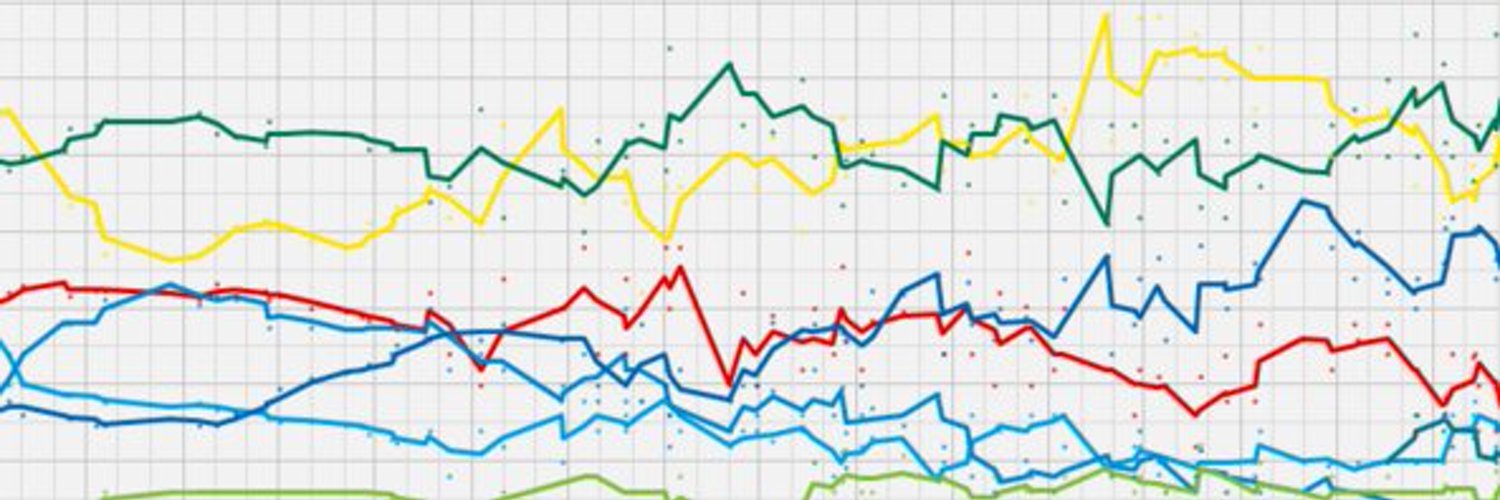
Generic Ballot: Democratic Lead Holds Within Historical Margins
National polling showed consistency this week, with Democrats maintaining a four-point advantage across two separate surveys. The Economist/YouGov poll (1,504 registered voters) showed Democrats at 44 percent versus 40 percent for Republicans, while the Cygnal survey (1,500 likely voters) registered 48-44 for Democrats. Both margins fall within historical volatility ranges nine months before the midterm election. Analysts tracking the 2026 cycle should note that generic ballot leads typically narrow significantly as campaigns intensify and messaging reaches broader audiences through the summer and fall.
House Ratings: Multiple Republican Gains in Swing Districts
Rating agencies made substantial adjustments favoring Republicans across swing House districts this week, signaling momentum in districts previously classified as competitive. Inside Elections moved five races toward Republicans: Nebraska's 2nd District from Toss-up to Lean R, New York's 19th District from Toss-up to Tilt R, California's 13th District from Tilt D to Toss-up, Arizona's 6th District from Toss-up to Tilt R, and Michigan's 7th District from Toss-up to Tilt R. Pennsylvania's 8th District shifted from Tilt D to Toss-up. Sabato's Crystal Ball moved New York's 19th District and Pennsylvania's 7th District to Toss-up status. The cumulative effect of these adjustments suggests Republicans have gained ground in districts where Democrats hold current seats or where competitive open seats exist. Cook Political Report provided the lone Democratic-favorable movement, shifting Arizona's 6th District from Lean R to Toss-up.
Senate Ratings: Democratic Gains in Florida and Ohio; Minnesota Concern
Democrats saw modest movement in two traditionally Republican-favored states. Inside Elections downgraded Florida's Senate race from Safe R to Likely R and moved Ohio's Senate race from Likely R to Tilt R, both changes reflecting Democratic competitive positioning in states where the party has struggled in recent cycles. Sabato's Crystal Ball shifted Nebraska's Senate race from Likely R to Leans R, indicating modest Democratic movement in an otherwise Republican-leaning state. However, Cook Political Report downgraded Minnesota's Senate race from Likely D to Lean D, signaling Republican movement in what had been a safer Democratic seat. Most competitive Senate races remained stable across multiple raters, suggesting stabilization after earlier volatility in battleground states like North Carolina, New Hampshire, Georgia, Michigan, and Maine.
North Carolina Senate: Roy Cooper Opens 10-Point Lead
Roy Cooper (D NC-SEN) leads Chuck Whatley (R NC-SEN) 50-40 percent among likely voters in a Change Research poll of 1,069 voters. The ten-point margin represents one of the largest single-candidate leads observed in current Senate data and suggests potential vulnerability for the Republican incumbent in a state with a history of competitive statewide races. The result warrants monitoring in subsequent polls to determine whether Cooper's lead reflects genuine movement or poll-specific variance as Republican spending and messaging intensify heading into spring.
Iowa's 1st District: Financial Strength Without Polling Clarity
Mariannette Miller-Meeks (R IA-01) maintains a fundraising advantage over Christina Bohannan (D IA-01) in Iowa's 1st District, with 5.7 million in total receipts and 4.3 million in cash on hand compared to 5.1 million and 4.0 million for Bohannan. Miller-Meeks has spent 1.8 million to date versus 1.2 million for Bohannan, though both candidates maintain substantial reserves for late-cycle operations. Cook Political Report rates the district Likely R, though the absence of recent
Polls
Generic Ballot: Divergence Between Pollsters
Generic ballot surveys show Democrats leading Republicans by 3 to 8 percentage points across ten recent polls, but significant methodological variation complicates interpretation. Harvard-Harris, Marquette, and FOX News all place Democrats at 52 percent, while Economist/YouGov shows the narrowest lead at 44-40. The middle-range polls from Cygnal, Morning Consult, and PPP cluster between 47-48 for Democrats and 41-44 for Republicans. Sample sizes vary considerably, from PPP's 652 respondents to Morning Consult's 2,201, which may account for some volatility. The consistency of Democratic leads across most pollsters suggests genuine preference advantage, but the 4-point range in Democratic support indicates either real movement or persistent house effects.
North Carolina Senate: Cooper Leads Whatley
Roy Cooper (D NC-SEN) maintains a commanding 10-point advantage over Chuck Whatley (R NC-SEN) in a Change Research poll conducted through February 4. The 1,069-sample survey shows Cooper at 50 percent against Whatley's 40 percent, leaving 10 percent unaccounted for. If this margin holds, it would represent a significant Democratic performance in a traditionally competitive state. The single poll limits conclusions about trend or stability in the race.
Follow the Money
Arizona House Races: Financial Disparities Across Multiple Contests
The Arizona House data reflects multiple concurrent races with significant fundraising gaps. Eli Crane (R AZ-##) leads all candidates with 7.4 million in total receipts but has spent heavily, leaving 2.3 million cash on hand. Joanna Mendoza (D AZ-##) raised 5.3 million but spent only 1.8 million, maintaining 3.5 million in reserves—the highest cash position among all candidates listed. Juan Ciscomani (R AZ-##) trails Crane in receipts at 5.1 million but demonstrates disciplined spending with 3.8 million remaining.
Jonathan Treble (D AZ-##), Jonathan Nez (D AZ-##), and Adelita Grijalva (D AZ-##) occupy a second tier, each raising between 2.1 and 2.5 million. Grijalva has depleted her cash reserves to 385,000 despite raising 2.1 million, indicating aggressive late-cycle spending. Republicans Thomas Feely (R AZ-##) and Daniel Keenan (R AZ-##) operate with substantially smaller budgets under 1.8 million each.
The financial positioning suggests resource concentration among Crane, Mendoza, and Ciscomani, with Mendoza's cash advantage positioning her for closing-phase spending despite lower overall receipts than Crane
Headlines
Visit pollingsource.com for the latest political news.
What to Watch
Competitive House Races in Southwest and California
Arizona's 1st District (AZ-01) and Arizona's 6th District (AZ-06) remain tossups according to Cook Political Report, making Arizona a potential swing point for House control. In California, CA-13 and CA-22 are rated tossups, while CA-45 and CA-47 lean Republican. These four California seats collectively represent significant battleground territory. Monitor early voting patterns and candidate fundraising disclosures in these districts for shifts in competitiveness.
Senate Races: Florida and Georgia
Florida's Senate race (FL-SEN) is rated likely Republican by Sabato's Crystal Ball, suggesting structural Democratic headwinds in the state. Conversely, Georgia's Senate race (GA-SEN) leans Democratic according to Cook Political Report, indicating the state remains contested. Watch for polling movements in Georgia particularly, as Senate map control often hinges on this race.
Lean Republican House Seats
Colorado's 8th District (CO-08) and Iowa's 1st District (IA-01) are rated lean Republican. Iowa's 1st is rated likely Republican, suggesting reduced vulnerability. Track field operation intensity and candidate visibility in CO-08 as the more competitive of the two.
How was today's briefing?
Get this briefing in your inbox every morning
Free. No password required. Unsubscribe anytime.