
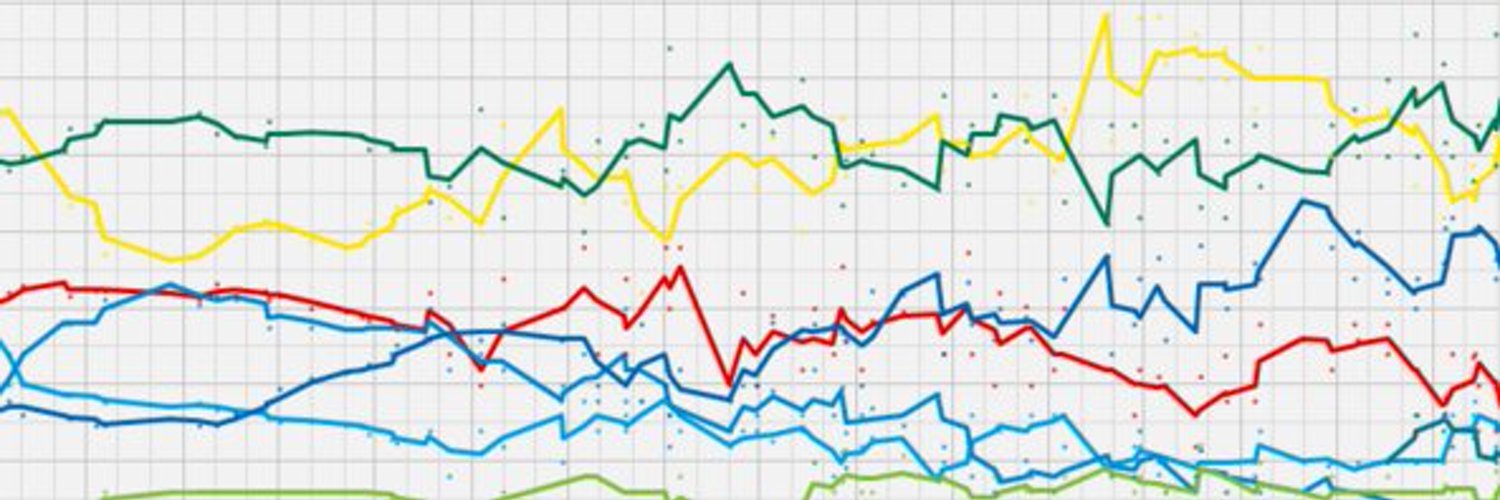
Democrats lead the generic ballot 48-44 percent in a Cygnal survey of 1,500 likely voters, a four-point advantage that remains within historical volatility ranges nine months before the midterms. A separate North Carolina Senate poll shows Roy Cooper (D NC-SEN) opening a 10-point lead over Chuck Whatley (R NC-SEN) at 50-40 percent among likely voters, suggesting potential Democratic strength in a state trending competitive for Senate control.
Generic Ballot: Democrats Maintain 4-Point Cushion
The Cygnal poll released today shows Democrats at 48 percent and Republicans at 44 percent among likely voters nationally. The margin aligns with recent trend data but remains subject to compression as campaigns intensify and turnout dynamics shift closer to November.
North Carolina Senate: Cooper Opens 10-Point Lead Over Whatley
Roy Cooper (D NC-SEN) leads Chuck Whatley (R NC-SEN) 50-40 percent in a Change Research poll of 1,069 likely voters completed today. The 10-point gap represents one of the largest single-candidate spreads in current Senate data and suggests potential vulnerability for the Republican incumbent in a state with a history of competitive statewide races.
What to Watch
Monitor whether Cooper's North Carolina lead holds in subsequent polling or narrows as Republican spending and messaging intensify. Track generic ballot movement as legislative activity and campaign messaging accelerate heading into spring 2026.
Polls
| National Generic Cygnal (n=1500 LV) | Democrats 48.00% · Republicans 44.00% |
| NC Senate Change Research** (n=1069 LV) | Cooper 50.00% · Whatley 40.00% |
Follow the Money
Ohio Senate: Brown's Financial Advantage
Sherrod Brown (D OH-SEN) has raised 25.98 million dollars across his campaign, significantly outpacing other Democratic Senate candidates in this filing cycle. With 17.03 million dollars in cash on hand against 8.95 million dollars in disbursements, Brown maintains substantial financial reserves. His funding advantage reflects the competitive nature of his Ohio race, where Senate control remains contested.
Michigan Senate: Two-Front Democratic Spending
Michigan Democrats are executing parallel Senate campaigns with notable financial profiles. Haley Stevens (D MI-SEN) has raised 8.87 million dollars but shows a lower cash-on-hand ratio at 3.39 million dollars relative to her 5.48 million dollars in disbursements, indicating aggressive recent spending. Mallory Mcmorrow (D MI-SEN) has raised 8.62 million dollars with 3.69 million dollars remaining and 4.93 million dollars in disbursements, presenting a similar burn-rate pattern. Both candidates are deploying resources heavily in the current period.
Republican Senate Candidates: Resource Constraints
Nate Morris (R KY-SEN) and Michael Whatley (R NC-SEN) show divergent financial trajectories. Morris has raised 8.59 million dollars but holds only 708,324 dollars in cash on hand against 7.88 million dollars in total disbursements, indicating minimal remaining resources. Whatley has raised 8.41 million dollars with 2.53 million dollars cash on hand and 5.88 million dollars in disbursements, placing him in a stronger liquidity position relative to Morris heading into the final campaign phase.
Headlines
Visit pollingsource.com for the latest political news.
What to Watch
```htmlHouse Tossups in Arizona and California
Monitor AZ-01 and AZ-06, both rated tossup by Cook Political Report, alongside CA-13 and CA-22. These four districts will likely determine House control margins. Watch for early voting data and polling movement in the final two weeks, particularly in Arizona districts that have shifted demographic composition.
Senate Races: Georgia and Florida
Georgia's Senate race (D GA-SEN) remains lean Democratic according to Cook Political Report, making it a critical battleground. Track ground game activity and voter registration numbers. Florida's Senate race (R FL-SEN) leans likely Republican per Sabato's Crystal Ball; monitor whether Democratic turnout operations can narrow the gap in key regions.
California Lean Republican Districts
CA-45 and CA-47, both rated lean Republican, merit attention for signs of Democratic competitive positioning. These Orange County and Los Angeles-area seats reflect suburban dynamics that could signal broader House trends. Monitor candidate spending and endorsement patterns for signals of resource allocation confidence.
```How was today's briefing?
Get this briefing in your inbox every morning
Free. No password required. Unsubscribe anytime.